
Introduction
Fire protection in modern buildings extends beyond conventional smoke detection systems and requires a comprehensive approach that addresses hidden risks within infrastructure. One of the most critical yet often overlooked components is the duct detector, a device specifically designed to monitor air moving through HVAC systems and prevent the spread of smoke.
In large commercial and industrial environments, HVAC systems can unintentionally act as pathways for smoke distribution, rapidly transferring hazardous gases across multiple zones. According to fire protection standards, these systems must be equipped with detection mechanisms that can identify smoke early and initiate protective actions such as system shutdown and airflow control.
This article provides a detailed, technically structured overview of duct detection systems, including their working principles, types, compliance requirements, integration strategies, and future advancements relevant to 2026.
Understanding the Role of a Duct Detector in Fire Safety
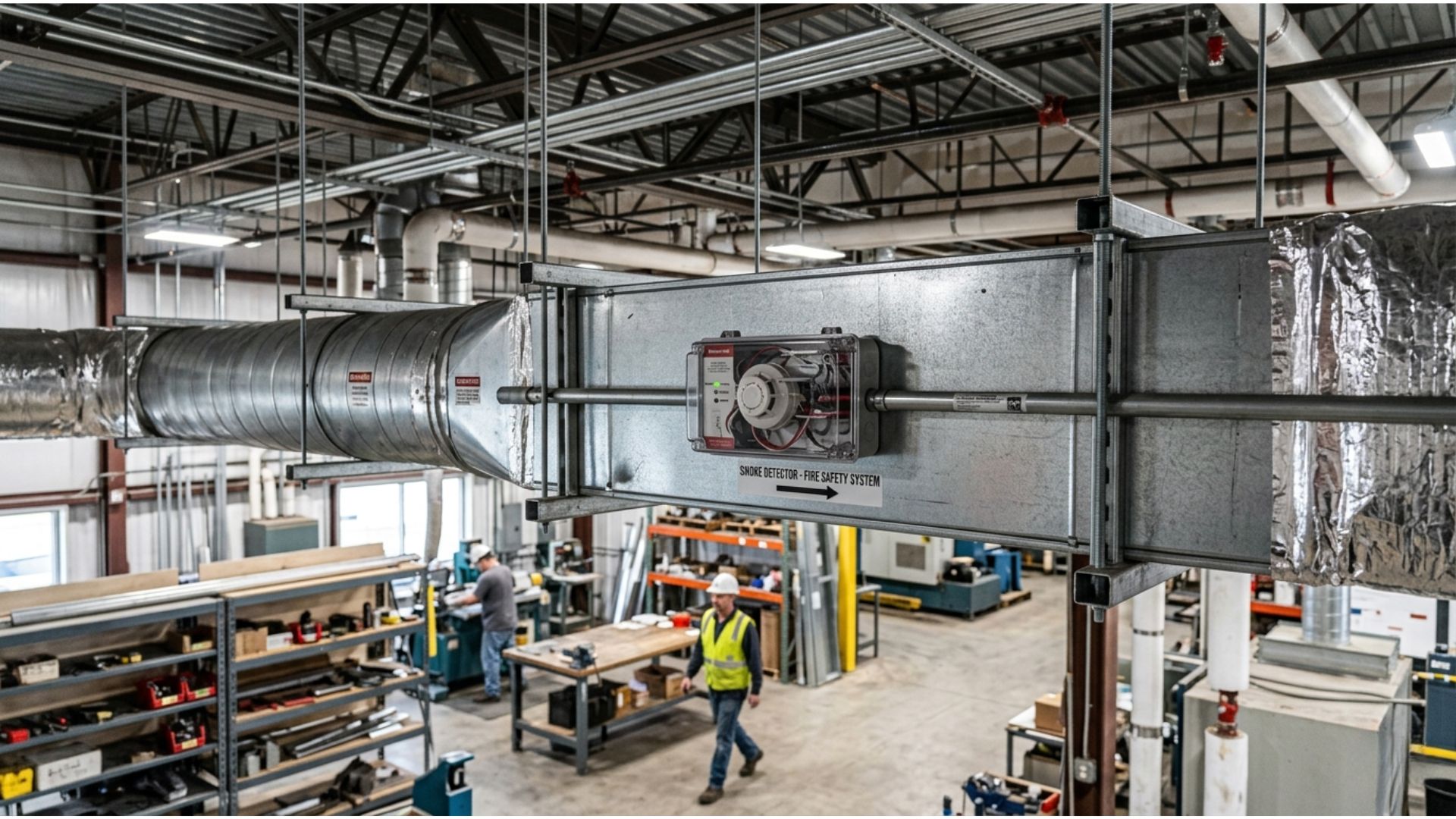
A duct detector is a specialized fire alarm initiating device installed within or adjacent to HVAC ductwork to detect smoke particles present in the airflow. Unlike conventional detectors that monitor open areas, these devices operate within air handling systems and serve a unique function preventing smoke recirculation throughout a building.
These devices are not intended to replace standard smoke detection systems but instead complement them by addressing risks associated with air movement. Fire safety standards explicitly emphasize that duct-based detection and area detection serve distinct purposes within a complete protection strategy.
In high-capacity HVAC systems, early detection within ducts ensures that smoke does not propagate to unaffected zones, thereby reducing potential hazards and structural damage.
Operational Mechanism of Duct Detection Systems
The performance of a duct detector is based on continuous air sampling within the duct. Most systems utilize sampling tubes that extend into the airflow to capture representative air samples.
Core Working Process
- Airflow passes through sampling tubes installed across the duct
- The collected air enters a sensing chamber within the detector
- Smoke particles are analyzed using optical or ionization technology
- Upon detection, the system initiates a signal to the fire alarm control panel
- Automated responses are triggered, including HVAC shutdown or damper control
This mechanism ensures that smoke is identified at an early stage, even before it becomes visible in occupied spaces.
Technical Components of a Duct Detector System
A fully functional duct detection system consists of multiple interconnected components designed to ensure reliability and accuracy.
Primary Components
- Sampling Tubes: Facilitate air collection across the duct cross-section
- Detection Chamber: Houses sensing elements for smoke analysis
- Control Module: Interfaces with fire alarm systems
- Housing Enclosure: Protects internal components from environmental conditions
- Remote Test Stations: Enable accessible testing and reset functions
These components work collectively to provide consistent performance across varying airflow conditions.
Types of Detection Technologies Used
Different sensing technologies are employed depending on the application environment and risk profile.
1. Photoelectric Detection
Photoelectric technology is widely used due to its effectiveness in detecting visible smoke particles typically associated with smoldering fires. It is particularly suitable for duct environments where smoke travels over distance and becomes more detectable.
2. Ionization Detection
Ionization-based systems detect smaller combustion particles generated by fast-flaming fires. While effective, they are less commonly used in HVAC applications due to environmental sensitivities.
3. Multi-Criteria Detection
Advanced systems combine multiple sensing technologies to enhance detection accuracy and minimize false alarms.
Importance of Duct Smoke Detection in HVAC Systems
The integration of a duct detector within HVAC infrastructure plays a vital role in maintaining fire safety integrity.
Key Functional Benefits
- Prevents smoke from being distributed through ventilation systems
- Enables early hazard detection within concealed spaces
- Supports automatic shutdown of air handling units
- Protects critical equipment from smoke damage
- Enhances occupant safety through early warning systems
HVAC systems can act as conduits for smoke movement; therefore, integrating detection within these systems is essential for effective fire containment.
Installation Requirements and Best Practices
Proper installation is critical for ensuring optimal performance and compliance with safety standards.
Placement Guidelines
- Install detectors downstream of air handling units
- Position units upstream of branch ducts for accurate sampling
- Avoid installation near bends, obstructions, or turbulent airflow areas
- Ensure accessibility for inspection and maintenance
- Integrate with centralized fire alarm systems
Fire codes specify installation thresholds based on airflow capacity, typically requiring detection systems in ducts exceeding defined airflow limits.
Compliance with Fire Safety Standards
Regulatory compliance is a fundamental aspect of duct detection system implementation.
Key Standards
- NFPA 72: National Fire Alarm and Signaling Code
- NFPA 90A: Standard for Air Conditioning and Ventilating Systems
- International Mechanical Code (IMC)
These standards define requirements for installation, performance, and system integration to ensure effective fire protection.
Integration with Fire Alarm Systems
Modern duct detector systems are designed for seamless integration with building-wide fire alarm networks.
Integration Capabilities
- Real-time communication with fire alarm control panels
- Activation of supervisory or alarm signals
- Coordination with smoke control systems
- Automatic control of dampers and ventilation systems
This integration enables coordinated responses that enhance overall building safety.
Maintenance and Inspection Protocols
Regular maintenance is essential to ensure system reliability and compliance.
Maintenance Activities
- Periodic cleaning of sampling tubes and sensors
- Functional testing using approved methods
- Inspection of electrical connections and control modules
- Verification of airflow conditions
- Calibration as per manufacturer specifications
Dust accumulation and environmental factors can affect performance, making routine inspection a critical requirement.
Applications Across Various Industries
Duct detection systems are widely deployed across multiple sectors due to their effectiveness in managing HVAC-related fire risks.
Common Applications
- Commercial office buildings
- Industrial manufacturing facilities
- Healthcare institutions
- Data centers
- Retail complexes
These environments rely on HVAC systems extensively, making duct-based detection a critical safety component.
Performance Factors and System Limitations
While highly effective, certain factors influence the performance of duct detection systems.
Key Considerations
- Air velocity within ducts
- Dust and particulate accumulation
- Proper placement and installation
- Regular maintenance and calibration
Maintaining optimal airflow conditions is essential, as extremely low or high velocities can affect detection accuracy.
Use of System Sensor Duct Detector in Modern Installations
The System Sensor Duct Detector is widely recognized for its advanced sensing capabilities and reliability in HVAC applications. These systems are engineered to meet stringent fire safety standards and provide consistent performance across varying environmental conditions.
With features such as improved airflow sampling, enhanced sensitivity, and integration flexibility, the System Sensor Duct Detector is commonly used in commercial and industrial projects requiring high-performance detection systems.
Additionally, modern versions of the System Sensor Duct Detector incorporate smart diagnostics and remote monitoring capabilities, improving maintenance efficiency and system reliability.
Role of Duct Smoke Detector in Fire Containment Strategy
A Duct Smoke Detector is a critical component in fire containment strategies, specifically designed to prevent the spread of smoke through HVAC systems. These devices act as an early warning mechanism within air ducts, enabling immediate system responses.
The Duct Smoke Detector also contributes to system automation by initiating shutdown procedures and activating smoke control measures, ensuring that fire hazards are contained within localized areas.
In advanced fire protection systems, the Duct Smoke Detector works in conjunction with other detection devices to create a multi-layered safety framework.
Future Trends in Duct Detection Technology (2026)
Advancements in fire safety technology are driving innovation in duct detection systems.
Emerging Developments
- Integration with IoT-based monitoring platforms
- Real-time analytics and predictive maintenance
- Enhanced sensitivity with reduced false alarms
- Cloud-based system diagnostics
- Smart building integration
These innovations are expected to improve system performance and operational efficiency in modern infrastructure.
Conclusion
The duct detector is an essential component in modern fire protection systems, specifically designed to address the risks associated with HVAC air movement. By detecting smoke within ductwork and initiating immediate system responses, these devices play a crucial role in preventing smoke propagation and enhancing overall building safety.
Compliance with established standards, proper installation, and regular maintenance are critical factors in ensuring optimal performance. As technology continues to evolve, duct detection systems are becoming more intelligent, reliable, and integrated, making them indispensable in contemporary fire safety strategies.
For organizations seeking comprehensive fire protection solutions, incorporating advanced duct detection systems is not only a regulatory requirement but also a strategic investment in safety and risk management.
FAQs
1. What is the primary purpose of duct-based detection systems?
These systems are designed to detect smoke within HVAC ducts and prevent its spread through ventilation systems, enhancing overall fire containment.
2. Are duct detectors required by fire safety codes?
Yes, installation is mandated by standards such as NFPA and IMC for specific HVAC system capacities and configurations.
3. How do duct detectors differ from standard smoke detectors?
They monitor air inside ducts rather than open spaces and are primarily used to control airflow and prevent smoke distribution.
4. Can duct detectors trigger building-wide alarms?
Typically, they generate supervisory signals and initiate system responses such as HVAC shutdown, depending on system configuration.
5. What factors affect detection accuracy?
Air velocity, dust accumulation, improper installation, and lack of maintenance can impact performance.
6. How often should these systems be maintained?
Routine inspection and testing should be conducted according to regulatory requirements and manufacturer recommendations.
7. Are advanced detection systems available with smart features?
Yes, modern systems include IoT integration, remote monitoring, and predictive maintenance capabilities.
Upgrade Your Fire Safety System with Trusted Detection Solutions
Ensure your building is equipped with advanced fire protection technology that meets modern safety standards. At QuickShipFire, we provide high-performance duct detection systems designed for reliability, compliance, and seamless integration.
Explore our complete range of fire alarm and detection products today and build a safer, smarter environment with QuickShipFire.