
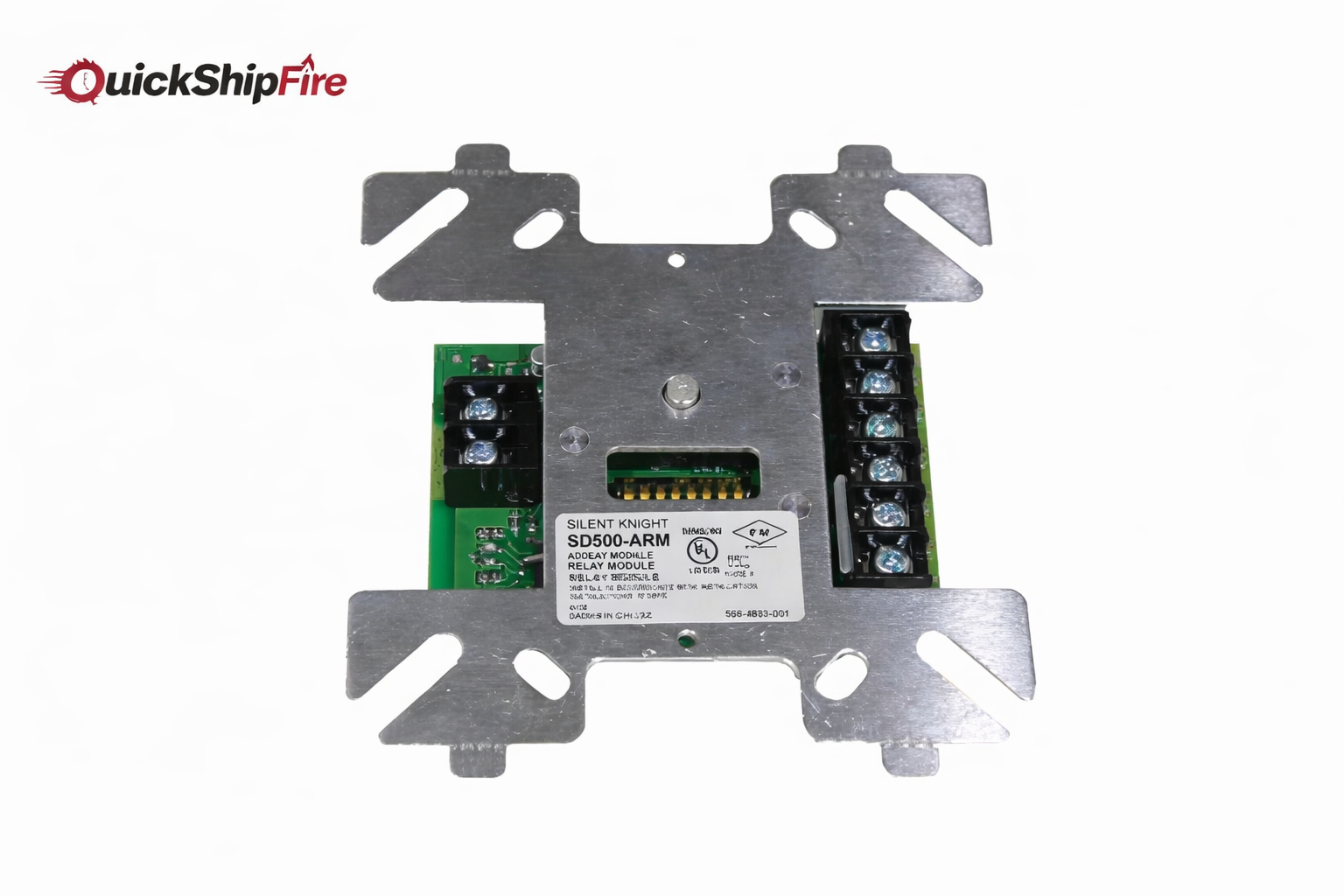
The SD 500 ARM plays a critical role in helping U.S. commercial buildings meet today’s strict fire code compliance standards. Fire safety regulations are no longer something building owners can approach casually. Inspections are more detailed, documentation requirements are tighter, and liability exposure is higher than ever before. From hospitals and schools to warehouses and multi-tenant office buildings, every commercial property is expected to operate with a fully supervised, properly integrated fire alarm system that aligns with NFPA 72 requirements.
But here’s the reality – compliance is not just about installing smoke detectors or control panels. It’s about how every component inside the system communicates, supervises, and responds during an emergency situation. As an addressable relay module designed for modern commercial fire alarm systems, the SD 500 ARM supports precise device identification, structured supervision, and coordinated equipment control. In an environment where inspectors demand clarity and facility managers demand reliability, choosing the right module can directly impact inspection outcomes, emergency response speed, and long-term operational stability.
The Reality of Fire Code Compliance in the U.S.
NFPA 72 requirements are getting attention. AHJs are asking for detailed testing logs. Commercial insurance companies now want documented inspection records before policy renewals.
Some buildings still operate on older conventional systems. They struggle during inspections. Why? Because zone identification is slow. Documentation is messy. Troubleshooting takes time.
Modern addressable fire alarm systems changed that.
Instead of guessing which zone triggered, you see the exact device address. That clarity is powerful during emergencies and inspections.
And this is where SD 500 ARM fits naturally into the ecosystem.
What Is SD 500 ARM?
At its core, SD 500 ARM is an addressable relay module used within commercial fire alarm systems. It allows integration, supervision, and control of various connected components.
Simple explanation? It acts like a communication bridge between devices and the fire alarm control panel.
It supports:
- Device supervision
- System monitoring
- Controlled activation of connected equipment
- Integration with HVAC shutdown systems
- Enhanced addressable reporting
It does not scream for attention. But without modules like this, compliance becomes messy.
In retrofits especially, SD 500 ARM helps bring older buildings up to modern reporting standards without full system replacement.
That matters for budget-conscious property managers.
Why Addressable Modules Matter for Code Compliance
Let me explain something from experience. Inspectors love clarity. When they see clear device labelling and precise address identification, inspection becomes smoother.
SD 500 ARM supports that clarity.
1. Accurate Device Identification
Addressable modules provide exact reporting locations. This aligns with NFPA 72 documentation requirements. No guessing. No confusion.
2. System Supervision
Modern fire alarm installation requires proper supervision of relays and connected circuits. If a fault occurs, it must be reported.
This module ensures those states are monitored correctly.
3. Faster Emergency Response
Time matters. If smoke is detected in one mechanical room, responders need that exact data. Not “Zone 3 maybe.”
Addressable integration reduces delay.
HVAC Compliance and Duct Detection Integration
Commercial HVAC systems are complex. Air moves fast inside ducts. Smoke can travel quickly across floors.
That is why duct smoke detectors are required in many installations.
The sd505 duct smoke detector is commonly used in commercial HVAC detection setups. It detects smoke within air ducts before it spreads into occupied spaces.
Now here is where integration matters.
When paired properly, SD 500 ARM supports coordinated response – like triggering HVAC shutdown or sending accurate supervisory signals to the panel.
That coordination is critical for:
- Hospitals
- Data centers
- Warehouses
- Schools
The sd505 duct smoke detector provides early duct detection, and integration modules ensure signals are properly reported and supervised.
Without proper module integration, inspectors may flag incomplete supervision.
Detection Accuracy and the Role of SD365-IV Smoke Detector
Let’s talk about detection quality. False alarms are expensive. They frustrate tenants. They create fire department fatigue.
The SD365-IV Smoke Detector is a photoelectric detector widely used in commercial systems. It reduces nuisance alarms compared to some older ionization designs.
Better detection means better compliance history.
When integrated properly through modules like SD 500 ARM, devices like the SD365-IV Smoke Detector can provide accurate reporting and structured monitoring.
And that builds confidence during inspections.
How SD 500 ARM Directly Supports NFPA 72 Requirements
NFPA 72 emphasizes:
- Device address identification
- Supervisory signal reporting
- System documentation
- Functional testing
SD 500 ARM helps support those requirements in practical ways.
Let’s break it down:
| Compliance Requirement | How SD 500 ARM Helps |
| Device Supervision | Ensures relay states are monitored |
| Address Reporting | Provides unique identification |
| Documentation | Supports structured logging |
| HVAC Shutdown Integration | Allows coordinated relay control |
This is not theory. I’ve seen inspection reports improve after upgrading to addressable modules.
Real Commercial Applications
Hospitals
Hospitals require precise room-level detection. HVAC zones are sensitive. Integration with duct systems using sd505 duct smoke detector becomes critical.
Schools
Budget matters in schools. Retrofit friendly modules like SD 500 ARM help upgrade systems without total replacement.
Warehouses
Large open spaces require layered detection including SD365-IV Smoke Detector units and proper relay supervision.
Office Buildings
Tenants demand minimal false alarms. Integrated systems improve reliability.
Installation Best Practices
Let me be honest. Even the best equipment fails if installed poorly.
Some quick reminders:
- Verify compatibility with control panel
- Follow manufacturer wiring diagrams
- Label addresses clearly
- Test supervisory signals
- Document installation thoroughly
Routine fire alarm testing must include relay verification. Inspectors check this.
Skipping documentation is a mistake I see too often.
The Bigger Trend: Smarter Commercial Fire Systems
We are moving toward:
- Smart building integration
- Remote monitoring
- Cloud-based fire system reporting
- Stricter AHJ enforcement
Modules like SD 500 ARM are not optional anymore in many commercial upgrades.
They are part of the infrastructure shift.
Also consider related components like:
- addressable smoke detector modules
- fire alarm relay module
- commercial duct smoke detector
- HVAC smoke detection system
- fire alarm control panel compatibility
- supervised relay module
- commercial fire alarm retrofit
These terms are not buzzwords. They represent how the market is evolving.
Why Contractors Trust QuickShipFire
Now let’s talk sourcing.
When compliance matters, you do not buy from random sellers. You need:
- Authentic commercial inventory
- Fast nationwide shipping
- Reliable stock availability
- Technical support
- Competitive pricing
QuickShipFire focuses specifically on commercial fire alarm components including SD 500 ARM, sd505 duct smoke detector, and SD365-IV Smoke Detector.
I’ve seen too many projects delayed because parts were backordered elsewhere.
Fast shipping reduces downtime.
And downtime in commercial buildings equals lost revenue.
Common Mistakes in Commercial Fire Alarm Compliance
Here are things I’ve personally seen go wrong:
- Using non-compatible relay modules
- Not supervising HVAC shutdown circuits
- Poor address labelling
- Skipping annual fire alarm testing
- Ignoring documentation updates
Compliance is not just installation. It’s maintenance too.
Frequently Asked Questions
1. What does SD 500 ARM actually do in a fire alarm system?
It acts as an addressable relay module that integrates and supervises connected devices. It ensures signals are properly reported to the control panel and helps meet code requirements.
2. Is SD 500 ARM required for all commercial buildings?
Not always mandatory, but in modern addressable systems it often becomes necessary for supervision and integration purposes.
3. How does sd505 duct smoke detector improve safety?
It detects smoke inside HVAC ducts before it spreads into occupied areas. That early detection reduces risk and supports compliance.
4. Why choose SD365-IV Smoke Detector over older models?
Photoelectric detection reduces nuisance alarms and improves stability in commercial environments.
5. Does this module help with inspection documentation?
Yes. Addressable reporting simplifies logging and verification during fire marshal inspections.
6. Can older buildings retrofit with this module?
In many cases yes, depending on panel compatibility. Retrofits often improve compliance ratings.
7. How often should these systems be tested?
NFPA 72 outlines inspection intervals. Annual testing is common, but some components require more frequent checks.
8. Where can contractors source reliable units quickly?
QuickShipFire offers commercial fire alarm components with fast nationwide shipping.
9. Does integration reduce insurance risk?
Proper documentation and compliance can positively influence insurance evaluations, though policies vary.
Final Thoughts
Compliance is not exciting. But it protects lives. And reputations. I believe every commercial building deserves systems that are properly supervised, correctly installed, and professionally sourced.
SD 500 ARM supports structured addressable integration. Paired with devices like sd505 duct smoke detector and SD365-IV Smoke Detector, it becomes part of a smarter safety framework.
If you are planning upgrades, inspections, or retrofits, sourcing matters. QuickShipFire is built for professionals who take compliance seriously. Because when safety matters, shortcuts are not worth it.