A fire alarm system is only as dependable as the plan that protects a building when that system is taken offline. Every time a fire alarm system is shut down for testing, maintenance, an upgrade, or because of an unexpected failure, the property loses its primary line of defense against fire. That period of reduced protection is called an impairment, and the way a facility manages it often decides whether a routine service visit stays routine or turns into a life-safety incident. This guide breaks down fire alarm system impairment procedures, the notifications they require, and the documentation that keeps your building both compliant and protected.
Whether you manage a hospital, a hotel, an industrial plant, or a commercial office tower, understanding impairment procedures is not optional. Insurance carriers, the local fire marshal, and national codes all expect a documented, repeatable process. The sections below walk through what an impairment is, who is responsible for it, the exact steps to follow, and the notification timelines you cannot afford to miss.
What Is a Fire Alarm System Impairment?
An impairment is a shutdown, in whole or in part, of a fire protection system. When a fire alarm system is impaired, all or some of its detection and notification functions stop working as designed. Because the building cannot fully detect or announce a fire during that time, every impairment introduces measurable risk that must be controlled with backup measures and clear communication.
Fire protection professionals generally recognize three distinct categories of fire alarm system impairment. Knowing which type you are dealing with shapes the response, the notifications, and the paperwork.
Planned Impairments
A planned impairment is scheduled in advance. It typically happens during routine inspection, testing, and maintenance, during renovations, or when a fire alarm system is being expanded or modernized. Because the work is anticipated, the impairment coordinator has time to notify every stakeholder, arrange a fire watch, and stage replacement parts before any device is taken out of service.
Emergency Impairments
An emergency impairment, sometimes called an unplanned impairment, happens when an unexpected event disables the system. A power surge that damages a fire alarm control panel, water intrusion, or a sudden component failure can all force the system offline without warning. Emergency impairments follow the same core notification steps as planned ones, but they demand faster action and tighter coordination with whoever handles insurance claims.
Hidden Impairments
A hidden, or concealed, impairment is one that nobody knows about. A disconnected wire, a disabled zone, or a detector that quietly fails sensitivity testing can leave a building unprotected for weeks. Hidden impairments are the most dangerous type precisely because there are no notifications and no compensating measures in place. This is why routine testing of detectors, panels, and notification appliances is the only reliable defense against them.
Why Impairment Procedures Matter
A fire alarm system that is offline without proper safeguards turns an ordinary building into a high-risk environment. Beyond the obvious danger to occupants, poor impairment management exposes owners to citations, failed inspections, denied insurance claims, and serious liability after an incident. A well-run fire alarm system impairment program protects people first, and protects the organization second.
Documented impairment procedures deliver several concrete benefits:
- They keep occupants safe by ensuring compensating measures, such as a fire watch, are in place whenever protection is reduced.
- They satisfy code and the Authority Having Jurisdiction (AHJ), reducing the chance of a failed inspection or a shutdown order.
- They protect insurance coverage, because carriers expect prompt notification of any impairment to the fire alarm system.
- They create a clear paper trail that proves due diligence if an incident is ever investigated.
- They shorten downtime by forcing teams to stage parts and plan restoration before the system is ever powered down.
The Role of the Impairment Coordinator
Every effective impairment program has a single point of control: the impairment coordinator. If no one is formally appointed, the fire department and regulators will treat the building owner or company head as the coordinator by default, so it is far better to name someone deliberately. This individual must understand the building layout, the occupancy, the emergency plan, and the fire alarm system itself.
Core responsibilities of the impairment coordinator include:
- Authorizing every impairment and verifying that procedures are followed at each step.
- Coordinating with building management, occupants, and contractors so work is scheduled at appropriate times.
- Confirming that compensating measures, such as a fire watch and accessible extinguishers, are active before any smoke detectors or zones are disabled.
- Ensuring all required notifications are sent and that the system is fully tested before it returns to service.
Step-by-Step Fire Alarm System Impairment Procedure
While details vary by site and by AHJ, a sound fire alarm system impairment procedure follows the same logical arc: notify and prepare, control the hazard during the work, then verify and restore. The steps below reflect the practices used in well-managed facilities across the country.
Before the Impairment: Pre-Impairment Notifications
Preparation is where most of the safety happens. Before a single device is touched, the coordinator should:
- Notify the alarm monitoring company and ask them to place the affected zones in test or maintenance mode to prevent false dispatches.
- Notify the fire department, the insurance carrier, and other Authorities Having Jurisdiction as required.
- Notify supervisors and occupants in the affected areas so everyone understands protection is temporarily reduced.
- Stage all tools, replacement parts, and a fire watch so the work can proceed without delay once the system is down.
- Confirm spare components, from addressable modules to detector bases, are on hand so a quick swap does not stall the whole project.
During the Impairment: Controlling the Hazard
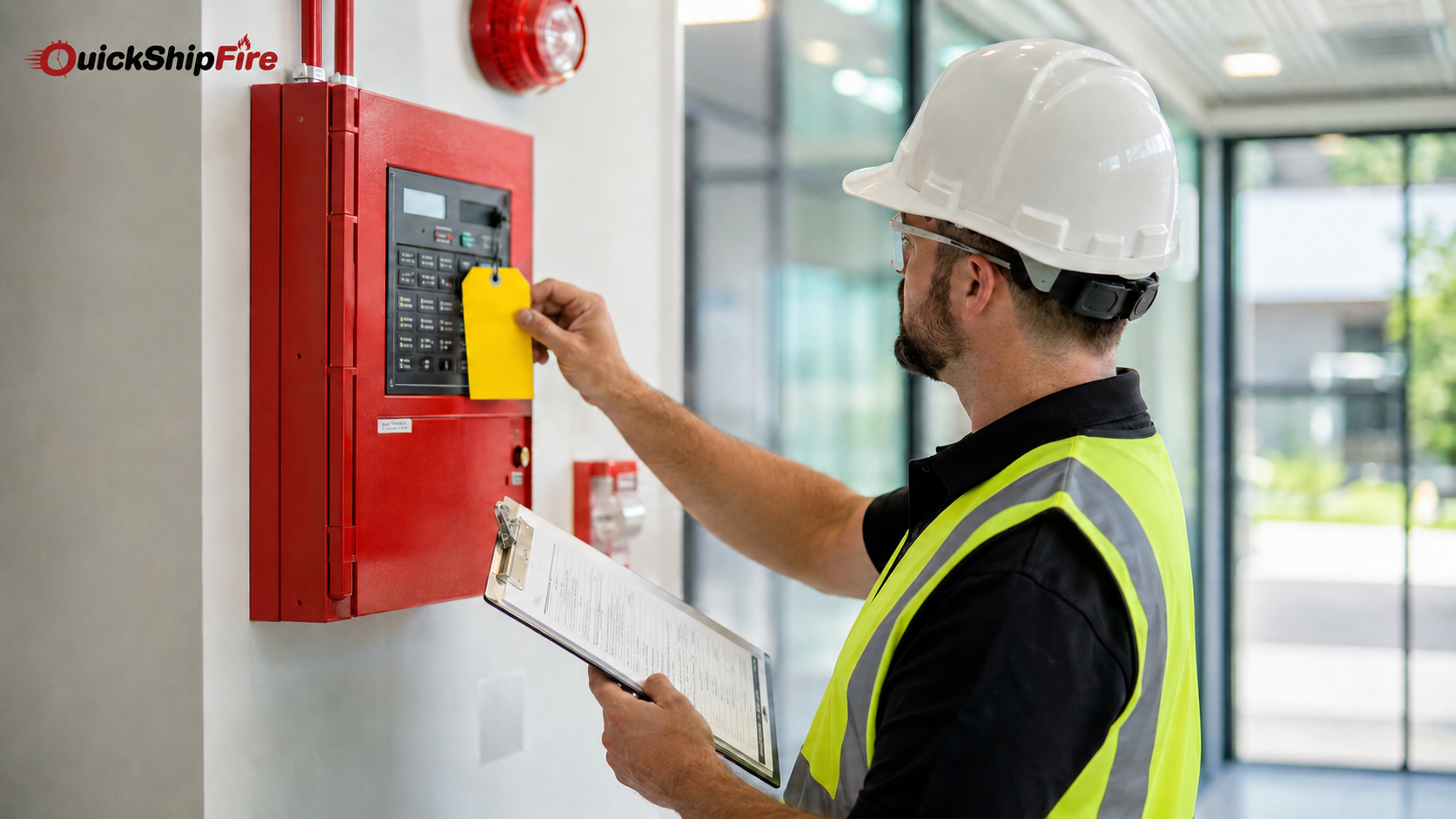
Once the fire alarm system is offline, the building relies on compensating measures rather than electronics. A trained fire watch should continuously patrol the affected area, carrying a means to contact the fire department and to alert occupants if a fire breaks out. Portable extinguishers should be staged and ready. The coordinator should also attach impairment tags to the fire alarm control panel or annunciator so no one unknowingly assumes the fire alarm system is fully operational.
If the work involves replacing field devices such as pull stations, the team should minimize the number of zones offline at any one time. On large systems that take more than eight hours to test, technicians often work floor by floor, restoring each section before moving to the next so the majority of the building stays protected.
Planning maintenance or racing to recover from a failure? QuickShipFire keeps brand-new and hard-to-find fire alarm components in stock with fast U.S. shipping. Request a quote today and keep your fire alarm system downtime as short as possible.
Restoring the System to Service
Restoration is just as critical as the shutdown. The fire alarm system is not truly back until it has been tested and verified. Before declaring the impairment over, the coordinator should:
- Perform all applicable acceptance and functional tests so detection and alarm signaling are confirmed operational.
- Remove impairment tags only after testing proves the system is fully restored.
- Notify the monitoring company to return all zones to normal alarm transmission.
- Inform supervisors and occupants that protection has been restored, and update every related record.
Required Notifications and the 8-Hour Rule
Notifications are the backbone of any impairment program, and the timelines are defined by code. Under NFPA 72, the National Fire Alarm and Signaling Code, the 2025 edition requires that the building owner be notified of an impairment, whether of the whole fire alarm system or part of it, within eight hours. Deficiencies that are found must still be reported to the owner in writing within twenty-four hours.
Field crews increasingly satisfy the eight-hour rule with a phone call from the site followed by written confirmation, or with digital reporting tools that generate an immediate, time-stamped notice. Whatever the method, the goal is the same: the owner and the AHJ should never be left unaware that protection has been reduced.
Impairment Tags and Documentation
A physical impairment tag is the simplest and most visible safeguard in the entire process. The tag is attached to the alarm panel, the annunciator, or the affected device, and it states clearly that the fire alarm system, or a portion of it, is out of service. It also signals that authorization is required before the fire alarm system can be shut down further. Standardized tags should include the reason for the impairment, the start time, the expected restoration time, and a contact name.
Strong documentation goes beyond the tag. A complete impairment record captures the building name, the type and extent of the impairment, the reason, the personnel involved, the notifications made, and the restoration test results. This paperwork is what an inspector or insurer will ask for, and it is what proves the organization acted responsibly.
Planned vs. Emergency Impairments at a Glance
The table below summarizes how the two most common impairment types compare so teams can respond appropriately to each.
| Factor | Planned Impairment | Emergency Impairment |
| Trigger | Scheduled testing, maintenance, or upgrades | Unexpected failure, damage, or power loss |
| Lead time | Days or weeks to prepare | Immediate, no advance warning |
| Notifications | Sent before work begins | Sent as soon as the failure is discovered |
| Fire watch | Arranged in advance | Deployed urgently |
| Documentation | Pre-completed impairment form | Completed during and after the event |
Common Mistakes That Compromise Compliance
Even experienced teams slip up. Watch for these recurring errors that quietly undermine a fire alarm system impairment program:
- Assuming occupants already know about the impairment instead of formally notifying them.
- Skipping the fire watch for a short shutdown, even though no impairment is too brief to skip compensating measures.
- Forgetting to take the monitoring zones off test, which leaves the building unmonitored after the work is done.
- Returning the system to service without testing the notification appliances that occupants depend on to hear and see an alarm.
- Leaving impairment tags on after restoration, which causes confusion during the next service visit.
Conclusion
A fire alarm system impairment does not have to be a crisis. With a named coordinator, a clear step-by-step procedure, timely notifications under the eight-hour rule, a diligent fire watch, and complete documentation, a fire alarm system shutdown becomes a controlled, low-risk event. The organizations that handle impairments best are simply the ones that plan ahead, communicate early, and verify everything before they walk away.
When the difference between a short impairment and a long one comes down to having the right part on the shelf, sourcing matters. QuickShipFire specializes in brand-new and obsolete components, from panels and boards to power supplies, so your fire alarm system spends less time offline. If you are not sure which part you need, our team is glad to help.
Frequently Asked Questions
What is a fire alarm system impairment?
An impairment is any condition in which a fire alarm system, or part of it, is out of service and unable to perform its detection or notification function as designed. Impairments can be planned (for testing or upgrades), emergency (caused by an unexpected failure), or hidden (an unknown fault), and each requires compensating safety measures while the system is down.
Who is responsible for managing a fire alarm system impairment?
A designated impairment coordinator is responsible. This person authorizes the impairment, ensures notifications are sent, arranges a fire watch and other compensating measures, and confirms the fire alarm system is fully tested before it returns to service. If no coordinator is appointed, regulators typically hold the building owner accountable.
How quickly must an impairment be reported under NFPA 72?
The 2025 edition of the National Fire Alarm and Signaling Code requires that the building owner be notified of an impairment to the whole fire alarm system or part of it within eight hours. Any deficiencies discovered must also be reported to the owner in writing within twenty-four hours.
Do I need a fire watch every time the system is impaired?
In almost all cases, yes. A trained fire watch is the standard compensating measure whenever a fire alarm system is offline, regardless of how short the impairment is expected to be. The fire watch continuously patrols the affected area and is able to alert occupants and call the fire department if a fire occurs while the fire alarm system is down.
Where should an impairment tag be placed?
Impairment tags are typically attached to the alarm panel or annunciator, and to the specific affected device when practical. The tag identifies that the fire alarm system, or a portion of it, is out of service and warns that authorization is required before any further shutdown.
What is the difference between a planned and an emergency impairment?
A planned impairment is scheduled in advance for work such as testing, maintenance, or upgrades, which gives the coordinator time to notify stakeholders and prepare. An emergency impairment is caused by an unexpected failure and requires the same notifications and safeguards, but on an urgent timeline.
How can I reduce fire alarm system downtime during an impairment?
The most effective way is to stage replacement parts before the work begins so failed components can be swapped immediately. Keeping spare detectors, modules, boards, and power supplies on hand, and sourcing hard-to-find parts ahead of time, prevents a quick repair from turning into a multi-day fire alarm system impairment.