
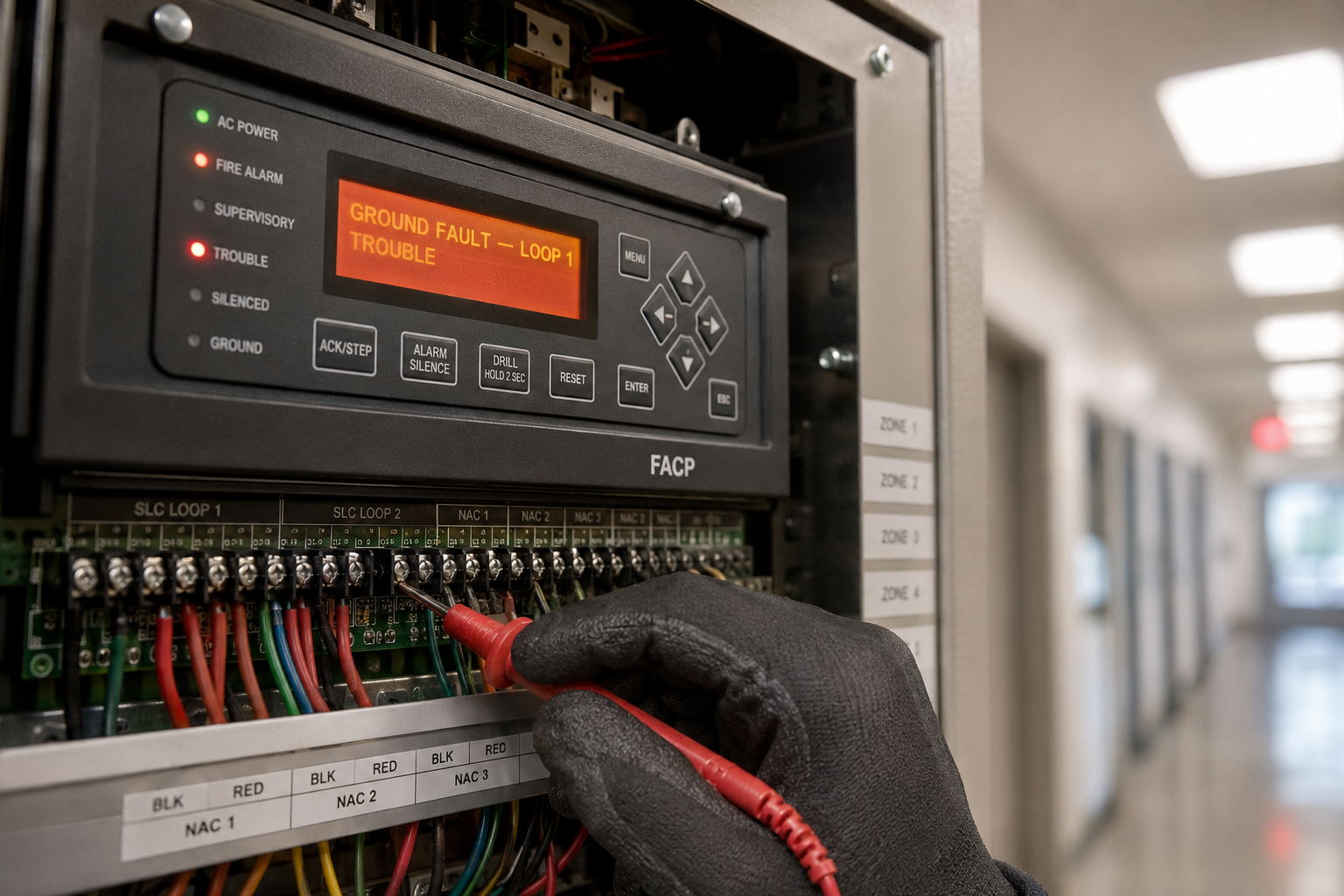
You walk into your building and the fire alarm panel is buzzing with a trouble condition. The red LED is flashing, the piezo is chirping, and your staff is asking what to do. This happens in commercial buildings every single day, and in most cases the situation is far more manageable than it looks, provided you know where to start. Proper fire alarm system troubleshooting is not a skill reserved for licensed technicians alone. Every facility manager and building operator who works with a commercial fire alarm system on a daily basis need at least a working understanding of how to read a trouble condition, what it means, and how to approach it systematically. This guide breaks down exactly that, the most common fire alarm system troubleshooting challenges you will encounter, the causes behind each one, and a clear method for working through them before your next inspection or service call. When you understand fire alarm system troubleshooting, you stop reacting and start solving.
What Does a “Trouble” Condition Actually Mean?
Before any meaningful fire alarm system troubleshooting can happen, you need to understand what the panel is actually communicating. Your fire alarm control panel operates in three distinct signal states: Alarm, Supervisory, and Trouble. An Alarm means a detector or pull station has activated potential fire event, evacuate. Supervisory indicates a monitored life safety system (like a sprinkler valve) is in an off-normal state. And a fire alarm trouble signal the one people most often mishandle means something within the fire alarm system itself has a fault that could compromise its ability to respond during a real emergency.
Think of the trouble condition like your car’s check engine light. The building is not on fire. But something under the hood needs attention before it becomes a bigger problem. When a trouble appears, the panel’s trouble LED activates and the audible piezo buzzer sounds. Pressing Acknowledge silences the buzzer and steadies the flashing indicator but it does NOT clear the condition. The fire alarm trouble signal stays on the display until the root cause is repaired and the system is reset. Knowing this single distinction is the starting point of effective fire alarm system troubleshooting.
The 6 Most Common Fire Alarm System Troubles and What Causes Them
Experience with fire alarm system troubleshooting across hundreds of commercial buildings shows the same trouble types appearing again and again. Here are the six you are most likely to encounter, and what each one is trying to tell you.
1. Ground Fault
A fire alarm ground fault happens when fire alarm wiring makes unintended contact with a grounded surface a metal conduit, a backbox, structural steel, or a cold water pipe. Fire alarm wiring uses only two conductors (positive and negative) with no dedicated ground wire. When one of those conductors finds an unintentional path to ground, the panel registers the fault immediately.
Ground faults are among the most frustrating aspects of fire alarm system troubleshooting because they can be caused by factors completely outside the fire alarm trade. A plumber pushing new pipe through a tight ceiling, an HVAC contractor drilling too close to an existing wiring bundle, or water seeping into a ceiling-mounted detector any of these can cause a fire alarm ground fault without a single fire alarm component actually failing.
2. NAC Circuit Fault
NAC stands for Notification Appliance Circuit the supervised wiring loop that energizes your horns, strobes, speakers, and bells during an alarm event. A NAC circuit fault indicates either an open (broken) or short (wire-to-wire) condition on that circuit. The consequence is serious: during a real fire event, a NAC circuit fault can mean your notification appliances do not sound at all.
The supervision mechanism is an End of Line (EOL) resistor installed at the far end of each NAC wiring run. The panel sends a small continuous supervisory current through the loop and monitors it. Any interruption open or short, immediately generates a NAC circuit fault on the panel display. This NFPA 72-required supervision exists precisely so that fire alarm system troubleshooting can catch a wiring failure before an alarm event reveals it at the worst possible time.
3. Battery Fault and Charger Trouble
Battery troubles rank among the most common service calls in the industry. When the panel cannot confirm adequate backup battery voltage, it generates a Battery Trouble condition. A dead battery, a battery degraded below rated capacity, a disconnected lead, or a blown charging fuse can all trigger this. The fix is usually straightforward, but it cannot be ignored fire alarm system troubleshooting around battery faults needs to happen quickly because a failed battery means the system has no secondary power when utility power is lost.
Charger Trouble is a separate condition. It means the panel’s charging circuit has failed. The battery may currently be fine, but without a functioning charger, any power outage will deplete it completely. NFPA 72 specifies replacement criteria based on manufacturer recommendations and measured recharge capacity most professionals follow a four-to-five year proactive replacement cycle.
4. Device Missing or SLC Communication Failure
Addressable fire alarm systems continuously poll every device on the Signaling Line Circuit (SLC) loop. If a device stops responding failed component, removed without de-programming, or a wiring break between the panel and that address the panel reports a Device Missing trouble. This is actually one of the more efficient fire alarm system troubleshooting scenarios because the system tells you exactly which address to investigate. You do not search a zone; you go to one specific device.
SLC communication failures are a step more complex. A wiring break at a certain point can cause every device downstream of that break to go missing simultaneously. In Class A (Style 7) addressable wiring, the loop is fed from both ends, so a single break does not isolate devices — in Class B (Style 4) wiring it can. Knowing your system’s wiring class is fundamental to efficient fire alarm system troubleshooting on addressable loops.
5. AC Power Loss
When the panel loses utility power tripped breaker, blown fuse on the dedicated fire alarm circuit, or an actual utility outage it switches to battery backup and generates an AC Power Trouble condition. This is often the most benign of the common troubles, but it still demands investigation and documentation.
If utility power returns and the AC trouble persists, the problem is not the utility feed. Check the dedicated circuit breaker serving the fire alarm panel it may have tripped for reasons unrelated to the power outage. Many facilities have a labeled disconnect or sub-panel for the fire alarm circuit specifically. Restore that breaker and the trouble should clear on the next polling cycle.
6. Dirty Detector and Clean Me Alert
Addressable smoke detectors continuously self-monitor their sensing chamber sensitivity and report contamination levels back to the panel. When a detector’s chamber accumulates enough dust and particulate to shift its sensitivity outside its calibrated range, it sends a CleanMe or Maintenance Alert trouble code before that contamination drives a nuisance alarm or causes the detector to miss actual smoke.
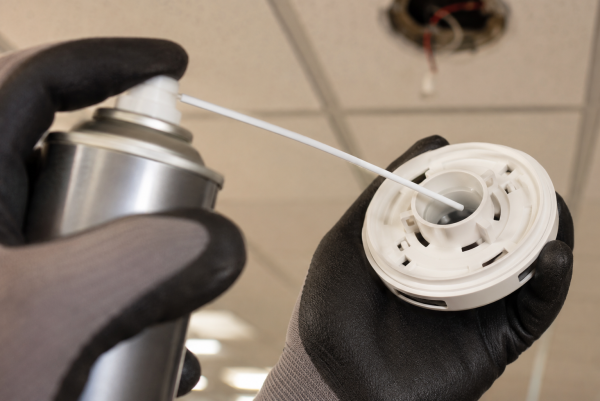
This is the system working exactly as designed. The problem occurs when building staff silence the fire alarm trouble signal without addressing it. A dirty detector left untreated will either produce false alarms as contamination pushes sensitivity too high, or fail to detect smoke as degraded sensitivity pushes it too low. Cleaning is typically straightforward compressed air directed carefully into the sensing chamber and replacement should be planned if the unit is approaching its ten-year service life. Addressing it promptly is simply good fire alarm system troubleshooting practice.
Step-by-Step: How to Approach Fire Alarm System Troubleshooting
One of the most important things to understand about fire alarm system troubleshooting is that it is a process, not a guess. The panel is telling you something specific. Your job is to read it, document it, and work through it in a logical sequence before you call a service technician, and before you reset anything. Here is a field-tested approach that works for most common trouble conditions.
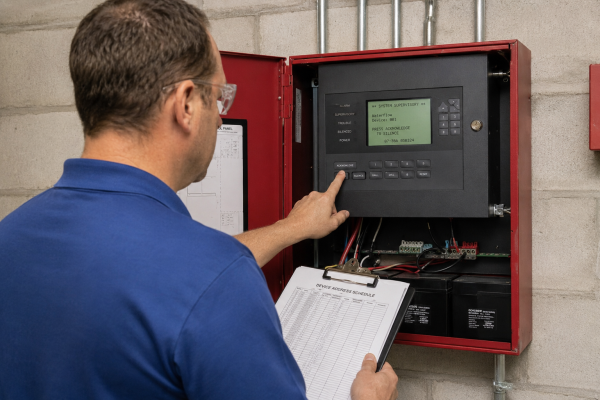
Always start at the panel display. Your fire alarm system is designed to give you specific information during the fire alarm system troubleshooting process use it. The exact wording on the display matters. Ground Fault, NAC Open, Battery Low, Device Missing, and Comm Failure each point to a completely different part of the system, and each one changes where your investigation starts. Never reset the panel before writing down exactly what it is displaying resetting temporarily clears the display but does nothing to fix the underlying problem. If the trouble condition is real, it will reappear.
Good fire alarm system troubleshooting also requires that you have accurate as-built documentation for your system available. Cross-referencing the panel’s trouble message with your system documentation device address schedule, zone maps, wiring diagrams is how you convert a generic trouble message into a specific physical location. If your documentation is outdated or missing, that itself becomes an urgent priority. We cover the documentation side in detail in our guide on fire alarm system documentation requirements for commercial buildings.
What to Check First When Your Panel Shows a Trouble:
- Read and write down the exact trouble message before touching anything. The precise wording on the panel display is your starting point different trouble types require investigation in completely different parts of the system, and losing that information by resetting the panel too quickly is a classic fire alarm system troubleshooting mistake.
- Acknowledge the trouble to silence the audible buzzer, but hold off on a full system reset until you understand the cause. Resetting clears the display temporarily it does not fix the fault. If the condition is genuine, it will return on the next polling cycle, and you will have lost the first opportunity to note exactly what it said.
- Check the AC power indicator LED before anything else if you suspect a power-related trouble. If the green AC LED is off or flashing, start at the dedicated circuit breaker for the fire alarm panel rather than on the alarm system side. Tripped breakers cause AC power trouble conditions more often than actual utility failures.
- In addressable systems, use the device address reported in the trouble message to go directly to the specific field device. Cross-reference the address against your device address schedule and as-built drawings. This is the efficiency advantage of addressable fire alarm system troubleshooting over conventional zone-based systems the panel does the locating work for you.
When to Call a Certified Technician
Not every trouble condition can or should be resolved by building staff. Some types of fire alarm system troubleshooting require a licensed technician with the right test equipment, wiring knowledge, and field experience. Know when to escalate rather than spending hours chasing a problem beyond your access or expertise.
A fire alarm ground fault is a good example. Finding the specific wire location where insulation has failed and the conductor is contacting ground requires a multimeter, a systematic approach to isolating circuit sections, and the kind of pattern recognition that comes from having traced dozens of them. Intermittent ground faults those that appear and disappear with temperature changes or building vibration are especially difficult. Repeated device failures on the same SLC loop, persistent communication errors after reset, and any trouble condition you cannot trace to a documented cause within your system drawings all warrant a NICET-certified technician. And regardless of the situation, never leave a trouble condition unresolved for more than 24 hours. Your building is operating with an impaired life safety system for every hour that trouble is ignored.
Preventing Troubles Before They Start: Maintenance That Actually Works
The honest reality about fire alarm system troubleshooting is that most of it is avoidable. The majority of service calls for trouble conditions trace back to deferred maintenance batteries not replaced on schedule, detectors not cleaned, conduit entries not inspected, notification appliances never tested between annual inspections. A consistent, realistic maintenance program eliminates the most common triggers before they ever generate a trouble condition.
Most cases of fire alarm panel beeping troubleshooting that facilities managers face at inconvenient hours evenings, weekends, first thing Monday morning are directly traceable to maintenance tasks that were overdue. The fire alarm system is one of the few pieces of building infrastructure where skipping a maintenance step has a direct life-safety consequence, not just an operational one.
A Practical Fire Alarm Maintenance Checklist:
- Test notification appliances quarterly, not just annually. Horns and strobes can fail open-circuit in a way that passes basic continuity supervision but produces no sound during a live alarm test. Quarterly functional testing catches what NFPA-required annual testing alone can miss, and it eliminates the scenario where a NAC circuit fault during an actual alarm event comes as a surprise.
- Replace backup batteries proactively on a four-to-five year cycle regardless of apparent condition. A battery that reads acceptable voltage at rest can still fail under the high-rate discharge demands of a full alarm event. Battery-related fire alarm system troubleshooting calls are far less common in facilities that replace on schedule rather than waiting for a Battery Trouble condition to appear on the panel.
- Clean addressable smoke detectors every six to twelve months using compressed air. Accumulation of dust and particulate in the sensing chamber is the leading cause of CleanMe alerts and false alarms in commercial buildings. If a unit is within two years of its ten-year service life, plan for replacement rather than continued cleaning cycles.
- Inspect conduit entries, junction boxes, and ceiling-mounted device locations annually for moisture intrusion. Water ingress is the primary cause of fire alarm ground faults in commercial buildings more than installation error, more than physical damage. Pay particular attention to exterior wall penetrations, mechanical rooms, and any area with known condensation or plumbing above the ceiling.
The Real Cost of Ignoring a Trouble Condition
Every trouble condition left unresolved carries compound costs that go well beyond the service call it eventually requires. From a purely practical fire alarm system troubleshooting standpoint: an unresolved fire alarm ground fault can mask a second fault on the same circuit – panels cannot reliably pinpoint a second ground fault location while the first remains. A lingering NAC circuit fault means your horns and strobes will not activate during an actual alarm event regardless of what else the system does correctly.
Beyond the immediate safety consequences, unresolved trouble conditions result in failed AHJ inspections, insurance policy violations in some coverage structures, and documented liability exposure if a fire event occurs while the system was in a known impaired state. The paper trail from a panel showing a persistent trouble for sixty days is not something you want reviewed by an insurance adjuster or a fire marshal after an incident.
Understanding Fire Alarm Trouble Codes by Category
One of the things that makes fire alarm system troubleshooting more approachable is that trouble codes despite their variety of specific wordings across different panel manufacturers – fall into a small number of logical categories. Once you know which category a trouble belongs to, you know roughly where in the system to look, even before you reference the as-built drawings.
Trouble Code Categories at a Glance:
- Wiring Faults: Open circuits, short circuits, and ground faults all trace to the physical wiring infrastructure between the panel and field devices. These are typically the most labor-intensive aspect of fire alarm system troubleshooting because the fault can exist anywhere along potentially hundreds of feet of wire across multiple floors or building wings. Systematic section isolation with a multimeter is the standard approach.
- Power Faults: Battery Trouble, Charger Trouble, and AC Power Loss all indicate a power supply issue. While AC loss is often temporary and self-resolving, Battery and Charger faults require immediate repair to maintain the secondary power protection that NFPA 72 mandates. These are the fire alarm system troubleshooting conditions most directly tied to code compliance status.
- Device Faults: Missing devices, CleanMe alerts, and module failures. In addressable systems these are the fastest to localize – the panel reports the exact device address. Conventional zone-based fire alarm system troubleshooting for device faults requires physically checking every device in the affected zone, which is significantly more time-consuming.
- Communication Faults: DACT failures, SLC communication errors, and IP/LAN trouble conditions. A communication fault means your central monitoring station cannot receive signals from your system alarms, troubles, and supervisory conditions are not being transmitted. The system may still activate locally, but external notification and dispatch is compromised until the communication path is restored.
Tools, Documentation, and Best Practices for Efficient Troubleshooting
Effective fire alarm system troubleshooting in a commercial building environment requires more than the right technical knowledge it requires the right tools and accurate supporting documentation. A technician or facility manager attempting fire alarm system troubleshooting without current as-built drawings, a device address schedule, and at minimum a basic multimeter is working blind. The investment in keeping documentation current pays for itself the first time a ground fault needs to be traced or a missing device address needs to be cross-referenced to a physical location.
Beyond documentation, the tools that matter most in fire alarm system troubleshooting work include: a calibrated digital multimeter for measuring circuit resistance and continuity; a fire alarm system test kit or smoke detector test aerosol for functional device testing; current manufacturer programming software for addressable systems to check device configurations and event logs; and access to the panel’s historical event log, which often shows when a trouble first appeared, how long it has been present, and whether it is intermittent or constant. Event logs are one of the most underutilized resources in commercial fire alarm system troubleshooting they tell you the timeline, and the timeline often tells you the cause.
Conclusion
Troubles on your fire alarm panel are not a system malfunction they are the system working exactly as designed, flagging a fault before it becomes a failure during a real emergency. Whether you are facing a straightforward AC power trouble or a persistent intermittent ground fault that only shows up on hot afternoons, the fundamentals of fire alarm system troubleshooting remain the same: read the panel carefully, document the exact condition, investigate methodically, and never ignore a trouble condition for extended periods. Buildings where fire alarm system troubleshooting is treated as a routine, documented process consistently outperform those where troubles are silenced and forgotten on inspections, on insurance reviews, and most importantly, during actual emergency events.
At QuickShipFire, we have been helping facility managers, fire alarm contractors, and building owners source the right fire alarm components since 2017. From replacement modules and fire alarm boards to panels, pull stations, and hard-to-find specialty devices, our team understands the urgency that comes with a system in trouble condition. If you need a part fast, we stock the brands that matter and we ship the same day. Reach out we are happy to help you get back to System Normal.
Frequently Asked Questions
Q1: What is a fire alarm trouble signal and is it an emergency?
A fire alarm trouble signal means there is a fault somewhere within the fire alarm system — not an active fire. It indicates a condition that could compromise the system’s ability to detect or respond during a real emergency. You should address it promptly through proper fire alarm system troubleshooting, but a trouble signal alone does not require immediate building evacuation. Acknowledge the signal, document exactly what is displayed, and arrange for investigation or repair as quickly as possible.
Q2: What causes a fire alarm ground fault?
A fire alarm ground fault occurs when alarm system wiring makes unintended contact with a grounded surface a metal conduit, a junction box, structural steel, or similar grounded building element. The most common causes are wire insulation damaged by other trades working near conduit runs, water ingress at a ceiling-mounted smoke detector, and abraded cable insulation in tight conduit bends. Ground faults can be intermittent, making them one of the more challenging fire alarm system troubleshooting scenarios.
Q3: How do I clear a NAC circuit fault on my fire alarm panel?
A NAC circuit fault indicates an open or short condition on your notification appliance wiring. Begin your fire alarm system troubleshooting by inspecting the NAC circuit for loose terminations, damaged wire insulation, a failed horn or strobe device, or a missing or incorrectly valued End of Line resistor. The fault will not clear until the wiring integrity is fully restored and the panel is reset. If the fault returns after reset, a wiring short in a conduit or junction box is the likely remaining cause.
Q4: Why is my fire alarm panel beeping after I replaced a smoke detector?
Post-replacement panel beeping is a common fire alarm panel beeping troubleshooting scenario in addressable systems. The most frequent cause is that the replacement detector has a different device address than the unit it replaced or the address was not set correctly before installation. The panel may also generate a trouble if the replacement detector was not fully seated in its base, leaving the supervised circuit open. Verify the address setting on the new device against your system’s device address schedule.
Q5: How often should fire alarm system batteries be replaced?
NFPA 72 requires battery replacement per the manufacturer’s schedule or when recharged voltage and current fall below published specifications. In commercial fire alarm system troubleshooting practice, most professionals replace sealed lead-acid batteries every four to five years proactively regardless of apparent condition because battery capacity degrades gradually and is not detectable by voltage measurement alone under no-load conditions. Batteries in temperature-extreme environments should be evaluated more frequently.
Q6: Can I silence a fire alarm trouble without fixing it?
You can Acknowledge a trouble signal to stop the panel buzzer, but the trouble condition remains active until the underlying fault is repaired. Silencing suppresses the audible alert only the panel continues to display the condition, log it in the event record, and flag it during inspection. Repeated acknowledgment without repair is a documented pattern in AHJ inspections and fire alarm system troubleshooting reviews, and it can result in code violations and failed inspections in most jurisdictions.
Q7: What is the difference between a trouble and a supervisory signal on a fire alarm panel?
A trouble signal indicates a fault within the fire alarm system itself a wiring issue, a failed device, a battery problem, or a communication error that fire alarm system troubleshooting must address. A supervisory signal indicates that a monitored fire protection system a sprinkler valve, a fire pump, or a dry system air pressure switch is in an off-normal condition. Both states require attention and should be reported to your service provider, but neither indicates that an active fire has been detected.