
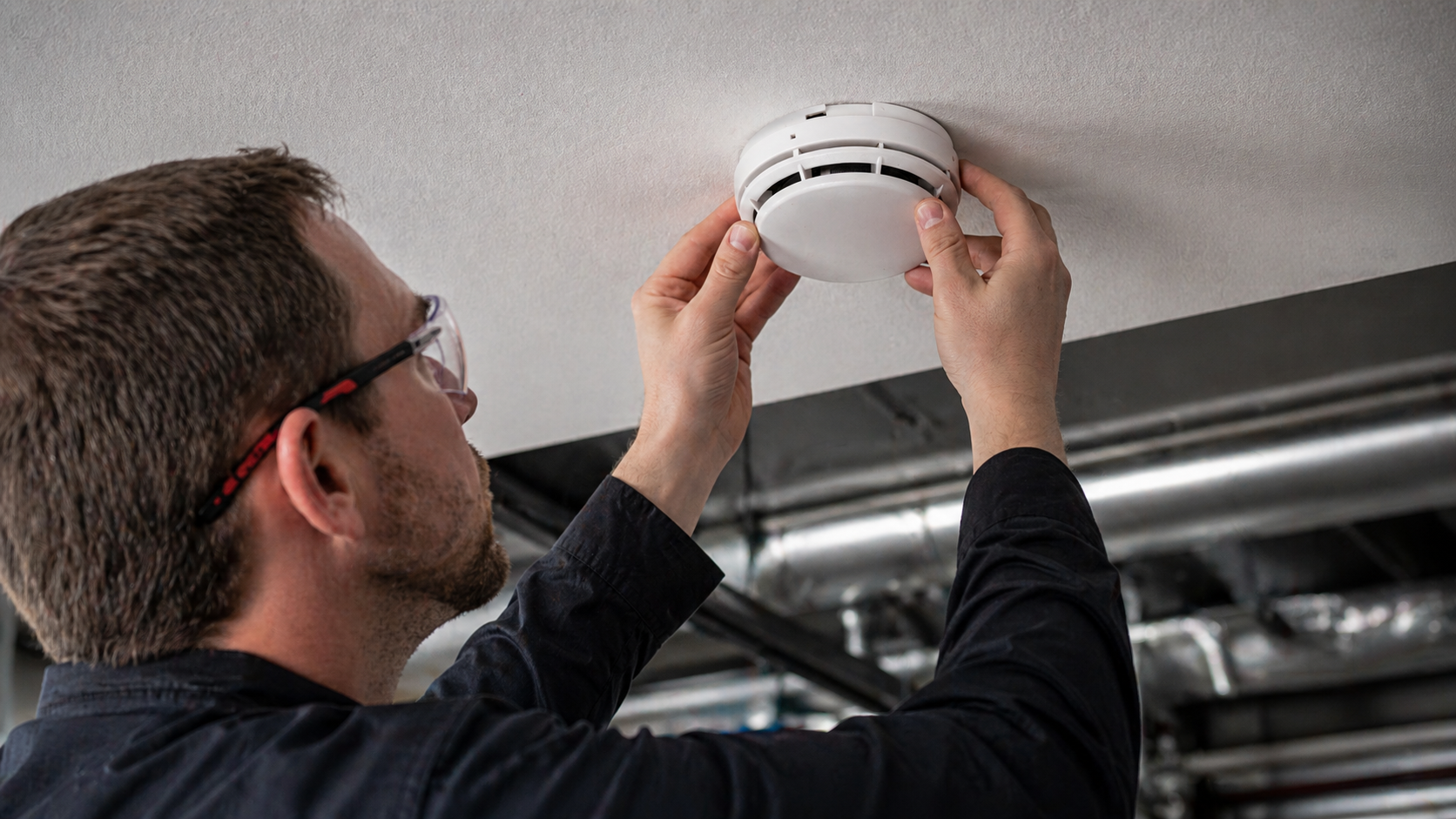
Selecting the correct smoke sensor for a Simplex fire alarm panel is one of the most important decisions a fire-life-safety professional will make during system design or upgrade work. The Simplex TrueAlarm platform is built around analog-addressable communication, intelligent drift compensation, and panel-side sensitivity control, which means a wrong sensor model can lead to compatibility issues, wasted budget, or even failed acceptance testing. With multiple TrueAlarm photoelectric sensor variants on the market in 2026, plus competing options like the FSP-851R photoelectric smoke detector and the newer FSP-951R photoelectric smoke detector from Notifier, buyers need a clear framework for matching the right device to their panel, application, and code requirements. This guide walks through every major factor from protocol compatibility and base type to sensitivity programming and UL 268 7th Edition compliance so you can specify with confidence and avoid expensive missteps.
Understanding TrueAlarm Photoelectric Technology
TrueAlarm is Simplex’s analog-addressable detection platform, and the TrueAlarm photoelectric sensor is its workhorse for early smoke detection in commercial and institutional buildings. Unlike conventional detectors that send a simple alarm or no-alarm signal, the TrueAlarm device continuously transmits a real-time analog smoke level back to the fire alarm control panel. The panel then applies drift compensation, multi-stage thresholds, and pre-alarm logic in software, allowing facility teams to fine-tune behavior without ever opening the device.
The sensor itself uses a stable pulsed infrared LED light source paired with a silicon photodiode receiver. Smoke entering the chamber scatters the infrared beam, and the photodiode converts that scattered light into an electrical signal proportional to particle density. Because photoelectric sensing reacts most strongly to the larger combustion particles produced by slow-smoldering fires, it is particularly effective in offices, hotels, residential corridors, hospitals, and other commercial environments where most real fire events begin as smolder rather than fast flame. This is also the reason the technology has overtaken ionization detection in modern code-driven specifications.
Match Your Sensor to Your Simplex Panel Series
The most common mistake in detector selection is choosing a device that is not properly compatible with the host control panel. A TrueAlarm photoelectric sensor must communicate with its panel using the correct protocol, must report under a supported address range, and must align with the panel’s firmware revision.
IDNet vs MAPNET II Communication Protocols
Simplex addressable systems use one of two two-wire communication protocols: IDNet (the modern standard) and MAPNET II (the legacy protocol still found on many older buildings). The 4098-9714 TrueAlarm photoelectric sensor supports both, with the panel auto-selecting the correct mode. This dual-protocol behavior is a major reason the 4098-9714 remains so widely specified across both retrofit and new-construction projects in 2026.
Compatible Panel Models
Modern TrueAlarm devices are designed for the Simplex 4100ES, 4010ES, and 4007ES platforms. Older buildings may still operate the 4020, 4100U, 4120, or 4008 series, and most TrueAlarm photoelectric devices maintain backward compatibility with these legacy panels though feature sets are sometimes reduced. Always verify panel firmware revision before purchasing replacement units, because sensitivity programming options and pre-alarm thresholds vary by panel generation.
Key TrueAlarm Photoelectric Sensor Models in 2026
Several variants of the TrueAlarm photoelectric sensor are available in 2026, and choosing the right one depends entirely on the application:
- 4098-9714: the standard plug-in photoelectric device for general open-area protection in offices, classrooms, hospitals, and similar commercial environments
- 4098-9754: a multi-criteria unit combining photoelectric and thermal sensing, ideal for high-value or mission-critical spaces where both smoke and heat events must be detected
- 4098-9756: a duct smoke detector housing with a factory-installed photoelectric head, used for HVAC supply and return ducts in systems above 2,000 CFM
- 4098-9601: an earlier-generation TrueAlarm photoelectric sensor still in widespread service, often replaced one-for-one as part of routine modernization
Selecting between these models comes down to the type of space being protected and whether environmental conditions such as dust, airflow, or temperature swings call for a multi-sensor or duct-mounted approach.
Sensitivity Settings and UL 268 7th Edition Compliance
One of the most powerful features of the TrueAlarm platform is panel-controlled sensitivity. Each TrueAlarm photoelectric device supports up to seven selectable sensitivity levels ranging from 0.2% to 3.7% per foot of smoke obscuration. The lower settings (0.2%, 0.5%, 1%) are reserved for clean-air applications such as data centers or telecommunications rooms, while the standard range of 1.5% to 3.1% per foot covers the majority of commercial occupancies.
Under UL 268 7th Edition the standard now enforced across most U.S. jurisdictions — fixed sensitivity settings above 1.0% per foot are not compliant for general-area smoke detection. This is a major reason newer panels run an automatic algorithm that adjusts sensitivity dynamically between 1.25% and 3.1% per foot, balancing fast response with nuisance-alarm immunity. When specifying a replacement device, always confirm the model has been UL 268 7th Edition listed and that the host panel firmware supports the corresponding behaviour.
How TrueAlarm Compares with Notifier FSP-851R and FSP-951R
Buyers cross-shopping the TrueAlarm platform often consider Notifier’s photoelectric line as well, particularly when comparing brand ecosystems for new construction or retrofit projects. The two most common alternatives are the FSP-851R and the newer FSP-951R.
The FSP-851R photoelectric smoke detector was Notifier’s standard remote-test photoelectric device for many years, designed to integrate with DNR and DNRW duct detector housings on Flash Scan and CLIP loops. It has since been discontinued by the manufacturer. The FSP-951R photoelectric smoke detector is the direct replacement, offering an enhanced optical chamber, a more contemporary low-profile design, and improved performance under UL 268 7th Edition.
In practical terms, the choice between TrueAlarm and Notifier comes down to existing infrastructure. Buildings already equipped with Simplex panels (4100ES, 4010ES, 4007ES) should specify TrueAlarm devices to maintain protocol and base compatibility, while sites running Notifier ONYX or NFS panels should choose the FSP-951R. Mixing brands within a single fire alarm system is not supported and will fail acceptance testing.
Market Data: Photoelectric Detector Adoption Trends
The photoelectric detection segment continues to outpace ionization-based devices in commercial and institutional construction, driven by stricter UL 268 7th Edition requirements, growing awareness of nuisance-alarm reduction, and global building-code modernization.
Global Smoke Detector Market – Photoelectric Technology Trend (2025 – 2034)
| Year | Total Market Value (USD) | Photoelectric Segment Share |
| 2025 | $3.81 Billion | ~55% |
| 2026 | $4.08 Billion | ~58% |
| 2028 | ~$4.65 Billion | ~60% |
| 2030 | ~$5.30 Billion | ~62% |
| 2034 | $7.12 Billion | ~65% |
Source: Fortune Business Insights – Smoke Detector Market Report 2026–2034 (CAGR 7.20%); Future Market Insights Smoke Alarm Market 2025–2035 (photoelectric leads at 55% share in 2025); Grand View Research Smoke Detector Industry Report (photoelectric held 60.3% revenue share by technology in 2024).
The data reinforces a clear directional shift: photoelectric platforms like TrueAlarm and the Notifier 951 series are absorbing market share that was historically held by ionization detectors, primarily because photoelectric technology delivers stronger real-world performance against the slow-smoldering fires most common in modern buildings.
Selection Criteria: 5 Factors That Matter Most
When narrowing down which TrueAlarm photoelectric sensor model to specify for your project, the following five factors should drive every decision:
- Panel compatibility: Confirm IDNet or MAPNET II protocol match and panel firmware revision before ordering any device
- Application environment: Open-area, duct-mounted, or multi-criteria sensing each calls for a different model in the TrueAlarm family
- Sensitivity programming needs: Spaces with cleaner air can use lower obscuration settings, while restaurants and parking structures need higher thresholds and dynamic adjustment
- UL 268 7th Edition listing: Ensure both the sensor and its host panel are listed under the current edition to avoid AHJ rejection
- Base type and footprint: Standard, sounder, relay-driver, or duct-housing bases all change the order configuration
A correctly specified detector will satisfy code, integrate cleanly with the existing system, and avoid the rework costs that come with mismatched components.
Common Selection Mistakes to Avoid
Even experienced specifiers occasionally make selection errors that show up only at acceptance testing. The most frequent issues we see at QuickShipFire include:
- Ordering a current-generation TrueAlarm photoelectric sensor for a legacy panel that has not been firmware-updated, leading to unsupported communication
- Mixing Simplex and Notifier devices on the same loop in the hope they will interoperate, which they will not
- Specifying low-sensitivity settings (under 1% per foot) for general-area protection, which violates UL 268 7th Edition for most occupancies
- Selecting the wrong base, such as ordering a sounder base when the application only requires a standard mounting base, or vice versa
- Forgetting to verify that duct applications use the proper TrueAlarm duct housing rather than a standard plug-in chassis
A simple pre-order checklist that confirms panel model, protocol, base, and listing edition prevents virtually every one of these issues.
Installation, Bases, and Long-Term Maintenance
Once the correct TrueAlarm photoelectric sensor is selected, installation must follow Simplex’s mounting and spacing guidelines from the published 4098 series application data. On smooth ceilings, a 30-foot spacing rule typically applies, although AHJ-specific reductions may be required for sloped or beamed ceilings. Each detector mounts to a base such as the 4098-9792 standard base, 4098-9789 base with relay or LED accessory connections, 4098-9791 supervised relay-driver base, or 4098-9794 sounder base.
Long-term maintenance is simplified by the platform’s drift-compensation algorithm. As dust and airborne particulates accumulate inside the sensing chamber over time, the panel automatically adjusts the baseline reference, and once contamination crosses a threshold, the panel reports a “dirty” or “excessively dirty” trouble for that specific sensor address. This pinpoint reporting eliminates the guesswork involved with conventional detectors and makes preventative cleaning schedules far more efficient, while also helping facility teams document compliance with NFPA 72 testing intervals.
Conclusion: Find the Right Sensor with QuickShipFire
Choosing the right TrueAlarm photoelectric sensor for your Simplex fire alarm panel does not have to be complicated. By matching protocol, panel firmware, application environment, sensitivity needs, and base type, specifiers can confidently select the precise model that will deliver code-compliant, reliable, and maintenance-friendly performance for years to come. Whether you are upgrading legacy 4100U infrastructure, replacing aging 4098-9601 heads, or specifying a complete new 4100ES installation, the TrueAlarm family covers virtually every realistic application and for sites operating Notifier panels, the FSP-951R photoelectric smoke detector remains the natural next-generation successor to the discontinued FSP-851R.
QuickShipFire is your trusted source for brand-new Simplex TrueAlarm devices, original Notifier detectors, and accessories from every major fire-life-safety manufacturer. With more than 20 years of fire safety expertise, fast nationwide shipping, original manufacturer packaging, and a knowledgeable team that helps locate hard-to-find parts, we make detector selection and procurement effortless. Every product we ship is backed by warranty protection and our daily commitment to keeping your fire alarm system compliant, dependable, and ready to perform.
Frequently Asked Questions
Q1: Which Simplex panels support the 4098-9714 TrueAlarm photoelectric sensor?
The 4098-9714 is compatible with 4007ES, 4010, 4010ES, 4100ES, 4100U, and 4008 series control units, with reduced features on some legacy platforms.
Q2: Can a TrueAlarm device work on a Notifier fire alarm panel?
No, TrueAlarm devices use Simplex IDNet or MAPNET II communications and are not compatible with Notifier Flash Scan or CLIP loops, regardless of physical fit.
Q3: What is the sensitivity range of a TrueAlarm photoelectric device?
The platform offers seven selectable sensitivity levels from 0.2% to 3.7% per foot of smoke obscuration, all configured at the host fire alarm control panel.
Q4: Is the FSP-851R photoelectric smoke detector still available for purchase?
The FSP-851R has been discontinued by Notifier and is officially replaced by the FSP-951R for both new installations and field replacements going forward.
Q5: How does drift compensation reduce false alarms in TrueAlarm devices?
The host panel continuously tracks each sensor’s average value, automatically adjusting the alarm baseline to compensate for dust accumulation and component aging.
Q6: What is the difference between the 4098-9714 and 4098-9754 sensors?
The 4098-9714 is photoelectric only, while the 4098-9754 combines photoelectric smoke sensing with thermal sensing for multi-criteria detection in one unit.
Q7: Are TrueAlarm photoelectric devices UL 268 7th Edition listed?
Current production TrueAlarm photoelectric devices meet UL 268 7th Edition when used with compatible panel firmware; always verify listing on the data sheet before purchase.
Q8: How often should TrueAlarm devices be tested?
NFPA 72 requires functional testing once per year and visual inspection twice per year, with the panel automatically reporting dirty or trouble conditions in between.
Order Genuine Simplex TrueAlarm Sensors from QuickShipFire Today
Need to replace a TrueAlarm photoelectric sensor, source a new FSP-951R photoelectric smoke detector, or locate a hard-to-find FSP-851R photoelectric smoke detector for a legacy system? QuickShipFire stocks brand-new, manufacturer-packaged Simplex, Notifier, Fire-Lite, Gamewell FCI, Silent Knight, and System Sensor products with industry-leading shipping speed and dedicated technical support. Contact our specialists for personalized model recommendations, bulk pricing, or help identifying the correct base, housing, or accessory for your specific Simplex fire alarm panel installation.
📞 Call us at +1 (833) 747-7845 | 🌐 Visit www.quickshipfire.com