
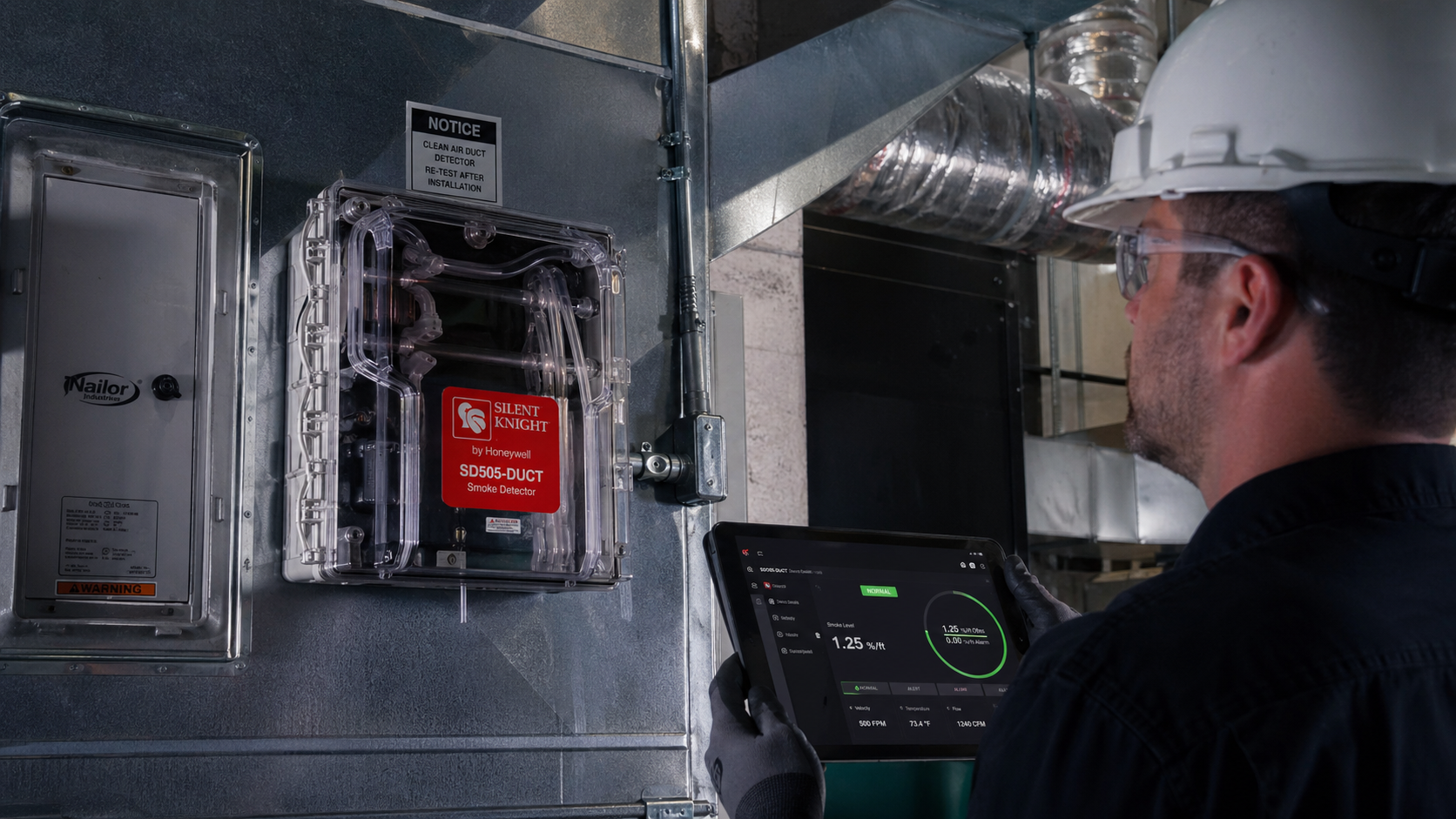
The fire safety industry is witnessing one of its most transformative shifts in decades, as wireless technology rapidly reshapes how commercial and industrial buildings monitor airflow for smoke. Traditional hard-wired systems, while reliable, have long been associated with high installation costs, lengthy commissioning timelines, and disruptive retrofit projects in older facilities. The arrival of advanced wireless duct detectors solutions in 2026 is changing that narrative entirely. These next-generation devices combine the proven sampling-tube methodology of legacy systems with cloud connectivity, mesh networking, and predictive analytics, giving facility managers a level of insight that was unavailable five years ago. As building codes tighten and HVAC infrastructure becomes more complex, demand for smarter, faster, and more flexible duct smoke detector technology has never been stronger across North American markets.
Why Wireless Duct Detection Is Reshaping HVAC Fire Safety
Hard-wired smoke detection systems have served the fire-protection industry well for several decades, yet their limitations have become increasingly apparent in the era of smart, connected buildings. Pulling new conduit through finished ceilings, coordinating multiple trades, and disrupting tenant operations adds significant cost to every project, sometimes accounting for forty to sixty percent of a fire alarm upgrade’s budget. A wireless duct detectors eliminates much of that overhead by using secure radio-frequency communication between the field device and the fire alarm control panel, removing invasive cable runs while maintaining full supervision integrity.
Beyond cost savings, wireless solutions offer unmatched flexibility for modern building portfolios. They can be deployed in heritage structures where invasive wiring is prohibited, in temporary installations like modular hospitals or pop-up data centers, and in expanding facilities where HVAC layouts evolve frequently. The ability to reposition devices without removing cabling represents a meaningful advantage in industries where downtime translates directly into lost revenue.
Market Growth Data: Why Wireless HVAC Detection Is Surging
The numbers behind the wireless transition tell a compelling story. According to current industry research, the global market for HVAC-based smoke detection equipment is on a steep upward trajectory, fueled by stricter fire codes, rapid commercial construction, and growing IoT adoption.
Global HVAC Smoke Detection Market Forecast (2026 – 2035)
| Year | Market Value (USD) | Key Growth Driver |
| 2026 | $1.93 Billion | Stricter NFPA / IBC enforcement |
| 2028 | ~$2.20 Billion | IoT-enabled retrofits accelerate |
| 2030 | ~$2.52 Billion | Smart-building integration mainstream |
| 2032 | ~$2.88 Billion | Predictive maintenance becomes standard |
| 2035 | $3.50 Billion | AI-driven false-alarm reduction |
Source: Morgan Reed Insights research (CAGR 6.83% for the HVAC smoke detection segment); Grand View Research U.S. commercial market projection (CAGR 5.0% through 2030); Mordor Intelligence smoke detector market analysis (IoT segment growing at 9.61% CAGR through 2031).
The data confirms what facility executives already see on the ground: connected HVAC fire safety is no longer optional. The IoT-enabled segment alone is projected to grow at nearly double the rate of traditional stand-alone units, reflecting a clear preference for systems that deliver real-time visibility, automated diagnostics, and centralized compliance documentation.
Core Components of a Modern Wireless System
Although wireless smoke detection technology may sound complex, its architecture follows a logical, modular design built around three primary subsystems. Understanding each layer helps engineers and facility teams select the right configuration for their environment.
Sensing Module
The sensing module remains the heart of every device, housing the photoelectric chamber, sampling tubes, and airflow verification sensors. Modern chambers include anti-fog coatings, hydrophobic membranes, and dust-resistant geometry that significantly reduce false alarms versus legacy designs. Many units now incorporate dual-wavelength optical sensing, improving the device’s ability to distinguish genuine smoke from contaminants such as steam, dust, or humidity spikes.
Wireless Communication Layer
The communication layer is what truly defines a wireless device. Most modern units operate on encrypted sub-GHz mesh networks or proprietary protocols certified for fire alarm use. These networks self-heal automatically, meaning if one node loses connection, signals reroute through neighboring devices, preserving end-to-end supervision and ensuring no single point of failure exists.
Cloud Dashboard and FACP Integration
The final layer connects the duct detectors to either a traditional fire alarm control panel through a wireless gateway, or directly to a cloud-based building management dashboard. This dual-path capability ensures legacy compliance while unlocking modern analytics, mobile alerts, and multi-site portfolio management.
Top Advantages of Switching to Wireless Technology
Property owners, contractors, and engineers consistently cite a similar list of benefits when justifying the move to wireless HVAC detection. The advantages span operational and strategic categories, supporting both project economics and long-term portfolio value.
- Lower installation costs, since conduit, junction boxes, and trenching are dramatically reduced many retrofit projects report 30 to 50 percent savings versus equivalent hard-wired upgrades
- Faster deployment timelines, with many installations completed in hours rather than days, which is critical for tenant-occupied spaces
- Real-time supervision and alerts delivered through mobile applications and centralized dashboards, ensuring no event, fault, or trouble signal goes unnoticed
- Predictive maintenance capabilities that warn technicians of dust accumulation, airflow drift, or component degradation weeks before a failure occurs
- Scalability across multi-site portfolios, allowing chain retailers, hotel groups, and healthcare networks to standardize fire-safety infrastructure from a single platform
These benefits translate to lower total cost of ownership, stronger compliance posture, and a measurable reduction in unplanned downtime across the system lifecycle.
System Sensor Duct Detector Innovations Leading the Wireless Transition
Among manufacturers driving this shift, the System Sensor Duct Detectors family has emerged as a clear benchmark for innovation in the North American market. The brand consistently introduces features that align with IoT and smart-building requirements, including remote test and reset capability, plug-and-play sampling tube assemblies, magnetic test access points, and high-velocity airflow ratings designed for modern commercial duct systems.
Recent product generations from System Sensor are engineered to integrate with both addressable fire alarm panels and emerging cloud monitoring platforms. The result is a versatile duct detectors solution that simplifies inspections, reduces nuisance alarms, and supports predictive maintenance, all while maintaining full code compliance under NFPA and UL standards. For facility teams managing multiple buildings, viewing every connected unit from a single dashboard delivers operational efficiency and audit-ready documentation.
In retrofit applications, the System Sensor series remains particularly attractive because it can often replace older units within the same physical footprint, eliminating costly ductwork modifications and expensive change orders.
Compliance, NFPA 72 Standards, and UL 268A Certification
No wireless duct detectors enters the U.S. market without meeting strict third-party certification requirements. Facility managers must verify compliance before specifying any wireless solution, because non-listed devices can result in failed acceptance tests, denied insurance claims, and significant rework costs.
- NFPA 72 governs fire alarm signaling, including supervision, reset, and standby power requirements that apply equally to wired and wireless systems
- NFPA 90A mandates the placement of duct smoke detectors devices in HVAC systems exceeding 2,000 CFM on the supply side and 15,000 CFM on the return side serving multiple stories
- UL 268A is the listing standard for duct-mounted smoke detection, covering airspeed performance up to 4,000 feet per minute under realistic conditions
- International Mechanical Code (IMC) Section 606 establishes parallel installation requirements frequently referenced by local Authorities Having Jurisdiction
- FCC Part 15 and equivalent international standards govern radio-frequency emissions of any wireless device, ensuring it does not interfere with life-safety equipment
A compliant System Sensor Duct Detector or equivalent product from another major manufacturer will display visible UL 268A markings and the appropriate FCC identifiers. Always confirm these listings before purchase to avoid costly post-installation surprises.
Industries Driving Wireless Adoption in 2026
The shift toward wireless smoke detection is not happening evenly across the market. Several industries have accelerated adoption due to specific operational pressures that hard-wired solutions cannot easily address.
- Healthcare facilities, where 24/7 operation makes hard-wired retrofits nearly impossible without disrupting patient care or critical-care monitoring
- Data centers, which demand zero downtime and benefit from rapid commissioning of fire safety equipment in newly built server halls or expansion zones
- Hospitality, where guest-occupied floors cannot tolerate extended construction periods, exposed conduit, or installation noise
- Educational institutions, particularly older universities pursuing energy-efficiency upgrades alongside fire-safety modernization on tight summer-break schedules
- Industrial manufacturing, where flexible production layouts require frequent HVAC reconfiguration and fire-safety equipment must keep pace with operational change
In each of these verticals, the wireless duct smoke detector approach allows essential life-safety upgrades without halting core business operations or generating disruptive change orders.
Implementation Challenges and How to Solve Them
While the benefits are clear, no technology rollout is friction-free. Project teams should anticipate and plan for several specific challenges associated with wireless deployments to ensure smooth commissioning and long-term reliability.
- RF interference from existing wireless infrastructure, large metal HVAC components, or dense concrete construction can degrade signal reliability if not surveyed during design
- Battery management for fully wireless field devices requires a documented inspection and replacement schedule to prevent unexpected outages
- AHJ familiarity varies by jurisdiction; some inspectors are still building experience with wireless fire alarm devices, so early coordination is essential
- Cybersecurity considerations apply to any cloud-connected device, requiring encryption review, network segmentation, and regular firmware updates
- Integration with legacy panels may require approved gateway modules to ensure the existing fire alarm control panel maintains full system supervision
Engaging an experienced fire alarm integrator from the design phase typically resolves most of these challenges efficiently and ensures the system meets every code, insurance, and operational requirement on schedule.
The Future Outlook: AI, IoT, and Predictive Maintenance
Looking beyond 2026, three converging trends will shape the next generation of HVAC smoke detection. Artificial intelligence is being applied to airflow and particulate data to distinguish genuine smoke events from cooking byproducts, dust, and steam, virtually eliminating nuisance alarms in challenging environments. IoT integration is enabling automatic correlation between duct detectors alerts, building management data, and security camera feeds, providing first responders with richer situational awareness during the critical first minutes of an incident. Predictive maintenance analytics are using machine learning to forecast component failures weeks in advance, transforming fire safety into a proactive discipline.
These technologies are pushing duct smoke detector systems toward a model where they are not merely compliance devices but active participants in the building’s intelligence layer. The role of the duct detectors is evolving from a passive HVAC interlock into an intelligent, networked component of modern facility infrastructure. As insurance providers begin offering premium discounts for buildings equipped with smart fire detection, the financial argument for wireless adoption will only continue to strengthen.
Conclusion: Powering Smarter Fire Safety with QuickShipFire
The transition to wireless duct detector technology represents one of the most significant evolutions in HVAC fire safety since the introduction of photoelectric sensing itself. Faster installation, real-time visibility, predictive maintenance, and lower lifecycle costs are no longer luxury features; they are rapidly becoming the baseline expectation for modern commercial and industrial buildings. Organizations that proactively upgrade their fire-protection infrastructure will achieve stronger code compliance and unlock measurable operational, insurance, and resilience benefits.
At QuickShipFire, we specialize in supplying brand-new, manufacturer-packaged fire safety equipment from leading names including System Sensor, Notifier, Fire-Lite, Simplex, Gamewell FCI, Silent Knight, and VESDA. Whether you need a single replacement duct detector or a complete inventory of next-generation wireless devices for a multi-site rollout, our team brings 20+ years of fire and life-safety expertise paired with an unmatched commitment to fast shipping and dedicated support. Every product ships in original manufacturer packaging, backed by warranty protection and our daily commitment to keeping your safety systems compliant.
Frequently Asked Questions
Q1: Are wireless duct detectors compliant with NFPA 72 in 2026?
Yes, wireless models that carry UL 268A and proper FCC certifications meet NFPA 72 requirements when installed and supervised correctly. Always confirm acceptance with your local AHJ before final specification.
Q2: Can a wireless detector replace an open-area smoke detector?
No, NFPA 72 specifically prohibits this substitution because the device cannot detect smoke when the HVAC fan is off. The two device types serve fundamentally different code purposes within a building.
Q3: What is the typical battery life of a fully wireless unit?
Most modern wireless duct detectors models offer between three and five years of battery life under standard supervision, depending on signaling frequency and ambient temperature.
Q4: How does a System Sensor Duct Detectors compare to other major brands?
System Sensor offers strong dashboard integration, broad airspeed ratings, and a robust ecosystem of compatible accessories, making it a reliable choice for both retrofit and new-construction projects.
Q5: Is wireless technology suitable for high-airflow industrial environments?
Yes, modern UL 268A-listed devices are tested for airflows up to 4,000 feet per minute, covering virtually every commercial and industrial HVAC application currently deployed in North America.
Q6: How often should a wireless duct unit be inspected?
NFPA 72 requires a visual inspection twice per year and a full functional test annually, with cloud-based monitoring providing additional continuous supervision between manual inspections.
Q7: Can wireless devices integrate with existing fire alarm panels?
Yes, most products integrate through approved wireless gateways, allowing legacy hard-wired panels to receive supervised signals from new wireless field devices without full-system replacement.
Q8: Where can I source genuine, brand-new wireless duct detectors models?
QuickShipFire stocks brand-new, original-packaged units from leading manufacturers, with fast shipping, transparent warranty terms, and dedicated technical support for every order placed.
Upgrade Your Fire Safety Infrastructure with QuickShipFire Today
Ready to modernize your building’s HVAC fire protection? Browse our complete duct detectors collection at QuickShipFire for genuine System Sensor, Notifier, Fire-Lite, Simplex, Gamewell FCI, and other top-brand products, all shipped in original manufacturer packaging with industry-leading speed. Contact our specialists for personalized recommendations, bulk pricing on enterprise rollouts, or help locating hard-to-find legacy parts. Whether you are managing a single building or a portfolio of facilities, QuickShipFire is the trusted partner for fire safety equipment that protects what matters most.
📞 Call us at +1 (833) 747-7845 | 🌐 Visit www.quickshipfire.com