
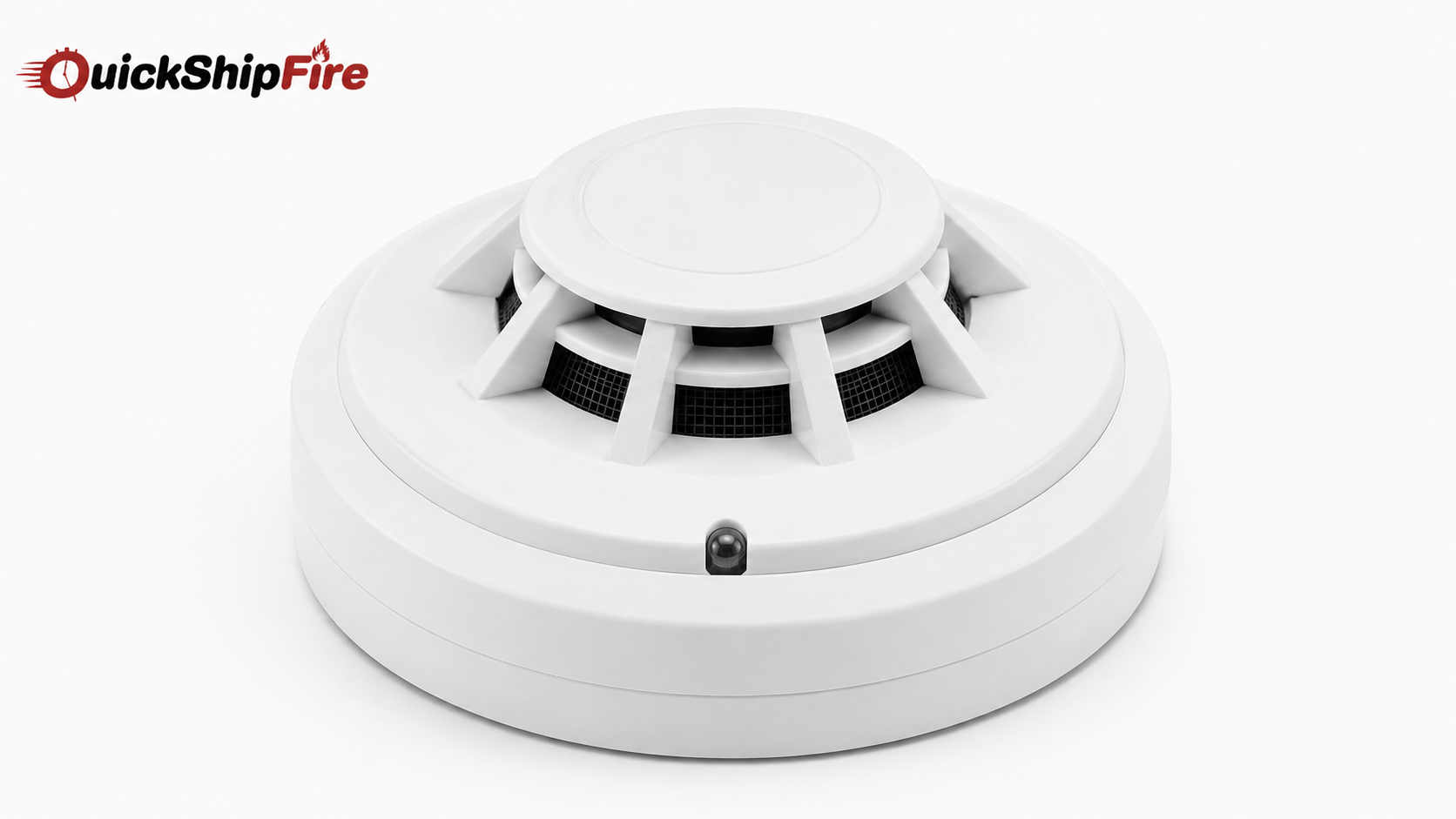
Not every fire announces itself with a wall of black smoke rolling down a corridor. Some smolder quietly for hours, producing little visible smoke until the damage is already severe. Others ignite in seconds, generating intense heat before smoke particles even have time to reach a ceiling-mounted sensor. This is precisely why the industry developed the multi-sensor detector a device engineered to address the fundamental blind spots that single-technology detection has always carried. If your building’s fire detection strategy still relies on one type of sensor doing all the work, this guide is worth reading before you spec your next system or replacement project.
Why Single-Technology Detectors Have Limitations
The photoelectric vs ionization detector debate has been around for decades, and the core issue is straightforward. Photoelectric detectors use a light beam inside the sensing chamber to detect large smoke particles, the kind produced by slow, smoldering fires like a sofa burning for two hours before it flames. Ionization detectors use a small radioactive source to sense the tiny, invisible particles produced by fast, flaming fires. Each excels at one type and underperforms at the other.
Heat-only detectors sidestep the smoke problem entirely, but only respond to elevated temperatures meaning they are completely blind to a smoldering fire that never generates significant heat until it has already spread. They remain useful in specific environments where smoke detectors would nuisance alarm constantly (commercial kitchens, dusty workshops), but they are not a general-purpose solution.
The lesson from this comparison is clear. When the question is photoelectric vs ionization detector for a mixed-occupancy commercial building, the real answer is: neither alone is sufficient. You need something that bridges both fire types and that is exactly what multi-sensor detector technology was built to do.
What Is a Multi-Sensor Detector and How Does It Work?
A multi-sensor detector is a device that simultaneously reads data from two or more sensing elements and runs those readings through an onboard algorithm before deciding whether to trigger an alarm. The key distinction is sensor fusion the algorithm evaluates multiple inputs together, not independently. No single sensing element makes the alarm decision alone. Think of it like a jury, not a single judge: any one piece of evidence might not be enough, but the combination tells a compelling story.
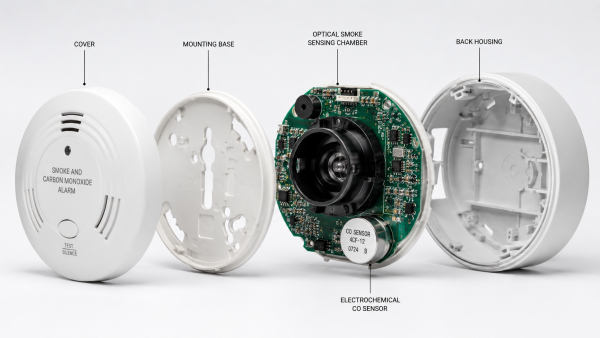
In technical terms, this is what manufacturers and UL standards refer to as a multi-criteria fire detector. The “criteria” are the specific sensing inputs smoke optical density, rate of temperature rise, carbon monoxide concentration, or a combination of all three. The detector processes these criteria together and applies decision logic that a single-sensor unit simply cannot replicate.
The practical result: the detector responds faster to real fire signatures, while filtering out transient events that would trip a conventional single-sensor unit. That is the fundamental value proposition and the reason multi-sensor detector technology has become the preferred specification in occupancies where false alarms carry high operational and reputational costs.
Smoke and Heat Combination
The most widely deployed variant is the combination smoke heat detector. An optical smoke sensing chamber handles slow, smoldering fire detection, while a rate-of-rise heat element monitors for rapid temperature increases characteristic of flaming fires. Together they provide coverage across the full spectrum of fire development from the first hour of a slow-burning electrical fault to the rapid ignition of flammable liquids.
The sensor fusion logic means the heat element can suppress a marginal smoke reading caused by steam, while the optical element can catch a fire that produces smoke well before temperatures rise significantly. Neither would catch the other’s fire type as reliably in isolation.
Smoke and CO Combination
Carbon monoxide is produced in nearly every fire and in many non-fire scenarios like malfunctioning gas appliances, incomplete combustion from heating systems, and vehicle exhaust in attached garages. A multi-sensor detector combining smoke and CO monitoring provides dual life-safety coverage from a single ceiling-mounted device. Beyond fires, it protects occupants from CO poisoning events that would go completely undetected by any smoke-only detector.
From an installation perspective, this combination also reduces the total device count needed in a space, simplifying wiring and lowering the overall system cost particularly relevant in retrofit applications where adding new device positions is expensive.
Tri-Sensor: Smoke, Heat, and CO
The most comprehensive option is the tri-sensor configuration, which is what the industry now formally describes as a multi-criteria fire detector in its fullest implementation. Optical smoke, rate-of-rise heat, and electrochemical CO sensing all feed into the same decision algorithm. This configuration responds to virtually every fire type and CO event while maintaining the lowest practical false alarm rate of any detection technology currently available.
Tri-sensor units are increasingly specified in healthcare facilities, luxury hotels, and high-occupancy residential buildings anywhere the cost of a false alarm (tenant disruption, fire department dispatch fees, reputational damage) justifies the higher per-unit cost at installation.
The False Alarm Problem – And How Multi-Sensor Technology Solves It
Anyone who has managed a commercial building, the panel is screaming, and it turns out someone made toast in the break room kitchen. False alarm reduction in fire alarm systems is not just about convenience. False alarms erode occupant trust, generate fire department response fees in many jurisdictions, desensitize building staff to alarms, and in high-occupancy buildings can create genuine panic and evacuation injuries.
Multi-sensor detector technology directly targets this problem. Because the detector requires corroboration from multiple sensing elements before alarming, transient events that fool single-sensor detectors are filtered out at the device level before the panel ever activates.
Common Causes of False Alarms That Multi-Sensor detector Technology Prevents:
- Steam and humidity: A single optical sensor positioned near a bathroom, kitchen, or dishwasher area can trip on steam from a shower or dishwashing cycle. A combined heat algorithm evaluates whether the temperature actually supports combustion before alarming, catching steam events before they become costly false activations.
- Dust during construction and renovation: Airborne particulates from drywall sanding, demolition, or floor refinishing are a leading cause of nuisance alarms on active job sites. Multi-sensor detector weighting discounts isolated particle events that are not accompanied by heat rise, dramatically reducing construction-phase false alarms.
- Insect intrusion: Bugs entering a smoke detector chamber create optical scatter readings that single-sensor detectors interpret as smoke particles. Multi-sensor detector logic requires those readings to align with at least one other criterion before triggering, effectively eliminating insect-caused false alarms as a recurring problem.
- Rapid temperature changes from HVAC systems: Supply air diffusers that blow directly onto a heat detector can produce brief temperature spikes from cold outdoor air in winter. Combined sensor logic filters these transient temperature changes against smoke and CO readings to distinguish HVAC artifact from actual fire signature.
What the Research and Standards Say
The push for false alarm reduction in fire alarm systems has influenced both NFPA 72 and UL listing criteria in meaningful ways. UL 268 7th edition now includes standardized test requirements specifically designed for multi-criteria detectors evaluating performance against polyurethane fuel smoldering fires, fast flaming fires, and cooking nuisance scenarios in the same test protocol. A multi-criteria fire detector must demonstrate superior discrimination in all three scenarios to achieve listing under the updated standard. This is a significant development: it means the performance advantage of multi-sensor detector technology is now verified through standardized testing, not just manufacturer claims.
Where Are Multi-Sensor Detectors Best Suited?
A multi-sensor detector is not the right answer for every single device position in every building but there are specific applications and occupancy types where they substantially outperform standard units. Understanding those environments helps you make the case for the upgrade budget and spec the right product. We have also covered early detection strategies in detail in our TrueAlarm Photoelectric Sensor guide, which is worth reading alongside this article for a complete picture of advanced detection technology.
Applications Where Multi-Sensor Detectors Outperform Standard Units:
- Hotel corridors and guest rooms: Guest kitchenettes, hair dryers, steam from showers, and the general diversity of occupant behavior make hotel guest rooms one of the highest-nuisance-alarm environments in commercial fire protection. Multi-sensor detector technology dramatically reduces the 2 AM false evacuation calls that affect guest experience and expose property managers to liability.
- Healthcare facilities: Hospitals and outpatient clinics have a zero-tolerance standard for false alarms because evacuating patients particularly ICU, surgical, and neonatal patients is itself a high-risk operation. Multi-criteria detection provides the sensitivity needed to catch real fires early while maintaining the selectivity that healthcare operations demand.
- Residential high-rise buildings: High-density occupancy means any false alarm displaces hundreds or thousands of residents and can create stairwell crowding hazards during evacuation. Sensors that reliably distinguish toast smoke from a genuine smoldering fire are not a luxury in this context; they are a practical necessity for building management.
- Industrial and warehouse environments: Dust, exhaust fumes, temperature swings, and high ceilings create a detection environment that punishes single-sensor technology. A multi-sensor detector unit requiring heat confirmation or CO corroboration before alarming is far better suited to these conditions than a standalone photoelectric or ionization detector would be.
Multi-Sensor vs. Standard Detector: An Honest Comparison
The combination smoke heat detector costs more per unit at installation than a standard photoelectric or ionization detector. That is the honest starting point. But the total cost picture over a system’s service life tells a different story when you factor in false alarm response fees, service calls for nuisance alarms, insurance considerations, and tenant or occupant disruption costs.
If the classic debate in fire detection was photoelectric vs ionization detector, multi-sensor technology effectively ends that debate by delivering both capabilities and more from a single device. The question shifts from which detection type to choose to whether the application justifies the per-unit premium, and in most commercial occupancies, the math Favors multi-sensor.
Multi-Sensor vs. Single-Sensor: What Changes for You:
- Detection breadth: A multi-sensor unit covers smoldering fires, fast flaming fires, and in CO-equipped variants, carbon monoxide events. No single-technology detector performs all three with equivalent accuracy, making multi-sensor the only true all-hazard solution in a single ceiling device.
- False alarm rate: Multi-sensor logic reduces nuisance alarms by requiring corroboration from multiple sensing elements before an alarm is triggered. Buildings that switch from single-sensor to multi-sensor detector technology typically see immediate, measurable reductions in false alarm frequency.
- Installation economy: One multi-sensor device can replace what would otherwise require separate smoke and CO detectors in the same space, reducing the total device count, shortening wiring runs, and simplifying the panel’s point allocation without sacrificing coverage.
- Code compliance advantage: Certain high-risk occupancies and jurisdictions are increasingly requiring or preferring multi-criteria detection based on its demonstrated performance under UL 268 7th edition testing. Specifying multi-sensor technology now positions a system ahead of tightening code requirements rather than scrambling to catch up later.
Conclusion
Fire detection is not a technology you want to compromise on, and the choice of detector type matters more than most building owners and facility managers realize until they are dealing with the consequences of a poor selection. Whether you are specifying a combination smoke heat detector for a hotel corridor application, evaluating a tri-sensor multi-sensor detector for a healthcare project, or simply trying to understand why your existing detectors keep false alarming, the underlying principle is the same: better sensing inputs plus smarter decision logic equals better outcomes.
At QuickShipFire, we carry a wide range of smoke detectors and specialty detection devices from trusted manufacturers including combination and multi-technology units. Our team has over 20 years in the fire and life safety industry, and we understand that finding the right detector for a specific application is rarely as simple as picking the cheapest unit in a catalog. If you are unsure what your occupancy and environment call for, we are happy to help you work through it.
Frequently Asked Questions
Q1: What is a multi-sensor detector?
A multi-sensor detector is a fire alarm device that uses two or more sensing technologies typically combining optical smoke detection with heat sensing, carbon monoxide detection, or both and applies an algorithm to evaluate the combined readings before triggering an alarm. This approach improves detection accuracy across different fire types and significantly reduces false alarms compared to any single-technology detector.
Q2: What is the difference between a multi-sensor and a multi-criteria fire detector?
These terms are often used interchangeably in practice, but multi-criteria fire detector is the formal UL and industry standards term. It refers specifically to a detector that uses multiple sensing inputs and weighs them together algorithmically to make an alarm decision — rather than having multiple sensors that each operate independently. The distinction matters in specification documents and AHJ conversations.
Q3: Do multi-sensor detectors reduce false alarms?
Yes, false alarm reduction is one of the primary design objectives of multi-sensor detection technology. Because the device requires corroboration from multiple sensing elements before alarming, transient events such as cooking smoke, steam, construction dust, or insect intrusion are far less likely to trigger a full alarm than with a single-technology detector. Buildings that upgrade to multi-sensor technology typically see immediate reductions in nuisance alarm frequency.
Q4: What is the difference between a photoelectric and ionization smoke detector?
A photoelectric smoke detector uses a light beam to detect large smoke particles produced by slow, smoldering fires. An ionization detector uses a small radioactive source to detect the fine particles from fast, flaming fires. Each performs well at its specific fire type and less effectively at the other. Multi-sensor detectors combine these and additional technologies to cover both fire types from a single device.
Q5: Can a combination smoke heat detector replace two separate devices?
In most applications, yes. A combination smoke heat detector monitors for both smoke and abnormal heat rise from a single ceiling unit, reducing the total device count and simplifying installation. It typically fulfills the code requirements that would otherwise call for separate detector types in the same location. Always verify that the specific device selected meets the occupancy and application requirements under NFPA 72 and local code.
Q6: Where should multi-sensor detectors be installed?
Multi-sensor detectors are best suited for environments prone to nuisance alarms or requiring high detection reliability – hotels, healthcare facilities, high-rise residential buildings, kitchens adjacent to common areas, and industrial settings with dust or exhaust. They are also appropriate wherever single-technology detectors have a demonstrated history of false activations due to environmental conditions.
Q7: Are multi-sensor detectors required by NFPA 72?
NFPA 72 does not universally mandate multi-sensor detectors across all occupancies, but it sets performance standards that multi-criteria devices are increasingly designed to meet or exceed. UL 268 7th edition now includes standardized test protocols specifically for multi-criteria detectors. Certain occupancy types, local AHJ requirements, or facility specifications may require or strongly prefer multi-sensor technology based on demonstrated performance advantages.