
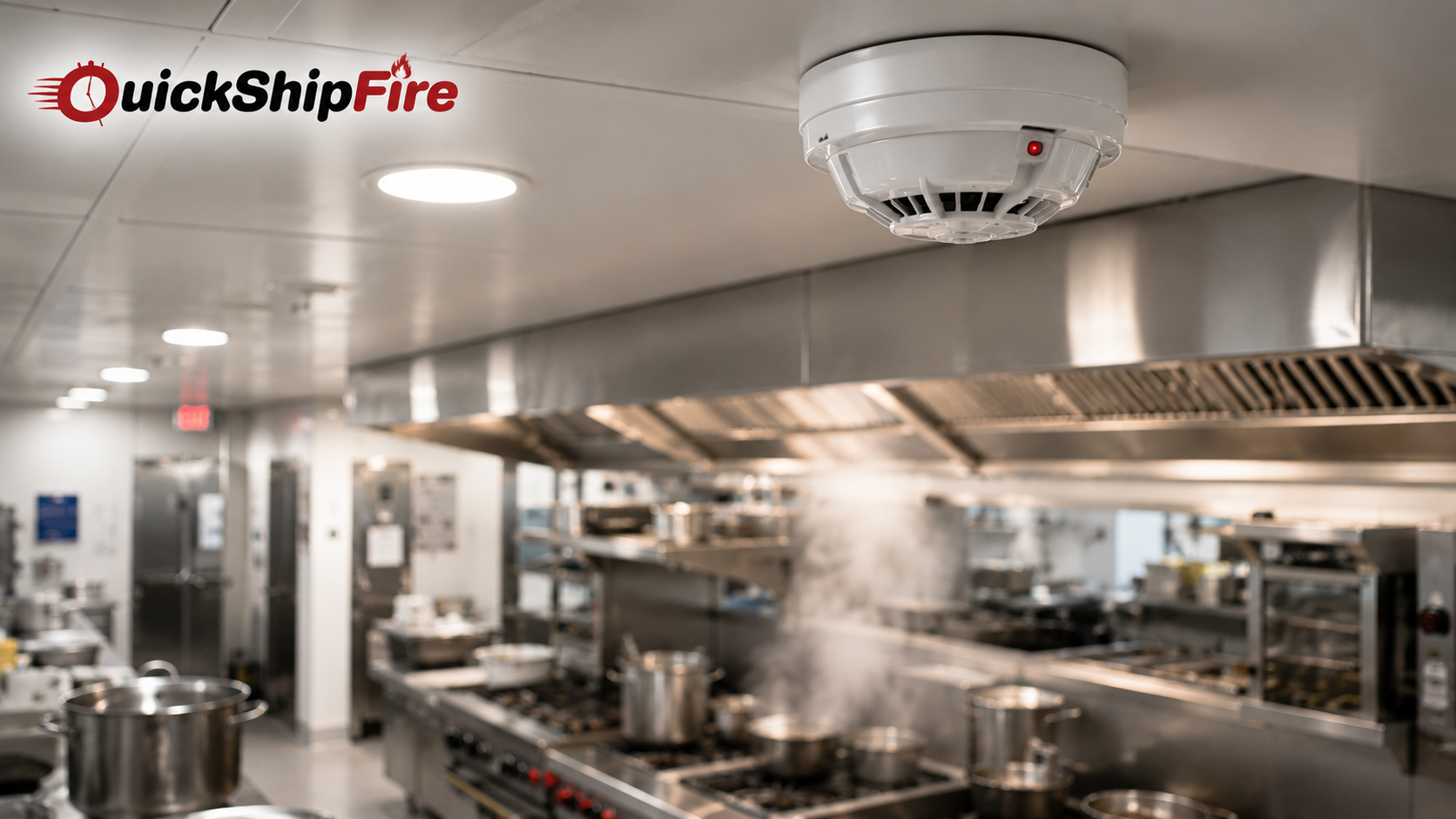
Few things disrupt a busy restaurant faster than a fire alarm triggered by nothing more than searing steak or a puff of steam. Learning how to reduce false alarms from smoke detectors in commercial kitchens protects your revenue, keeps staff focused, and preserves the credibility of your life safety equipment. When occupants stop trusting the alarm, real emergencies become more dangerous. This guide explains why these unwanted trips happen and how to stop them, and points you to the commercial detectors best suited to demanding kitchen environments.
Why False Alarms Are a Serious Problem
A nuisance trip feels like a minor annoyance, but the consequences add up quickly. Each unwanted activation may evacuate a dining room, dispatch the fire department, and interrupt service during peak hours. Repeated false alarms from smoke detectors also carry a hidden danger: staff begin to assume every alarm is false and may hesitate during a genuine fire, which is the exact moment hesitation is most costly.
There are financial stakes too. Many jurisdictions impose fines for repeated false dispatches, and frequent nuisance alarms can strain your relationship with the local fire department. Reducing false alarms from smoke detectors is therefore both a safety priority and a business decision that protects your bottom line and your reputation with first responders.
Why Kitchens Trigger So Many False Alarms
The commercial kitchen is one of the most hostile environments for any detection device. Understanding the specific triggers is the first step toward eliminating false alarms from smoke detectors for good.
Smoke, Grease, and Cooking Vapors
Normal cooking produces visible smoke, grease-laden vapors, and aerosolized particles that a sensitive device can easily mistake for a fire. A photoelectric smoke detector, which senses light scattered by particles, is especially prone to reacting to thick cooking haze if it is placed too close to the line, and this is a leading source of nuisance trips in food service.
Steam and Humidity
Dishwashers, steamers, and boiling pots release dense clouds of water vapor. Steam droplets scatter light almost exactly the way smoke particles do, which is why a photoelectric smoke detector mounted near a dish pit can generate constant false trips throughout a shift.
Heat and Temperature Swings
A busy kitchen runs hot, and rapid temperature changes near ovens and fryers can confuse a smoke-sensing device. In these zones a thermal device is often a smarter choice, because it responds to a genuine rise in temperature rather than to airborne cooking byproducts, sidestepping a major cause of false alarms from smoke detectors.
Dust and Contamination
Flour, spices, and airborne grease settle inside detector chambers over time. A contaminated sensor becomes hypersensitive, and dirty detection equipment is one of the leading causes of unwanted activations in any food service setting.
How to Reduce False Alarms from Smoke Detectors: Proven Strategies
The good news is that nuisance trips are almost always preventable. The strategies below address the root causes rather than the symptoms, and together they make these trips a rare event instead of a daily one.
1. Choose the Right Detection Technology
Selecting the correct device for each zone is the single most effective way to reduce false alarms from smoke detectors. Over a cooking line, a thermal detector or a combination device usually outperforms a smoke sensor because it ignores vapor and grease while still catching a real fire. Reserve smoke sensing for dining areas, hallways, and storage where the air is cleaner.
2. Position Detectors Correctly
Placement is critical. A photoelectric smoke detector should never sit directly above a fryer, grill, or dishwasher exhaust. Maintaining proper distance from cooking appliances and steam sources, as defined by NFPA 72 and the manufacturer, dramatically lowers the rate of false alarms from smoke detectors without sacrificing genuine coverage where it counts.
3. Keep Detection Equipment Clean
Regular cleaning is essential in a grease-heavy kitchen. Establish a schedule to vacuum and gently clean device exteriors, and have the chambers professionally serviced during routine maintenance. Clean sensors are far less likely to produce false alarms from smoke detectors, and they perform more accurately when a real emergency occurs.
4. Use Addressable and Adjustable Devices
Addressable detection equipment lets you pinpoint exactly which device is reporting and adjust sensitivity settings for each location. Many modern devices offer drift compensation that automatically accounts for gradual contamination, a feature that meaningfully cuts false alarms from smoke detectors in challenging spaces.
5. Improve Kitchen Ventilation
Strong, well-maintained hood and exhaust systems pull smoke, steam, and heat out of the room before they reach a ceiling-mounted sensor. Good airflow is one of the most underrated tools for reducing nuisance alarms, and it improves working conditions at the same time.
Choosing the wrong device for a hot, greasy zone is the number one cause of nuisance trips. Browse our specialty and heat detectors to match the right technology to every area of your kitchen and stop false alarms from smoke detectors before they start.
The Role of Heat Detectors in Kitchen Zones
Because smoke-sensing devices struggle near cooking equipment, a heat detector is frequently the recommended solution directly over a line or fryer. Rather than reacting to particles, it activates when the temperature rises beyond a set threshold or climbs unusually fast. This makes it almost immune to the cooking byproducts that cause false alarms from smoke detectors.
A balanced design often pairs a thermal device over the hot zones with photoelectric or addressable smoke sensing in adjacent, cleaner areas. This layered approach maintains full fire coverage while sharply reducing the unwanted activations that plague poorly designed installations across the whole kitchen.
Common Mistakes That Make the Problem Worse
When trips become frequent, the instinct is often to reach for a quick fix that actually backfires. The worst response is covering or bagging a device to silence it, which removes protection entirely and violates code. Another mistake is repeatedly resetting the panel without investigating the cause, which lets the same fault repeat night after night.
Installing the wrong technology to save money is equally counterproductive. A cheap smoke sensor over a fryer guarantees ongoing false alarms from smoke detectors, while the correct device in the same spot would have run quietly for years. Spending a little more on the right component is almost always cheaper than the lost revenue and fines that nuisance trips create.
The Hidden Cost of Ignoring the Problem
Operators sometimes tolerate a chronically tripping device because addressing it feels like a hassle. Yet the true cost of inaction is far higher than the price of a correct sensor. Every unnecessary evacuation empties tables, interrupts food preparation, and can send customers elsewhere for the evening. Over a year, those lost covers add up to real money, and a venue known for constant alarms quickly earns a reputation that is hard to shake.
There is also the regulatory side. Repeated false dispatches invite scrutiny, fines, and in some areas a mandatory remediation plan. The far smaller investment in proper device selection, correct placement, and a steady maintenance routine pays for itself many times over by protecting both daily revenue and your standing with the local authority. Treating the issue seriously the first time is always cheaper than living with it.
Maintenance: The Long-Term Defense
Even a perfectly designed layout will drift toward trouble without upkeep. Build device care into your existing cleaning routine, schedule professional inspection and sensitivity testing on the intervals your local code requires, and replace any unit that fails a test or has aged past its service life. A consistent maintenance habit is the most reliable long-term defense against false alarms from smoke detectors.
Keep a small stock of the detectors and modules your system uses so a failed device is swapped the same day. For an operation running older or discontinued equipment, fast access to the exact replacement part prevents both downtime and the temptation to leave a problem device in service, where it will keep generating nuisance alarms.
When to Call a Professional
If you have corrected placement, cleaned the devices, and chosen appropriate technology yet still experience repeated trips, it is time to involve a qualified fire alarm technician. They can perform sensitivity testing, inspect wiring, and verify that each smoke sensor and thermal sensor is reporting correctly. Persistent false alarms from smoke detectors sometimes signal a deeper wiring or panel fault that only a professional can diagnose and resolve.
Conclusion
A kitchen that cries wolf puts everyone at risk, but the cure is well within reach. By matching the right technology to each zone, positioning devices away from steam and grease, keeping detection equipment clean, using adjustable addressable sensors, and maintaining strong ventilation, you can dramatically reduce false alarms from smoke detectors while keeping genuine fire protection fully intact. The result is a quieter, safer, and more profitable kitchen.
Above all, remember that prevention is a system, not a single fix. Smart device selection, correct placement, disciplined maintenance, and quick access to replacement parts work together to keep false alarms from smoke detectors rare and trust high. QuickShipFire stocks the heat-sensing devices, photoelectric sensors, modules, and hard-to-find components that food service operators rely on, with fast shipping when you need a part in a hurry.
Tired of nuisance trips disrupting service? Request a quote from QuickShipFire and get the right detectors to finally reduce false alarms from smoke detectors in your kitchen for good.
Frequently Asked Questions
Why do smoke detectors go off in commercial kitchens?
Cooking smoke, grease vapors, steam, heat, and dust all mimic the signs of fire. Devices placed too close to cooking equipment misread these byproducts and trigger nuisance alarms.
What type of device is best over a cooking line?
A heat detector is usually best directly over fryers and grills because it responds to temperature rather than vapor or grease, ignoring the byproducts that cause false trips.
Can I just disable a detector that keeps going off?
No. Disabling a device removes life safety protection and violates code. Instead, relocate it, clean it, adjust its sensitivity, or replace it with the correct technology for that zone.
How often should kitchen detectors be cleaned?
Clean device exteriors as part of your regular cleaning, and schedule professional chamber cleaning and sensitivity testing at the intervals your local fire code requires.
Does a photoelectric smoke detector work in a kitchen?
It works well in cleaner dining and storage zones but struggles near steam and grease. Keep it away from cooking lines and pair it with heat detection in hot areas.
Will reducing trips lower my fire department fines?
Yes. Many jurisdictions fine repeated false dispatches, so cutting nuisance trips through proper device selection and maintenance can reduce those penalties significantly.
How do addressable detectors help?
They identify exactly which device is reporting and allow per-location sensitivity adjustment plus drift compensation, which accounts for contamination and cuts unnecessary activations.