
Introduction
Selecting the correct fire alarm panel is one of the most critical decisions a facility manager, contractor, or building owner will ever make. In a commercial environment whether an office tower, a retail complex, a school, or a healthcare facility your fire alarm panel serves as the central brain of the entire life-safety system. It receives signals from every detector and device, processes incoming data in real time, triggers evacuation alarms, communicates with monitoring stations and the fire department, and logs every system event for compliance documentation.
Getting this choice wrong carries serious consequences: code violations, costly system replacements, liability exposure, and worst of all, a delayed or failed response during an actual fire emergency. This comprehensive guide walks you through every factor you need to evaluate so you can make a confident, code-compliant fire alarm panel selection for any commercial building project.
What Is a Fire Alarm Panel and Why Does It Matter?
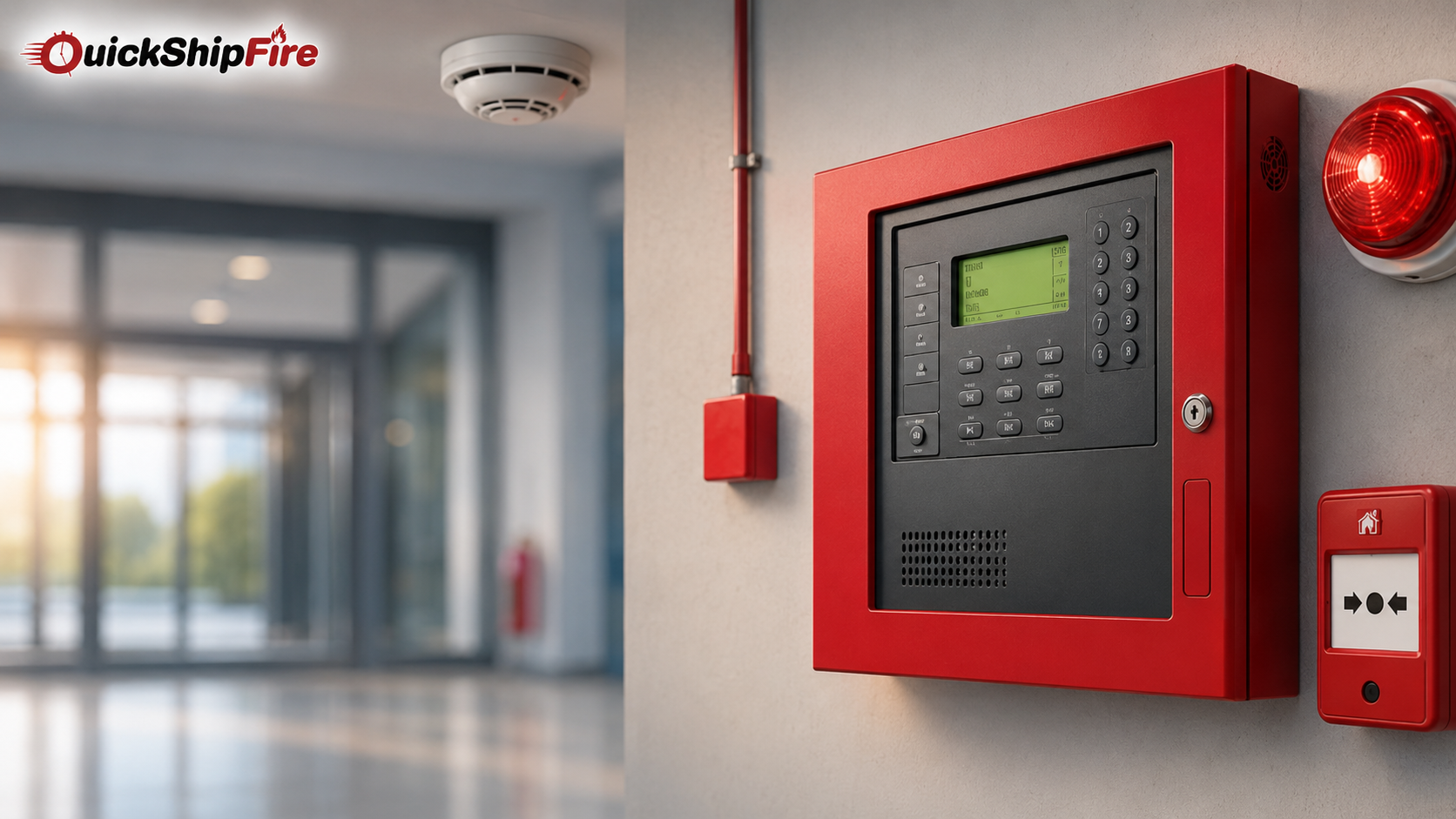
A fire alarm panel also called a fire alarm control panel (FACP) or fire alarm control unit (FACU) is the centralized command hub that manages your entire fire detection and notification network. When a smoke detector, heat sensor, duct detector, or manual pull station sends a signal, the fire alarm panel interprets that signal, determines the appropriate response, and triggers the correct sequence of actions: sounding alarms, dispatching alerts to the monitoring station, activating suppression systems, and controlling access doors and elevators.
In commercial buildings, the stakes are far higher than in residential settings. Larger square footage, more complex occupancy types, greater numbers of occupants, more stringent regulatory requirements, and tighter integration with building automation systems all demand a fire alarm panel that is properly engineered and precisely scaled for the specific environment it must protect.
Key Factors to Consider When Choosing a Fire Alarm Panel
1. Building Size and Number of Addressable Points
The first and most fundamental factor is how many devices your system must support. Every smoke detector, heat detector, pull station, module, and notification appliance is a “point” on the system. Small commercial buildings with 50 or fewer devices may be adequately served by a conventional panel, while mid-size to large facilities typically require an addressable fire alarm control panel capable of managing hundreds or even thousands of individual addressable points.
For example, a 50-point addressable panel such as the Fire-Lite ES-50X is well suited to small retail stores or single-floor offices, while a 198-point panel like the Fire-Lite ES-200X better serves mid-size commercial facilities with multiple floors and zones. Enterprise-level campuses frequently require networked multi-panel systems supporting thousands of addressable points distributed across multiple buildings.
2. Conventional vs. Addressable Fire Alarm Panel Technology
Understanding the fundamental difference between conventional and addressable technology is essential before evaluating any specific panel model.
- Conventional fire alarm panels: Divide a building into detection zones. When a device triggers, the panel identifies which zone activated but cannot pinpoint the specific device. These systems are simpler and lower in cost but offer limited diagnostic capability. They are best suited for small, single-zone commercial spaces.
- Addressable fire alarm panels: Assign a unique digital address to every device on the network. When any detector activates, the fire alarm panel identifies the exact device and location. This enables faster emergency response, more precise evacuation coordination, and detailed event logging for post-incident analysis.
- Analog addressable panels: Continuously monitor the real-time analog output value smoke density reading, temperature measurement of every connected device. This capability allows the panel to generate maintenance alerts when a detector is drifting or becoming contaminated, preventing nuisance alarms and detection failures before they occur.
For the vast majority of commercial building applications, an addressable or analog addressable fire alarm panel is the strongly recommended choice.
3. NFPA 72 and Local Code Compliance
Every fire alarm panel installed in a commercial building in the United States must comply with NFPA 72: National Fire Alarm and Signaling Code. Beyond the national standard, state and local authorities having jurisdiction (AHJs) frequently impose additional or more stringent requirements. When evaluating panel options, confirm the manufacturer’s UL listing, verify the panel’s compatibility with the specific edition of NFPA 72 adopted by your jurisdiction, and consult your local AHJ before finalizing any purchase decision.
NFPA 72 compliance is non-negotiable. A fire alarm panel that does not meet applicable standards will fail inspection, require costly removal and replacement, and may expose building owners to significant legal liability in the event of a fire.
4. Monitoring and Communication Capabilities
Modern fire alarm panels offer a variety of communication pathways to relay alarm and supervisory signals to a central station monitoring company or directly to emergency services. When evaluating panels, consider the following communication features:
- Dual-path communicators that transmit signals simultaneously over cellular and internet pathways, providing redundancy if one path fails
- DACT (Digital Alarm Communicator Transmitter) compatibility for traditional telephone line monitoring
- IP/Ethernet connectivity for integration with building management and automation systems
- Compatibility with UL Listed central monitoring stations and their specific communication protocols
- Built-in dialer functions for locations where broadband internet infrastructure is limited or unreliable
5. Scalability and Future Expansion
Commercial buildings change over time. Tenant build-outs, renovation projects, additional floors, and changing occupancy requirements all demand that the fire alarm system expand and adapt. Choose a fire alarm panel with a modular architecture that allows you to add detection loop cards, notification appliance circuits (NACs), and communication modules without replacing the entire panel. Leading manufacturers including Simplex, Fire-Lite, Silent Knight, Notifier, and Gamewell-FCI all offer scalable panel families specifically designed for phased expansion.
6. Power Supply Requirements
Every fire alarm panel requires a primary AC power source backed by a battery system capable of sustaining full standby operation for a minimum of 24 hours followed by at least 5 minutes in full alarm mode, as mandated by NFPA 72. For large addressable systems with extensive notification appliance circuit loads, supplemental power supplies are frequently necessary. Verify that the panel’s internal power supply and any auxiliary power supplies are appropriately sized for the total connected device current draw before finalizing the installation design.
Top Fire Alarm Panel Brands Available at QuickShipFire
QuickShipFire stocks fire alarm panels and fire alarm system boards from the industry’s most trusted manufacturers. Every product ships new in original manufacturer packaging.
Fire-Lite
Fire-Lite panels are widely respected for their reliability, ease of programming, and outstanding value in small to mid-size commercial applications. The ES-50X and ES-200X models feature built-in dual-path communicators and intuitive interfaces. Browse all available Fire-Lite fire alarm panels at QuickShipFire for fast U.S. shipping.
Simplex
Simplex is the benchmark for large-scale, mission-critical fire alarm installations. Hospitals, universities, airports, and high-rises rely on Simplex fire alarm panels for their robust architecture, advanced network capability, and seamless integration with complex building systems.
Silent Knight
Silent Knight panels offer solid addressable capability with straightforward programming, making them a strong choice for commercial and light industrial applications. Explore Silent Knight products available at QuickShipFire.
Notifier
Notifier by Honeywell is among the most widely specified brands for commercial fire alarm systems globally, offering advanced networking and a vast ecosystem of compatible devices. Browse Notifier products at QuickShipFire.
Gamewell-FCI
Gamewell-FCI panels are a trusted choice for municipal, institutional, and industrial applications. Discover available Gamewell-FCI products at QuickShipFire.
5 Critical Questions to Ask Before Purchasing a Fire Alarm Panel
- How many addressable points do I need now and in three to five years? Always plan for growth to avoid expensive mid-lifecycle upgrades.
- Is the panel UL Listed and compliant with my local AHJ’s adopted edition of NFPA 72? Code compliance is mandatory before a single device is installed.
- Does the panel support the communication path required by my central monitoring station? Verify protocol compatibility before purchasing.
- What is the true total cost of ownership, including programming, installation, and expansion modules? The lowest upfront price is rarely the lowest lifetime cost.
- Are technical support and replacement parts readily available for this panel model long-term? Critical for panels expected to serve a facility for 15 to 20 years.
Ready to Source Your Fire Alarm Panel?
Browse our complete selection of fire alarm panels including new and refurbished options from Fire-Lite, Simplex, Silent Knight, Notifier, and Gamewell-FCI. QuickShipFire specializes in hard-to-find fire alarm components with fast U.S. shipping and expert support. Call us at +(833) 747-7845 or request a quote online today.
Understanding Notification Appliance Circuits (NACs)
The fire alarm panel manages notification appliance circuits (NACs) the wiring loops that power horns, strobes, speaker-strobes, and other alerting devices throughout the building. When specifying a fire alarm panel, confirm that it provides sufficient NAC capacity (current output) to power all planned notification appliances. Large buildings with extensive notification appliance loads may require supplemental NAC expander panels in addition to the primary fire alarm control panel.
Refurbished vs. New Fire Alarm Panels
In many facility upgrade scenarios, a professionally refurbished fire alarm panel can deliver significant cost savings without compromising performance or compliance. QuickShipFire carries both new and clearly labelled refurbished fire alarm boards and control panels. Refurbished panels are fully tested and reset to factory default configurations before shipping. For cost-sensitive projects where a full new-equipment budget is not available, a refurbished panel from a trusted supplier can be a practical and code-compliant solution provided it carries the required UL listing and is compatible with your existing field devices.
Conclusion
Choosing the right fire alarm panel for a commercial building is a multifaceted decision that encompasses building size, detection technology, code compliance, communication infrastructure, power supply design, and long-term scalability. Taking the time to thoroughly evaluate each factor and partnering with a knowledgeable supplier like QuickShipFire ensures you invest in a system that protects lives, satisfies inspectors, and delivers reliable service for decades.
Never compromise on fire protection. Your fire alarm panel is the cornerstone of every other safety investment in your building. Select it with the care and diligence it deserves.
Frequently Asked Questions (FAQs)
Q1: What is the difference between a conventional and an addressable fire alarm panel?
A conventional fire alarm panel groups device into zones and identifies only which zone triggered an alarm, not the specific device. An addressable fire alarm panel assigns a unique digital address to every connected device, pinpointing the exact location of any alarm, trouble, or supervisory condition. For commercial buildings, addressable systems are strongly preferred because they enable faster, more precise emergency response and provide superior diagnostic capability.
Q2: How many addressable points does a commercial fire alarm panel typically support?
Point capacity varies significantly by model. Small panels support 50 points, mid-range commercial panels typically support 100 to 500 points, and large enterprise-grade panels can support 1,000 or more points per detection loop with multiple loops per panel. Your fire protection engineer will calculate the exact point count requirement based on the building’s layout, occupancy, and device density.
Q3: Does a fire alarm panel need to be UL Listed for commercial installation?
Yes. Virtually every jurisdiction in the United States requires that fire alarm control panels carry a current UL (Underwriters Laboratories) listing confirming that the equipment has been independently tested and meets established performance standards. Installing non-listed equipment in a commercial building will result in failed inspections, required removal, and potential liability.
Q4: Can I replace just the fire alarm panel without replacing all detectors and devices?
In many cases yes, provided the new panel is fully compatible with your existing field devices. Compatibility depends on the detection loop communication protocol, device addressing scheme, and manufacturer ecosystem. Some brands use proprietary protocols that limit cross-manufacturer interoperability. Always consult a licensed fire alarm technician and review the manufacturer’s compatibility documentation before attempting a panel-only replacement.
Q5: What battery backup duration is required for a commercial fire alarm panel?
NFPA 72 requires commercial fire alarm panels to maintain standby power for a minimum of 24 hours after primary AC power failure, followed by at least 5 minutes of full alarm operation. Some occupancy types and local AHJs require longer backup periods. Battery sizing calculations must account for the complete current draw of all connected standby and alarm-load devices.
Q6: What routine maintenance does a fire alarm panel require?
NFPA 72 mandates regular inspection, testing, and maintenance (ITM) of all fire alarm system components including the control panel. At minimum, the panel should receive a full functional test annually, with quarterly battery and supervisory signal tests. Event logs should be reviewed regularly, software or firmware updates applied when available, and all trouble conditions resolved promptly by a licensed fire alarm contractor.
Q7: What does a “trouble” condition on a fire alarm panel mean?
A trouble condition indicates a system fault such as a broken wire, failed device, low battery, or communication error. The panel will display the specific trouble location on its LCD or touchscreen and sound a distinct audible signal. Trouble conditions must be investigated and corrected promptly by a qualified technician. An unresolved trouble can mask real alarm signals and constitutes a code violation in most jurisdictions.