
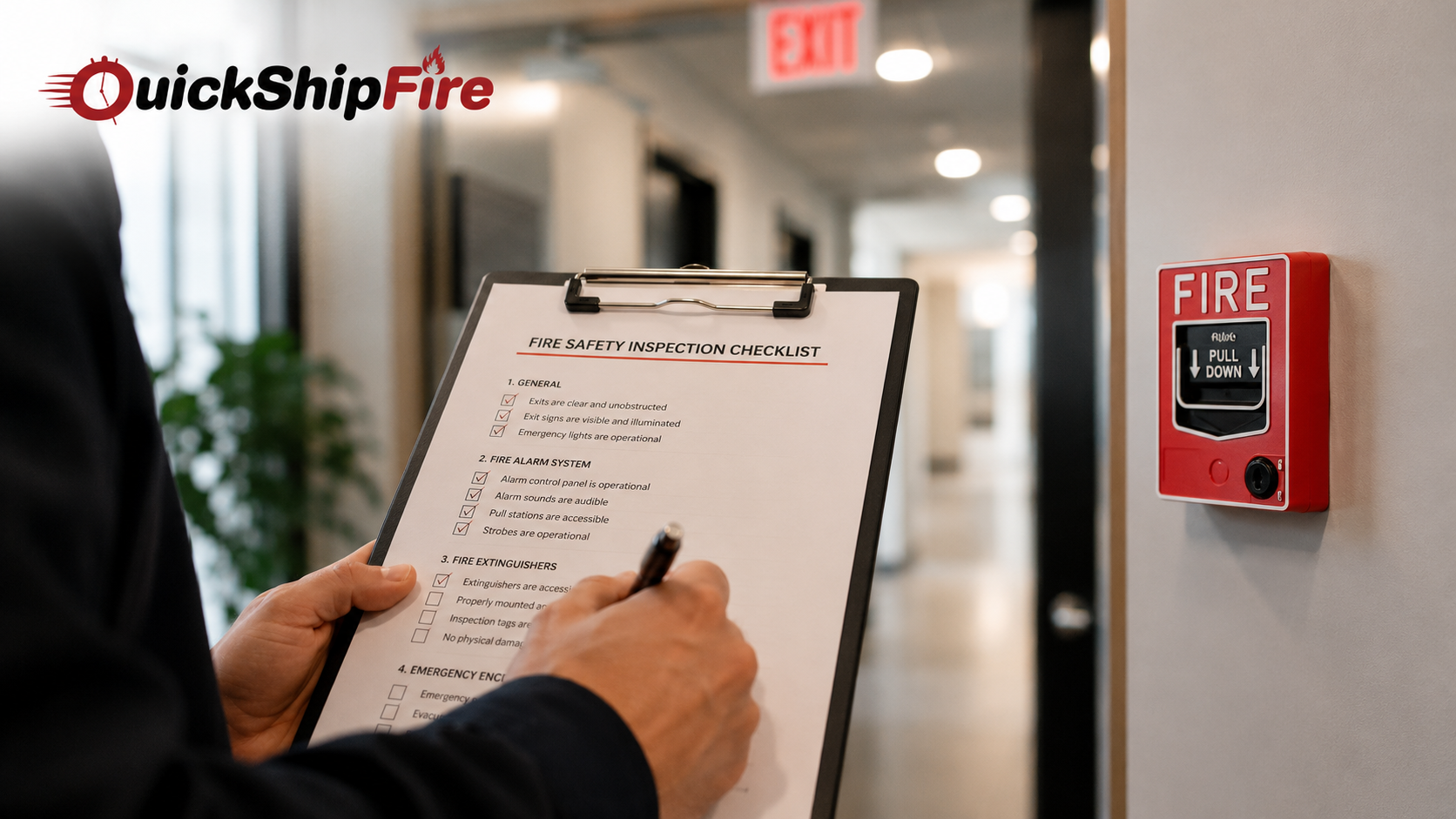
A fire marshal inspection is one of the most important checkpoints for keeping any commercial building safe, compliant, and open for business. Whether you manage an office tower, a restaurant, a warehouse, or a healthcare facility, knowing exactly what inspectors look for can save you from costly violations, failed re-inspections, and dangerous safety gaps. This guide breaks down a complete fire marshal inspection checklist so you can walk into your next visit fully prepared. And when a device needs replacing before the appointment, you can source compliant components fast from our fire alarm panels and control equipment.
What Is a Fire Marshal Inspection?
A fire marshal inspection is a formal review conducted by your local Authority Having Jurisdiction (AHJ) to verify that a building meets adopted fire and life safety codes. The inspector evaluates detection, suppression, egress, and housekeeping conditions to confirm that occupants can be warned and can escape safely in an emergency. These visits may be scheduled annually, tied to occupancy permits, triggered by a complaint, or required after renovations.
Most jurisdictions base their requirements on the International Fire Code (IFC) and on standards published by the National Fire Protection Association. During a fire marshal inspection, the official is not trying to trip you up; they are confirming that the systems you already own are installed correctly, tested on schedule, and ready to perform. Understanding their priorities turns the experience from stressful to routine.
Why a Fire Marshal Inspection Matters
Passing is about far more than a certificate on the wall. A failed fire marshal inspection can result in fines, a revoked certificate of occupancy, higher insurance premiums, or even forced closure until violations are corrected. For tenants and customers, an unaddressed hazard can become a tragedy.
There is also a financial upside to staying ready. Buildings that maintain their detection and suppression equipment consistently spend less on emergency repairs and avoid the rush fees that come with last-minute fixes. Treating every inspection as part of an ongoing safety program, rather than a once-a-year scramble, protects both people and your budget.
The Complete Fire Marshal Inspection Checklist
Inspectors work through a building methodically. The categories below mirror how most officials structure their walkthrough, so reviewing each one before the visit gives you a realistic preview of the day.
1. Fire Alarm and Detection Equipment
The first area scrutinized is almost always your fire alarm system. Inspectors confirm that the control panel shows no active trouble or supervisory signals, that smoke detectors and heat detectors are clean and unobstructed, and that pull stations are accessible and unblocked. They will check that notification devices, such as horns and strobes, are present where code requires and that audibility reaches every occupied space.
Detector placement matters too. Devices must be spaced according to NFPA 72 and kept clear of paint, dust, and storage. If a sensor is missing, painted over, or past its service life, expect a citation. Keeping spare smoke detectors and addressable modules on hand lets you correct minor findings immediately instead of scheduling another visit.
2. Fire Sprinkler and Suppression Systems
Wet and dry sprinkler systems receive close attention. The inspector verifies that control valves are open and supervised, that sprinkler heads are unpainted and unobstructed with the required clearance below them, and that the fire department connection is capped and accessible. Kitchen hood suppression systems must show a current service tag and clear nozzle aim over cooking appliances.
3. Portable Fire Extinguishers
Extinguishers must be the correct type and size for the hazard, mounted at the proper height, fully charged, and inspected. Each unit needs a current annual service tag and a visible monthly check record. Travel distance to the nearest extinguisher cannot exceed code limits, so partially blocked or relocated units are common findings.
4. Emergency Lighting and Exit Signs
Exit signs must be illuminated and visible from the path of egress, and emergency lights must activate when normal power is lost. Inspectors frequently press the test button on a few fixtures to confirm the batteries hold a charge. Dark exit signs and dead backup batteries are among the easiest violations to prevent and the most common to find.
5. Means of Egress and Exits
A clear, unobstructed path to safety is non-negotiable. Officials check that exit doors open freely, that hardware is functional, that corridors and stairwells are free of storage, and that exit pathways are not narrowed by furniture or equipment. Locked or blocked exits are treated as serious, immediate hazards.
6. Electrical and Mechanical Hazards
Inspectors look for overloaded outlets, daisy-chained power strips, missing cover plates, and extension cords used as permanent wiring. Electrical panels need clear working space, typically three feet, and must not be blocked by storage. Improper use of cords is one of the most frequently cited issues inspectors find during any walkthrough.
7. Storage, Housekeeping, and Hazardous Materials
Combustible storage must be kept well below the ceiling, away from heat sources, and clear of electrical equipment. Flammable liquids require approved cabinets, and aisles must remain open. Good housekeeping signals to the inspector that the facility takes safety seriously, which sets a positive tone for the entire visit.
8. Documentation and Records
Paperwork can make or break the day. The official will ask for recent fire alarm inspection reports, sprinkler test records, extinguisher service tags, and any required maintenance logs. Organized, up-to-date records demonstrate compliance and often shorten the walkthrough considerably.
Common Reasons Buildings Fail a Fire Marshal Inspection
Most failures are avoidable. The recurring culprits include blocked or locked exits, expired extinguisher tags, obstructed detectors, missing or incomplete fire alarm inspection documentation, electrical cord misuse, and notification devices that are damaged or removed. Many of these issues take only minutes to correct when you spot them in advance.
A frequent surprise is the active trouble signal on a panel that nobody noticed. A single faulty device, a low battery, or a ground fault can place the entire fire alarm system into a trouble condition. Walking the building and clearing every panel anomaly before the inspector arrives prevents this easy failure.
Need a replacement detector, module, or panel board before your inspection date? Browse our in-stock commercial smoke detectors and get the right fire safety equipment shipped fast so you stay compliant.
A Quick Pre-Inspection Self-Audit You Can Run Today
You do not need to wait for the official to walk your building like an inspector would. Set aside an hour, grab a flashlight and a notepad, and start at the main entrance. Confirm every exit door opens freely, every illuminated sign is working, and no corridor or stairwell is being used for storage. Small obstructions that feel harmless during a busy week are exactly the issues that generate citations.
Next, stand in front of your control panel and confirm it reads normal with no trouble or supervisory lights. Press the test button on a sample of emergency lights and watch for full illumination, then check that fire extinguishers are charged, tagged, and mounted at the correct height. Finally, open your records folder and verify that test reports and service tags are current. Running this simple loop monthly means there are rarely any surprises when the official visit finally arrives, and it builds the kind of habit that keeps a building safe between formal reviews.
How to Prepare for a Fire Marshal Inspection
Preparation is the difference between a five-minute pass and a return visit. Start a few weeks ahead by reviewing the previous inspection report and confirming that every prior finding was corrected. Schedule any overdue testing of your fire alarm system, sprinklers, and extinguishers with your service provider so fresh tags are in place. Much of this testing is required under NFPA 72, so keeping it current also keeps you compliant year-round.
Next, walk the building as if you were the inspector. Check that exits are clear, signs are lit, panels are normal, and storage is orderly. Assemble your documentation in one binder or folder so records are ready the moment they are requested. Finally, confirm that any fire safety equipment flagged as aging or obsolete has been replaced, because inspectors will not pass a device that cannot perform reliably.
Keeping a small inventory of common replacement parts is a smart strategy for facilities with older systems. When a detector or module fails during pre-inspection testing, having the correct part already on the shelf means you fix the problem the same day rather than risking a failed fire marshal inspection over a single component.
What Happens After the Inspection
If the building passes, you receive documentation confirming compliance, and you should file it with your records for the next cycle. If violations are noted, the inspector issues a report listing each deficiency along with a correction deadline. Address the items promptly, document the repairs with photos and invoices, and request a re-inspection if one is required.
The smartest building owners treat every report as a roadmap. Tracking findings year over year reveals patterns, such as a system nearing the end of its service life, and lets you plan upgrades on your own schedule instead of under the pressure of a looming deadline.
Conclusion
A fire marshal inspection does not have to be a source of anxiety. When you understand what inspectors look for, detection equipment, suppression systems, extinguishers, egress, electrical safety, housekeeping, and documentation, you can prepare with confidence and pass the first time. The checklist in this guide gives you a practical framework to audit your own building before the official ever arrives.
The buildings that consistently pass are the ones that treat safety as a year-round responsibility rather than a single appointment. Keep your systems tested, your records organized, and your critical replacement parts within reach. When you are ready to repair, upgrade, or stock up, QuickShipFire offers the hard-to-find fire safety equipment and fast shipping that keep your building inspection-ready all year long.
Have a finding to fix or a system to upgrade? Request a quote from QuickShipFire today and get expert help sourcing the exact parts your building needs to pass its next fire marshal inspection.
Frequently Asked Questions
How often is a fire marshal inspection required?
Most commercial buildings receive an annual fire marshal inspection, though frequency varies by occupancy type and local code. High-risk occupancies like hospitals and schools may be inspected more often.
What is the most common reason buildings fail a fire marshal inspection?
Blocked or locked exits and expired fire extinguisher tags are among the most common failures. Obstructed detectors and incomplete documentation are also frequent citations.
Do I need to be present during a fire marshal inspection?
A knowledgeable representative such as a facility manager or owner should be present. They can provide access, answer questions, and locate documentation the inspector requests.
What documents should I have ready for the inspector?
Have your most recent fire alarm inspection reports, sprinkler test records, extinguisher service tags, and maintenance logs organized and accessible. Up-to-date records often shorten the visit.
What happens if my building fails the inspection?
The inspector issues a report listing each violation with a correction deadline. You fix the items, document the repairs, and schedule a re-inspection if one is required.
How can I prepare for a fire marshal inspection quickly?
Walk the building to clear exits, confirm panels show no trouble, test emergency lights, and gather records. Replace any failed device immediately so nothing is flagged.
Can I replace a failed detector myself before the inspection?
Minor like-for-like replacements are often possible, but always follow manufacturer and NFPA 72 guidance. For programming or panel work, use a qualified technician to stay compliant.