
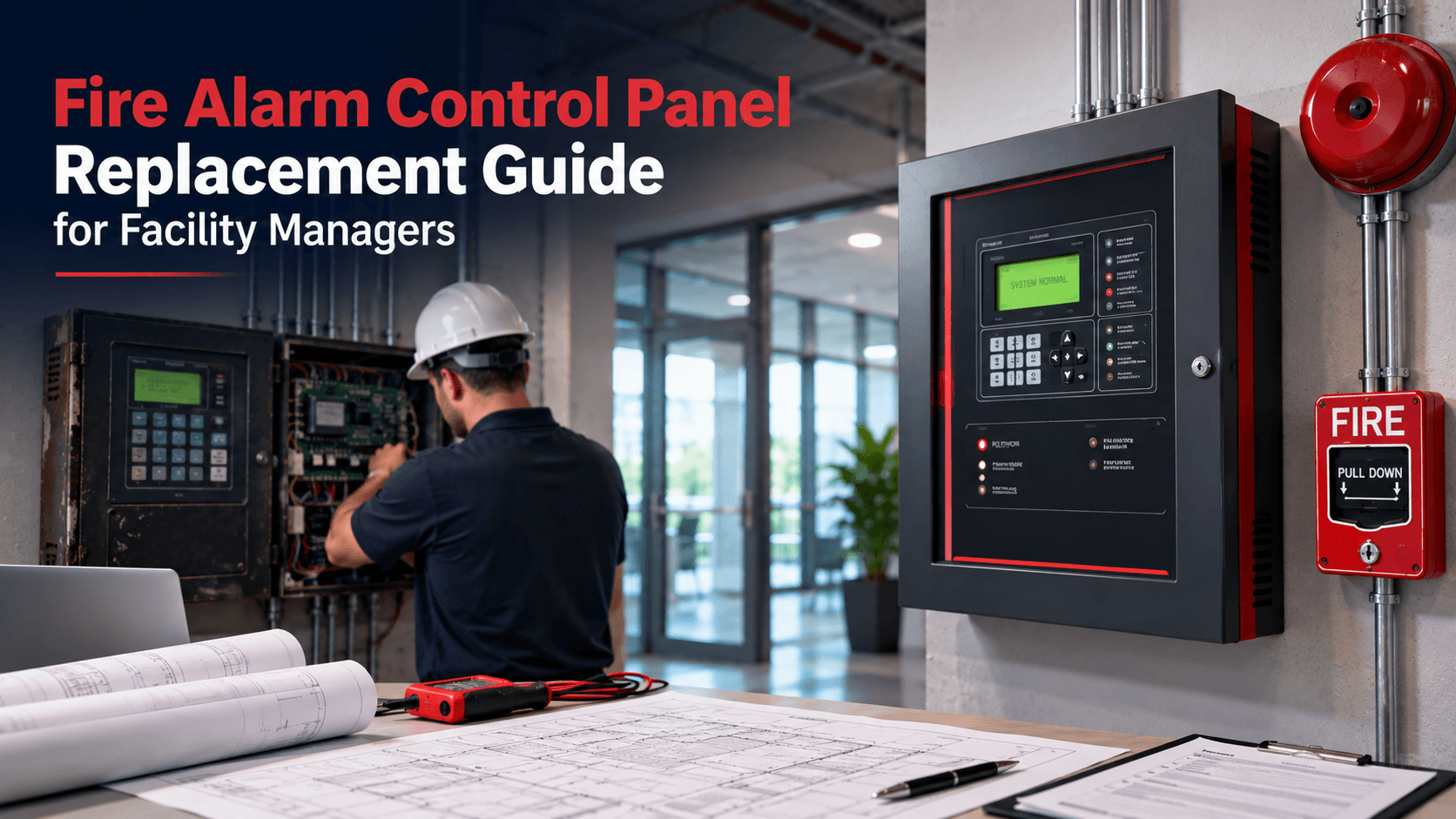
Facility managers rarely think about their building’s fire alarm control panel until it starts causing problems, and by then, a fire alarm control panel replacement is often already overdue. This guide walks through the warning signs that signal it’s time to act, how to weigh repair against replacement, what to look for in a new panel, and how to plan the changeover without leaving a building unprotected. Whether you manage a single office or a portfolio of commercial properties, understanding the process behind fire alarm control panel replacement helps you budget correctly, avoid code violations, and keep occupants safe throughout the transition.
When a Fire Alarm Control Panel Needs Replacing
Fire alarm control panels are built to last, but no electronic system runs indefinitely. Most manufacturers support a panel for a defined service life, after which parts become scarce and software updates stop. Recognizing the early indicators of panel failure gives a facility manager time to plan a fire alarm control panel replacement on their own schedule, rather than scrambling after a shutdown notice from the local fire marshal.
Obsolescence and Unavailable Parts
When a manufacturer discontinues a control panel line, it typically continues supporting existing units for a limited window before parts become difficult to source. If your maintenance contractor is quoting long lead times, substituting incompatible components, or telling you a board is simply unavailable, that is a strong signal that fire alarm panel replacement should move up the priority list. Facilities running discontinued or “legacy” panels are especially exposed, since a single failed processor board can take the entire life-safety system offline until a suitable replacement fire alarm control panel is sourced.
Recurring Troubles and Nuisance Alarms
A panel that logs frequent trouble conditions, drops communication with the monitoring station, or triggers alarms without an identifiable cause is telling you something. These issues often stem from aging capacitors, degraded batteries, or worn relays inside the cabinet rather than the connected devices themselves. When troubleshooting becomes a monthly routine instead of an occasional service call, the underlying cost of keeping an old panel running usually exceeds what a facility manager expects, and it is worth pricing out a fire alarm control panel replacement before another false alarm disrupts operations or triggers unnecessary dispatch fees.
Repair, Refurbish, or Replace
Not every panel problem requires a full replacement. A single failed module, a bad power supply, or a corroded terminal can often be repaired for a fraction of the cost of a new system. The decision comes down to the age of the panel, the availability of parts, and whether the underlying platform still meets current code requirements.
Cost and Downtime Tradeoffs
Repairing an older panel can buy time, but it rarely resets the clock on obsolescence. If the same panel keeps failing, or if replacement boards are refurbished units with their own uncertain lifespan, the facility ends up paying for repeated service calls that add up to more than a planned fire alarm panel replacement would have cost. Downtime is another factor: an emergency swap performed under pressure, often after hours or during a code violation deadline, typically costs more and carries more risk than a scheduled changeover. Facility managers who track the total cost of ownership, not just the invoice for each repair, tend to reach the replace decision sooner and with less disruption.
Key factors that usually tip the decision toward fire alarm control panel replacement include:
- The panel manufacturer has issued an end-of-life or discontinuation notice.
- Replacement boards are refurbished, hard to find, or backordered for months.
- The panel no longer supports current notification appliance circuit requirements.
- Insurance or the authority having jurisdiction has flagged the system during inspection.
Choosing a Compatible Replacement Panel
Once the decision to replace is made, the next question is which panel fits the building. This is where a rushed replace fire alarm control panel project can go wrong: choosing a panel that doesn’t match the building’s device count, wiring topology, or monitoring requirements creates new problems instead of solving the old ones.
Addressable vs Conventional
Most commercial buildings today use addressable systems, which identify the exact device reporting an alarm or trouble condition rather than just the zone. Conventional systems are simpler and less expensive but provide less granular information, which can slow emergency response in larger buildings. When planning a facp replacement, it’s worth confirming which architecture the building’s existing wiring and devices support before assuming a like-for-like swap is possible.
| Factor | Addressable Panel | Conventional Panel |
| Device identification | Reports exact device location | Reports zone only |
| Typical building size | Mid-size to large commercial | Small buildings, single zones |
| Wiring | Supports SLC loops, fewer wiring runs | Home-run wiring per zone |
| Expansion | Modular, scalable point capacity | Limited by physical zone inputs |
| Best suited for | Facilities needing precise alarm location | Simple, low-device-count occupancies |
Point Capacity and Expansion
Every addressable panel has a maximum point capacity, and it’s worth selecting a model with enough headroom for near-term growth, not just the current device count. An addressable panel replacement sized too tightly to existing devices can force another upgrade within a few years if the building adds detectors, notification devices, or a tenant fit-out. Facility managers planning a multi-building rollout should also confirm that the selected platform is available in the capacities needed across each site, since standardizing on one addressable panel replacement product line simplifies training and spare-parts inventory.
Planning the Changeover
A fire alarm control panel replacement is not a task to schedule casually. Because the panel is the central point for detection, notification, and monitoring communication, the changeover has to be sequenced carefully to avoid leaving the building without coverage.
Keeping the Building Covered During Work
Most jurisdictions require continuous fire watch coverage whenever the fire alarm system is out of service, whether that means posted personnel walking the building on a set schedule or a temporary monitoring arrangement. Before starting a fire alarm panel upgrade, confirm the fire watch requirements with the authority having jurisdiction and notify the monitoring company so they don’t dispatch on a signal loss they were expecting. Scheduling the work during lower-occupancy hours, such as overnight or on a weekend, reduces the exposure window and the disruption to normal operations.
Steps that typically belong in a fire alarm control panel replacement plan include:
- Notify the AHJ, monitoring company, and building occupants in advance.
- Arrange fire watch coverage for the duration the system is offline.
- Confirm the replacement panel, programming, and field devices are staged before the shutdown begins.
- Schedule final testing and AHJ inspection promptly after installation.
Reusing Existing Field Devices
One of the more cost-effective aspects of a fire alarm panel retrofit is that existing detectors, pull stations, and notification appliances often don’t need to be replaced, provided the new panel is compatible with the same protocol and device addressing scheme. Verifying compatibility before ordering equipment avoids the expense of a full device-level replacement and keeps the fire alarm panel retrofit closer to a panel-and-programming swap than a gut renovation. A qualified fire alarm technician should confirm device compatibility during the planning phase, since mixing protocols between manufacturers is rarely supported.
Acceptance Testing and AHJ Sign-Off
No fire alarm control panel replacement is complete until it passes acceptance testing. This typically involves testing every initiating device, notification appliance, and monitored circuit to confirm the new panel responds correctly, followed by documentation submitted to the authority having jurisdiction. The National Fire Protection Association publishes NFPA 72, the National Fire Alarm and Signaling Code, which governs the installation, testing, and maintenance requirements for these systems in the United States. Following this habit for every fire alarm panel upgrade speeds up future inspections, and facility managers should keep the acceptance test report, programming records, and as-built device list on file, since these documents are typically requested during future inspections and any subsequent panel replacement cost evaluation.
Common oversights during the final stage of a fire alarm control panel replacement include:
- Skipping a full point-by-point test in favor of a partial spot check.
- Failing to update the building’s fire alarm record documentation after the changeover.
- Not confirming that off-site monitoring is receiving signals correctly before closing out the fire watch.
- Overlooking secondary functions like elevator recall, HVAC shutdown, or door release tied to the panel.
Sourcing Panels from Quick Ship Fire
Finding the right panel quickly matters once a fire alarm control panel replacement decision has been made, particularly when a building is operating under a fire watch or facing an inspection deadline. Quick Ship Fire stocks new, factory-packaged fire alarm control panels and boards from established manufacturers, along with the compatible modules and accessories needed to complete an installation. For facility managers evaluating panel replacement cost against project timelines, having a supplier that can confirm stock and ship promptly often has as much impact on the schedule as the technical specification of the panel itself.
Frequently Asked Questions
How long does a fire alarm control panel replacement usually take?
A straightforward swap with compatible existing devices can often be completed in one to two days, including programming and initial testing. Larger buildings, custom programming, or device-level changes can extend the project to a week or more, particularly when full acceptance testing and AHJ scheduling are factored in.
How do I know if I need addressable panel replacement instead of conventional?
If the current system is addressable, the replacement should generally match to avoid rewiring or re-addressing every device. Buildings upgrading from conventional to addressable gain precise device location reporting, though this typically requires additional wiring and device changes beyond the panel itself.
What causes fire alarm panel replacement costs to vary so much?
Panel replacement cost depends on the panel’s point capacity, whether existing devices and wiring are reusable, labor rates in the region, and whether the project requires after-hours or fire-watch-covered work. Programming complexity and integration with elevators, HVAC, or access control also affect the total.
Can I keep my existing detectors and pull stations during a panel upgrade?
In many cases, yes. If the replacement panel supports the same communication protocol and device addressing as the original, a fire alarm panel upgrade can reuse existing field devices, which significantly reduces both cost and installation time compared to replacing every device.
Is a permit required to replace fire alarm control panel equipment?
Most jurisdictions require a permit and plan submission any time you replace fire alarm control panel equipment, since it is considered a life-safety system modification. The authority having jurisdiction typically reviews the submittal before work begins and inspects the completed installation before signing off.
What happens to the building during a fire alarm panel retrofit?
The building generally requires a fire watch for the period the system is out of service, meaning trained personnel monitor for fire conditions manually. Coordinating the retrofit for lower-occupancy hours and staging equipment in advance keeps this coverage window as short as possible.
How do I know if my facp replacement is due to obsolescence rather than a fixable fault?
If your service provider reports that replacement boards are discontinued, backordered indefinitely, or only available as refurbished stock, the panel has likely reached the end of its supported life. A technician can confirm this by checking the manufacturer’s current product and parts-support status.
Conclusion
A fire alarm control panel replacement is rarely convenient, but planning it proactively, rather than reacting to a failure, puts the facility manager in control of the timeline, the budget, and the disruption to building occupants. Recognizing the signs of an aging panel, weighing repair against replacement honestly, selecting a panel sized for the building’s current and near-term needs, and sequencing the changeover with proper fire watch and AHJ coordination all contribute to a smoother project. Whether the work involves a straightforward facp replacement or a more involved retrofit with new field devices, the goal remains the same: restore full, code-compliant fire protection with minimal downtime.
If your building is showing signs that a replacement fire alarm control panel is needed, confirm the panel model, point capacity, and protocol your building requires, then contact the Quick Ship Fire team or browse the current fire alarm panel inventory to check availability and get your project moving.