
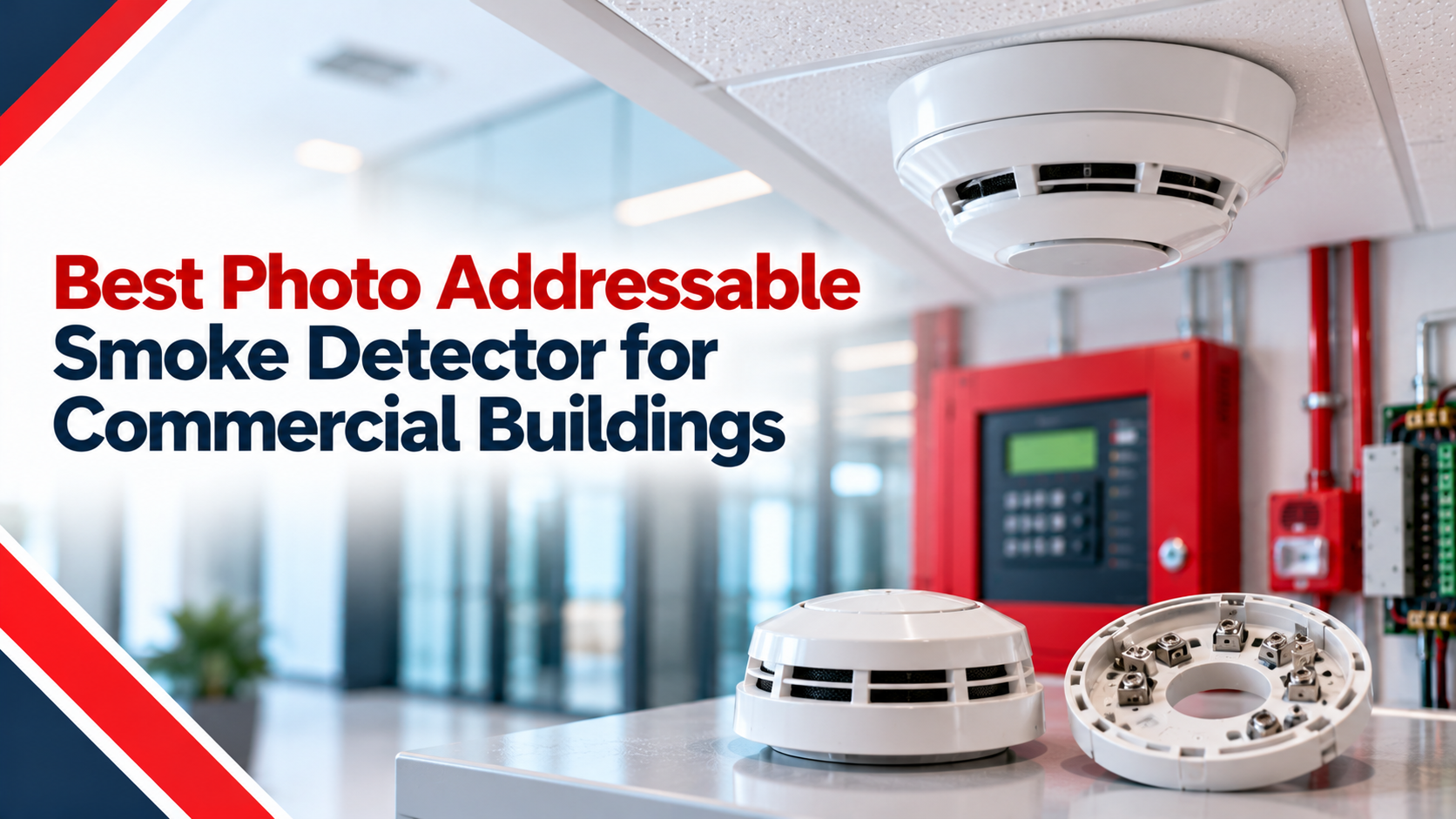
The best photo addressable smoke detector for a commercial building is the one that matches your panel, your base and your fire risk, not simply the one with the longest feature list. This guide explains how a photo addressable smoke detector works, what to compare across Silent Knight, Fire-Lite and System Sensor options, and which compatibility checks prevent expensive mistakes during a replacement or expansion.
What Is a Photo Addressable Smoke Detector?
A photo addressable smoke detector combines two ideas. “Photo” refers to photoelectric sensing, where a light source and a sensor sit in a chamber and smoke particles scatter light onto the sensor. “Addressable” means the detector has its own unique address on the panel’s signaling line circuit, so the panel knows exactly which device is reporting.
That second feature changes how a building is managed. Instead of seeing that “zone 3” is in alarm, staff can see the specific detector and location. This shortens response time, simplifies troubleshooting and allows the panel to report maintenance conditions for individual devices. The underlying sensing method is described in the smoke detector entry on Wikipedia.
How an Addressable Photoelectric Smoke Detector Performs
An addressable photoelectric smoke detector generally responds well to the larger particles produced by smoldering fires, such as overheated wiring or burning upholstery. This makes photoelectric sensing a common general-purpose choice for offices, schools, hotels and healthcare facilities.
It is not immune to nuisance alarms. Dust, steam and insects can enter the chamber, so placement and maintenance matter. Some models add a thermal sensor so a single device can respond to both smoke and heat, which can suit spaces where one device must cover more than one condition.
Strengths of Photo Addressable Detectors
- Device-level location reporting on the panel.
- Good response to smoldering fires.
- No radioactive component.
- Maintenance reporting, such as a dirty-chamber warning, depending on the model and panel.
Limitations to Plan For
- Dust and steam can affect performance if the detector is poorly placed.
- Compatibility is limited to the panel family it was designed for.
- Fast-flaming fire response may differ from other technologies, so review the risk with a fire protection professional.
Commercial Addressable Smoke Detector: Selection Criteria
A commercial addressable smoke detector should be selected using a short, disciplined list. When choosing a photo addressable smoke detector, start with the panel and work outward.
Selection Checklist
- Panel family: Confirm the detector is intended for your panel.
- Protocol and addressing: Verify how the address is set.
- Base: Check the base number, since many detectors require a specific base.
- Environment: Match the detector to dust, humidity, airflow and temperature conditions.
- Listings: Verify the approvals your jurisdiction requires.
- Supply and lead time: Confirm the part is available when you need it.
Silent Knight Addressable Smoke Detector Options
The Silent Knight addressable smoke detector line, including the SD505 series, is designed for Silent Knight addressable panels. These detectors use the panel’s own device protocol, so they should be installed on a compatible Silent Knight system rather than assumed to work on any panel from the same parent company.
When replacing one, record the existing model, the base and the address. Check the datasheet for the exact compatibility list, and confirm that the detector head and base are a supported pair.
Fire-Lite Addressable Smoke Detector Options
A Fire-Lite addressable smoke detector such as the SD365 is intended for Fire-Lite addressable panels. The QuickShipFire listing describes the SD365 as a photoelectric detector and notes that an ivory version replaces the older SD355, which illustrates why checking model generations matters during upgrades.
Fire-Lite panels, including the ES-50X and ES-200X listed in the QuickShipFire catalog, are designed to work with Fire-Lite devices. As with other brands, verify the supported device list for the specific panel rather than inferring compatibility from the brand name.
System Sensor Photoelectric Detector Options
A System Sensor photoelectric detector is common in commercial buildings because System Sensor devices are used across several panel lines. This is helpful in practice, but it does not make every System Sensor detector universal. The detector must still be listed as compatible with the panel, and the base must match.
For a decision between brands, compare the supported panel list, base availability, features such as thermal sensing or isolators, and lead time rather than assuming one brand is superior.
Comparing Leading Options
A Silent Knight addressable smoke detector and a Fire-Lite addressable smoke detector may look similar, yet each is intended for its own panel family. A System Sensor photoelectric detector may be listed for more than one panel line, which is why the panel’s compatibility list is the deciding document. A photoelectric fire alarm detector is a common general-purpose choice in offices, schools and healthcare spaces.
| Factor | Silent Knight | Fire-Lite | System Sensor |
| Typical panel pairing | Silent Knight addressable panels | Fire-Lite addressable panels | Several panel lines, per listing |
| Sensing type | Photoelectric options available | Photoelectric options available | Photoelectric options available |
| Compatibility approach | Verify model on the SK panel | Verify model on the Fire-Lite panel | Verify the panel’s compatibility list |
| Base consideration | Use the supported base | Use the supported base | Use the supported base |
| Best suited for | SK installations | Fire-Lite installations | Mixed or supported-panel installations |
Addressable Smoke Detector Compatibility: What to Verify
Addressable smoke detector compatibility is the most common point of failure in replacement projects. Every photo addressable smoke detector must be paired with a supported base, and every addressable photoelectric smoke detector must be listed for the panel’s protocol. Skipping these checks is the most common reason an addressable smoke detector replacement fails. Several things must line up:
- The detector must be listed for the panel’s protocol.
- The base must be supported by the detector.
- The address must be set and programmed in the panel.
- The loop must have capacity for the new device.
If any item is uncertain, verify it before installation. Compatible detector bases are as important as the detector head, and a worn or mismatched base can cause trouble signals that appear to be detector faults.
Addressable Smoke Detector Replacement: A Practical Process
Replacing a photo addressable smoke detector with a planned process avoids downtime and false alarms. A reliable sequence for addressable smoke detector replacement follows:
- Record the part number, address and location of the existing device.
- Notify the monitoring company and building occupants.
- Remove the old detector and inspect the base and wiring.
- Install the new detector, set its address and confirm the panel recognizes it.
- Test the detector using the method recommended by the manufacturer.
- Clear any trouble signals and document the work.
For help identifying a part, send the model, panel and photo through the quote request form. Buy from a supplier that ships new equipment in original manufacturer packaging.
Photoelectric Fire Alarm Detector Placement Basics
A photoelectric fire alarm detector performs best when placed according to the manufacturer’s instructions and the applicable code. Avoid locations near kitchens, shower areas, exhaust outlets or supply diffusers that can create nuisance alarms. Placement also affects how a photo addressable smoke detector reports nuisance conditions. Spacing and mounting requirements are set by NFPA 72 and local amendments, so your fire protection contractor should confirm layout for any new installation. A commercial addressable smoke detector should also be tested on the schedule your code and the manufacturer require.
Frequently Asked Questions
What is a photo addressable smoke detector?
It is a smoke detector that uses photoelectric sensing and has a unique address on the panel’s signaling line circuit. The panel can identify exactly which detector is reporting, which speeds up response and troubleshooting compared with zone-level conventional detection.
Is a photoelectric smoke detector better than ionization?
Photoelectric detectors generally respond better to smoldering fires and have no radioactive component, while ionization detectors generally respond faster to flaming fires. The best choice depends on the fire risk and the original system design, so consult a fire protection professional.
Can I use any addressable detector on my fire alarm panel?
No. Addressable smoke detector compatibility is defined by the panel’s list of supported devices. Addressable detectors are designed for specific panel families and protocols. Check the panel’s compatibility list and the detector’s datasheet, and confirm the base, before installing. Using an unsupported detector can cause communication faults or an unreliable system.
Are Silent Knight, Fire-Lite and System Sensor detectors interchangeable?
Not automatically. Even though some of these brands share a parent company, each panel supports a defined set of devices. Verify the supported list for your panel before assuming a detector from another brand will work.
How do I replace an addressable smoke detector?
Record the old detector’s address, notify the monitoring company, remove the head, inspect the base, install the new detector and set its address. Then confirm the panel recognizes it and test it according to the manufacturer’s instructions and local requirements.
Do addressable detectors need a special base?
Many do. The base carries the wiring and may be specific to the detector family. Always confirm that the detector and base are a supported pair, because a mismatched or worn base can cause intermittent trouble signals.
Where can I buy a photo addressable smoke detector?
A photo addressable smoke detector is sold by authorized distributors and independent resellers. Prioritize new equipment in original manufacturer packaging, clear return terms and part-identification help. QuickShipFire carries Fire-Lite, Silent Knight and System Sensor detectors and bases.
Conclusion
The best photo addressable smoke detector for a commercial building is the one that fits your panel, base and environment. Compare Silent Knight, Fire-Lite and System Sensor on listed compatibility, availability and features, verify the base, and test every installation. Record addresses, notify the monitoring company and document the work.
If you are replacing or adding detectors, gather your panel model, existing detector part numbers and base types, then browse the QuickShipFire smoke detector range or ask the team to verify the part before you order.