
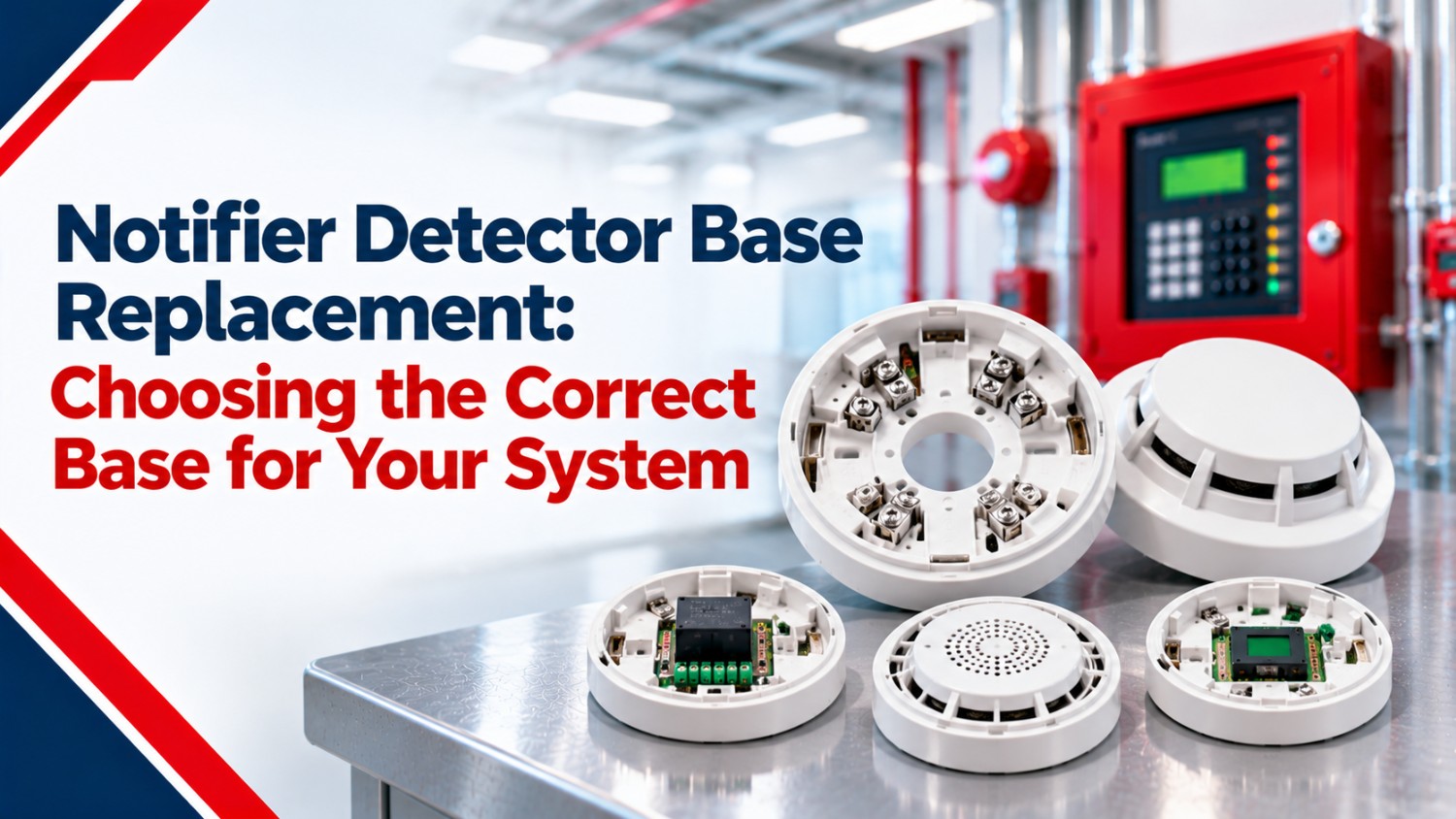
A Notifier detector base is the permanently wired mounting plate that connects a Notifier addressable smoke detector to the signaling line circuit (SLC) of the fire alarm system. When a base is damaged, discontinued or specified for a new function such as relay output or a built-in sounder, the replacement has to match the detector, the wiring and the panel. This guide explains the base types, the compatibility checks that matter and a practical way to choose the right unit the first time.
Most maintenance attention goes to the detector head, because heads fail, get dirty and get replaced on a schedule. The base is easy to overlook until it cracks, corrodes, loses a terminal or needs to be swapped for a version with extra functions. At that point, a wrong guess means a return visit and a ceiling left open.
What a Notifier Detector Base Does
Base and Detector Head Are Separate Parts
On a typical addressable installation, the base mounts to an electrical box and carries the field wiring. The detector head then twists or plugs onto it. When a head is serviced, the base stays in place, so the wiring is not disturbed. That arrangement is why selecting the correct base early matters: the base defines which heads can be fitted, which functions are available at that location and how the device connects to the loop.
How a Notifier Smoke Detector Base Fits the System
A Notifier smoke detector base provides secure terminals for the SLC wiring and a mechanical lock for the head. Some versions add outputs, such as a relay for door holders and elevator recall, or an audible sounder for localized notification. Many addressable systems set the device address on the head rather than in the base, but the specific method depends on the detector series, so confirm it in the installation instructions before assuming the new base needs any configuration.
Notifier Detector Base Models and Types
Notifier detector base models fall into a few functional groups. The table below describes the general purpose of each group; example model names are common in the market but should always be verified against the manufacturer’s current datasheet.
| Base type | Function | Typical use | Key consideration |
| Standard base | Mounting and SLC connection only | Offices, corridors, storage rooms | Most common; B501 is a frequently listed example |
| Relay base | Adds a relay output controlled by the panel | Door holders, fan control, elevator recall | Needs extra wiring and programming |
| Sounder base | Adds a local audible alarm | Sleeping areas and rooms needing local audibility | Requires its own power and wiring path as specified |
| Isolator base | Isolates a faulted loop segment | Loops designed to tolerate short circuits | Loop design determines where it is needed |
If you need a specific base that is hard to find, send the model number to your supplier so they can search for it, since sourcing discontinued components is a common specialist service.
Notifier Detector Base Compatibility
Notifier detector base compatibility has three layers, and all three must agree. The first is mechanical: the head must lock into the base. The second is electrical: the base must carry the signals and any outputs that the head and panel expect. The third is system-level: the panel and loop protocol must support the device that results. A base that fits physically can still be incompatible electrically.
Guidance on how base and panel families relate is covered in the article on Notifier detector base compatibility and the wider topic of addressable panels.
Compatibility Checks Before You Buy
- Detector series: identify the exact head model, since different series may use different bases.
- Base family: do not assume bases from different manufacturers interchange, even when they look similar.
- Panel and protocol: confirm that the panel supports the detector and any relay or isolator device on the loop.
- Function required: decide whether this location needs a standard, relay, sounder or isolator base.
- Existing wiring: check terminal arrangement and electrical box compatibility so the new base mounts without rework.
How to Choose the Correct Notifier Detector Base
Knowing how to choose the correct Notifier detector base comes down to working from the installed equipment outward. Begin with what is on the ceiling, not with a catalog.
Selection Factors That Matter
- Read the model number printed on the existing base and on the detector head, and photograph both before removal.
- Identify the function the location needs today, which may differ from the original design if the use of the room has changed.
- Check the Notifier addressable detector base requirements for the head series, because the same room can contain more than one generation of equipment.
- Confirm the loop wiring class and whether an isolator is part of the design.
- Verify the panel model and firmware limits on the loop device list.
- Ask whether a direct replacement exists or whether an updated base is the recommended substitute.
A Notifier addressable detector base is selected to suit the detector it carries, so the head model, such as the FSP-951 photoelectric detector, is the starting point rather than an afterthought.
Notifier Smoke Detector Base Replacement Step by Step
Notifier smoke detector base replacement is straightforward when the building’s impairment procedure is followed and the work is planned in advance. Notify the monitoring station and occupants, take the affected device out of service, and record the existing wiring before disconnecting anything. Remove the head, disconnect the SLC conductors from the old base, fit the new base to the electrical box, reconnect the conductors to the correct terminals and refit the head.
After installation, confirm that the panel reports the device correctly, run a functional test using the detector manufacturer’s method and verify any relay or sounder output. NFPA 72 sets the broader inspection and testing expectations for fire alarm systems, and the NFPA 72 code page is the starting point for those requirements.
Information to Gather Before Ordering
- The base and head model numbers and their series markings.
- The panel model and the loop device type.
- The required function: standard, relay, sounder or isolator.
- The quantity needed and whether any bases on the same floor share a failure pattern, such as moisture damage.
- Photos of the installed base and terminal layout.
Addressable Smoke Detector Base Replacement in Older Systems
Addressable smoke detector base replacement becomes harder when the original equipment is no longer in production. Older buildings often contain a mix of detector generations, and a base that was standard when the system was installed may now be listed as obsolete. In those cases, the best path is to confirm with the manufacturer or a knowledgeable supplier whether a current base is accepted for the installed head, instead of forcing a physical fit.
Pay particular attention to relay and isolator bases. A relay base performs a control function, so a replacement must match the way the panel is programmed to command it. An isolator base protects part of the loop, so substituting a standard base removes that protection and may violate the system design. These are the situations where a short check beforehand avoids a failed commissioning test.
Choosing a Notifier Fire Alarm Detector Base for Different Spaces
A Notifier fire alarm detector base serves different roles depending on where it is installed. A corridor or office usually needs a standard base. A stairwell, lobby or machinery area that must trigger elevator recall or a door release needs a relay function. Sleeping areas and some assisted living spaces may call for local audibility. The right choice follows the design intent, so check the building’s fire alarm drawings or the system documentation before changing the function of any device. For a wider look at the detectors that pair with these bases, see the range of smoke detectors listed on the site.
Common Mistakes to Avoid
The most frequent errors are easy to prevent. Buyers match a Notifier fire alarm detector base by appearance and discover that the terminals or locking mechanism differ. Technicians replace a relay or isolator base with a standard base because it is easier to find, silently removing a system function. Others forget to document the wiring, then reconnect conductors to the wrong terminals. Some skip the post-installation test and only discover a fault during the next inspection. A short written record of the old and new model numbers, plus a functional test of every output, eliminates most of these problems.
Frequently Asked Questions
What is a Notifier detector base?
A Notifier detector base is the wired mounting base that holds a Notifier smoke detector head and connects it to the fire alarm signaling line circuit. The head plugs or twists onto the base, so the head can be serviced without disturbing the field wiring.
Can I use any base with a Notifier addressable smoke detector?
No. A Notifier addressable detector base must be one that the detector series supports mechanically and electrically, and the panel must support the resulting device. Always check the detector datasheet or ask the manufacturer or supplier before purchasing, because similar-looking bases from different families are not interchangeable.
What types of Notifier detector bases are available?
Notifier detector base models generally fall into four groups: standard bases, relay bases for door holders and fan or elevator control, sounder bases for local audible alarms, and isolator bases that protect a loop segment from a short circuit. The right type depends on the function required at each device location.
How do I find the right replacement base for an old Notifier detector?
For addressable smoke detector base replacement on an older system, record the model numbers from both the existing base and the detector head, note the panel model and any special function, then confirm the match with the manufacturer’s documentation or a supplier experienced with discontinued fire alarm components. Photos of the installed unit help speed up identification.
Do I need to reprogram the panel after replacing a base?
A like-for-like standard base normally does not need changes, because the address typically stays with the detector head on many systems. A relay, sounder or isolator base can involve programming or wiring changes. Follow the installation instructions and test every function afterward.
Can a standard base replace a relay or isolator base?
It will physically hold a detector, but it will not perform the relay or isolation function, so the system no longer works as designed. Replace a specialty base with the same function unless a qualified designer approves a change.
Who should install a replacement detector base?
Replacement should be done by a qualified fire alarm technician following the manufacturer’s instructions, the building’s impairment procedure and local code requirements. This protects the device, the loop and the building’s alarm reporting while the work is in progress.
Conclusion
Knowing how to choose the correct Notifier detector base is a matter of working from the installed system outward: identify the detector head, define the function the location needs, confirm panel and loop compatibility, and test every output after the swap. Taking a few minutes to record model numbers and photograph the existing installation prevents the most common errors, including mismatched terminals and the loss of relay or isolation functions.
If you are planning a replacement or need help locating a discontinued part, gather the model numbers, panel details and photos first, then submit them with your request for Notifier smoke detector base replacement support so the QuickShipFire team can help confirm the correct match before you order.