
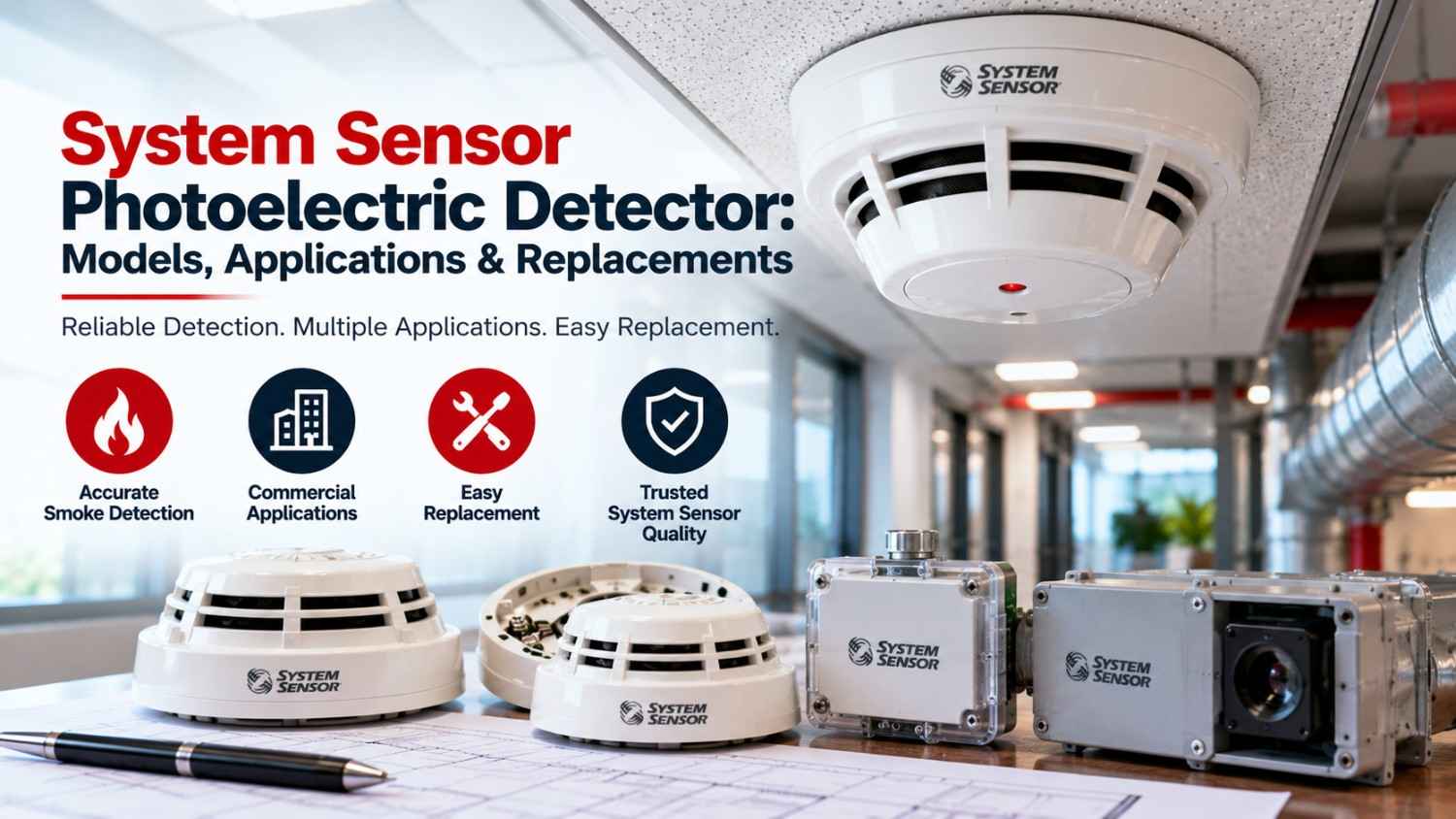
A System Sensor photoelectric detector is one of the most common smoke sensing devices in commercial fire alarm systems, yet choosing or replacing one takes more than matching a model number. This guide explains how photoelectric detection works, where each detector type fits, how to approach a replacement, and what to verify on price, stock and supplier terms.
How a System Sensor Photoelectric Detector Works
A System Sensor photoelectric detector contains a light source and a sensor arranged so that clean air does not reach the sensor. When smoke enters the chamber, particles scatter light onto the sensor, and the detector signals an alarm to the panel. Based on the general principles of photoelectric smoke detectors, this method responds well to smoldering fires and is less prone to nuisance alarms from cooking than ionization sensing.
System Sensor is a Honeywell company, and its detectors are specified across many commercial panels. That flexibility comes with a condition: every panel publishes a compatibility list, and the detector and its base must appear on it. A device that works in one system may not be listed for another.
No single technology is right everywhere. Heat detectors suit kitchens and garages, ionization sensing responds quickly to flaming fires, and multi-criteria devices combine methods, so match each space to its hazard rather than to a preferred brand.
Where a System Sensor Photoelectric Detector Fits Best
- Offices, corridors and classrooms: General-purpose ceiling detection where slow, smoky fires are the main risk.
- Areas near kitchens and break rooms: Spaces where ionization sensing could trigger nuisance alarms.
- HVAC ductwork: Duct detector housings sample air moving through supply or return ducts.
- Warehouses and atriums: Reflective beam detectors cover high ceilings and long open spans.
Models and Applications: Conventional, Duct and Beam
The System Sensor category at QuickShipFire shows how varied the family is. The 2W-B i3 is a conventional 2-wire photoelectric smoke detector for ceiling mounting. The DNR-AUS is an addressable photoelectric duct smoke detector, and the DNRW is a watertight housing for outdoor duct mounting. The OSI-R-SS is a reflective beam detector for warehouses, atriums and other high-ceiling buildings.
Conventional and addressable detectors are not interchangeable. A conventional detector reports a zone to the panel, while an addressable device reports its own location. Matching the detector type to the panel and environment matters more than picking the most feature-rich System Sensor photoelectric detector.
Duct and beam detectors solve problems ceiling detectors cannot. A duct detector samples air moving through HVAC ductwork, and its housing must suit the duct size and airflow. A reflective beam detector projects light across a long span and watches for a drop in the returned signal, suiting high ceilings where spot detectors would be hard to maintain. Both need careful placement by a qualified designer.
| Factor | System Sensor 2W-B i3 | Fire-Lite SD365 | Simplex 4098-9601 |
| Detection method | Photoelectric | Photoelectric | Photoelectric |
| System type | Conventional 2-wire | Addressable | Addressable |
| Mounting | Ceiling | Ceiling | Ceiling |
| Compatibility | Panel and base must be listed | Panel and base must be listed | Panel and base must be listed |
Other manufacturers, including Notifier, Edwards and Siemens, offer their own photoelectric detectors, and many owners stay within the brand of their panel. A System Sensor photoelectric detector is a natural fit where the panel documentation lists System Sensor devices.
System Sensor Photoelectric Detector Replacement: What to Check
A correct System Sensor photoelectric detector replacement begins with the installed device. Read the model on the label, identify whether it is conventional or addressable, and check the base it plugs into. A new head that fits physically may still be unlisted for the panel, so confirm compatibility before ordering.
Checks Before Ordering a Replacement
- The model number and any suffix printed on the installed detector
- Whether the device is conventional or addressable, and its address if applicable
- The base type and whether it also needs replacing
- The environment, including dust, humidity, temperature and airflow
Have a qualified technician install and functionally test the new detector, and record the result. Protect installed detectors during renovation work and clean or replace them afterward according to the manufacturer’s instructions.
Testing and Maintaining Photoelectric Detectors
Detectors are inspected and tested on a schedule set by NFPA 72 and your authority having jurisdiction. Sensitivity testing, cleaning and functional checks help identify aging devices before they cause trouble signals or miss a real event. Keep a device list showing model, location and installation date so replacement can be planned. A short spares list of the System Sensor photoelectric detector models you use most also shortens downtime.
Buying a System Sensor Photoelectric Detector: Price, Stock and Suppliers
When you order System Sensor photoelectric detectors online, look for full model numbers, clear photos and stated return terms. For larger projects, request quantities in advance so availability can be confirmed. QuickShipFire sells new equipment in original manufacturer packaging. Decide first whether you need a detector head, a base, a duct housing or several.
The System Sensor photoelectric detector price depends on the detector type: a conventional ceiling model differs greatly from a duct detector or a long-range beam detector. Availability changes, and at the time of writing the DNR-AUS shows as out of stock, so check current stock before planning an installation date. For volume orders, request a quote.
QuickShipFire is an independent reseller, not an authorized manufacturer channel, so judge any supplier on condition, warranty and support. You can review the company background before ordering.
Buyer’s Checklist
- Confirm new condition and original manufacturer packaging
- Compare listings by exact model and price by detector type
- Check that the detector and base are listed for your panel
- Review return and warranty terms before paying
Frequently Asked Questions
What is a System Sensor photoelectric detector?
A System Sensor photoelectric detector is a smoke detector that uses scattered light to sense smoke particles and signal the fire alarm panel. It suits smoldering fires and areas where cooking could cause nuisance alarms.
How does replacement work?
Identify the installed model, confirm whether it is conventional or addressable, check base and panel compatibility, and have a qualified technician install and test the new detector.
Where can I order these detectors online?
Buy from resellers that list full model numbers, condition and return terms, and confirm whether the seller is an authorized distributor or an independent reseller.
What affects System Sensor photoelectric detector price?
Price depends on the detector type, such as conventional ceiling, duct or beam, along with condition and availability. Compare listings by exact model.
Are detectors in stock ready to ship?
Availability changes, so confirm stock matches your exact model before planning an install date. Orders typically ship within one to three business days, though dates are estimates.
How do I choose a trustworthy supplier?
Look for new condition, original packaging, clear return and warranty terms, and honest disclosure of authorized or independent reseller status.
Can I get discount pricing?
It depends on the seller, model and quantity, so request a quote for larger orders and confirm shipping costs.
Conclusion
A System Sensor photoelectric detector performs best when matched carefully to the panel, the base and the space it protects. Identify the exact model, separate conventional from addressable devices, confirm listings, test after installation and compare suppliers on condition, warranty and terms rather than headline price.
Before ordering, gather your panel model, existing detector labels and quantities. Then explore the System Sensor range or contact the team for a compatibility check before checkout.