
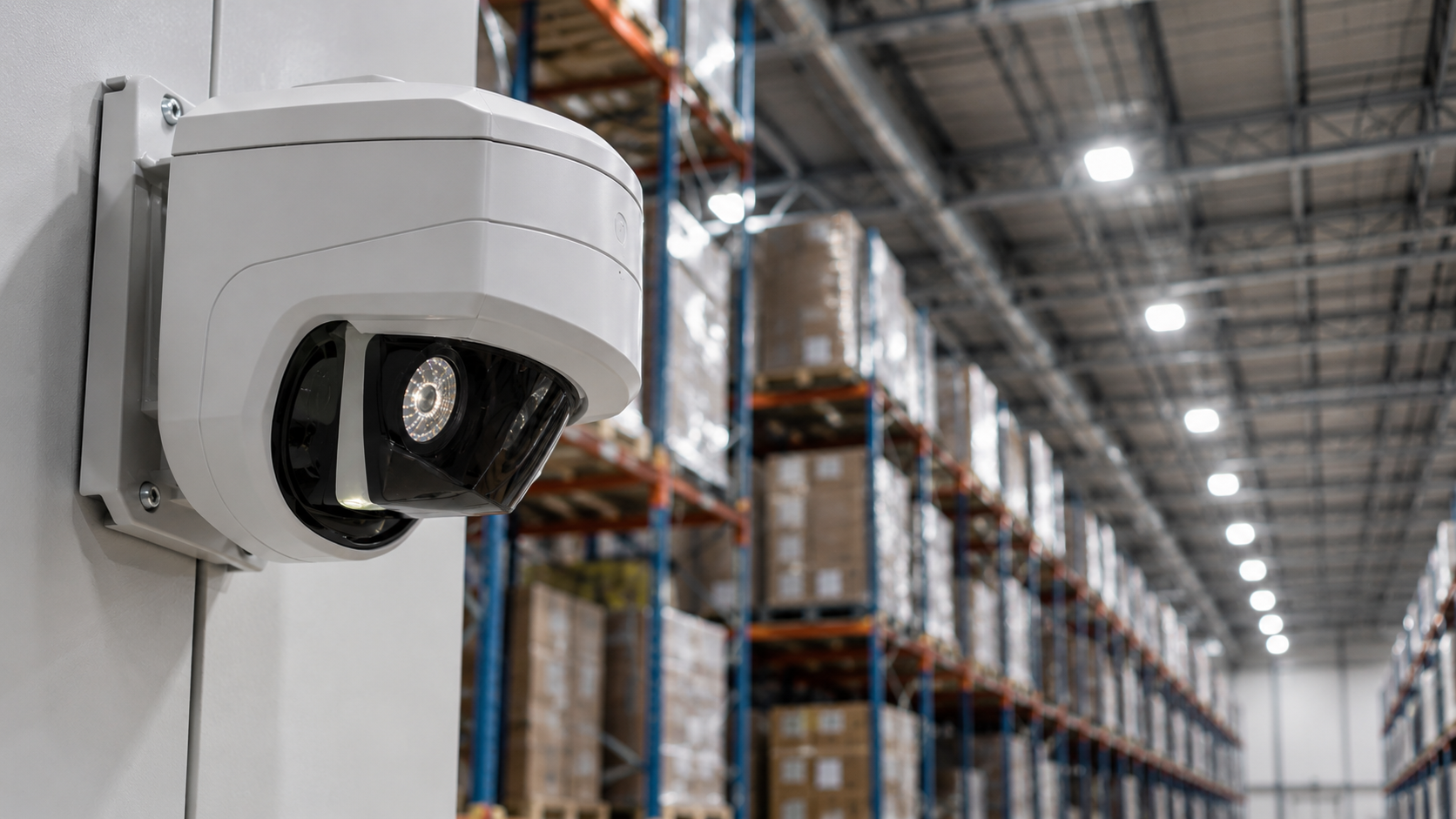
When a ceiling soars thirty, forty, or sixty feet above the floor, conventional point detection struggles to do its job, and that is exactly where beam smoke detectors earn their place. Instead of waiting for smoke to reach a single device on the ceiling, projected beam detection watches an entire line of sight across a space, sensing smoke the moment it crosses the beam. For atriums, warehouses, and other large-volume rooms, beam smoke detectors deliver reliable coverage that spot devices simply cannot match.
This guide explains what beam smoke detectors are, how projected beam detection works, and the specific situations where it is the right choice. You will also find a comparison with other detection methods, key installation and code requirements, and answers to the questions facility managers ask most. By the end, you will know exactly when and where to specify beam detection for your building.
What Are Beam Smoke Detectors?
Beam smoke detectors are optical detection devices that monitor a long, invisible beam of infrared light traveling across a protected area. Rather than sampling air at one fixed point, they measure how much that light is obscured as it crosses the space. When smoke drifts into the path, it scatters and absorbs the light, the received signal drops, and the device signals an alarm. Because a single unit can protect a path up to roughly one hundred meters long, beam smoke detectors cover large open areas with far fewer devices than point detection would require.
In practice, beam smoke detectors belong to the broader family of smoke sensing technology, but they solve a problem the others cannot. While conventional photoelectric detectors sample air at a single fixed point, beam units evaluate an entire path of light, so where ceilings are too high or too open for conventional devices, projected beam detection bridges the gap between standard point coverage and high-end air-sampling systems.
How Projected Beam Detection Works
Understanding the operating principle makes it easy to see why beam smoke detectors suit certain spaces so well. The technology rests on a simple optical idea: smoke between a light source and a sensor reduces the light that reaches the sensor.
Transmitter, Receiver, and Reflector
A projected beam system uses a light transmitter and a receiver. In an end-to-end arrangement, the transmitter sits on one wall and the receiver on the opposite wall. In the more common reflective design, the transmitter and receiver share one housing, and a reflector mounted across the room bounces the beam back. Reflective beam smoke detectors are popular because all wiring and electronics stay on one side of the room, simplifying installation and service.
Obscuration and Alarm Thresholds
The detector continuously measures obscuration, the percentage of light blocked along the beam. A small, gradual reduction from dust or dirt is compensated automatically, while a faster, larger drop consistent with smoke triggers an alarm. If an object completely blocks the beam, the detector reports a trouble condition instead of a false alarm. These thresholds let beam smoke detectors stay sensitive to real fires while resisting nuisance trips.
Beam Smoke Detectors vs. Other Detection Methods
Choosing the right technology means weighing ceiling height, airflow, aesthetics, and budget. The table below compares projected beam detection with the two methods it most often replaces or complements.
| Detection Method | Best Use Case | Key Trade-Off |
| Beam smoke detectors | High ceilings, atriums, large open volumes | Needs clear line of sight and alignment |
| Spot-type detectors | Standard ceilings, rooms, corridors | Impractical and costly above ~25-30 ft |
| Aspirating smoke detection | Critical, very-early-warning spaces | Higher cost and pipe network design |
Each technology has its place. Conventional point detectors remain the workhorse for ordinary ceilings, while aspirating smoke detection offers the earliest possible warning for data centers and irreplaceable assets. Beam smoke detectors sit between them, providing dependable coverage for tall, open architecture at a reasonable cost.
Where to Use Beam Smoke Detectors
Projected beam detection shines wherever a single point device would be too high, too sparse, or too difficult to maintain. Common applications include:
- Atriums and lobbies, where soaring open volumes make ceiling-mounted point detection impractical.
- Warehouses and distribution centers with high racking and broad, uninterrupted ceiling spans.
- Manufacturing plants and aircraft hangars, where large bays demand wide-area coverage.
- Historic buildings, churches, and theaters, where beam smoke detectors protect the space without intrusive devices marring decorative ceilings.
- Stadiums, transit terminals, and shopping malls, where long sight lines suit a projected beam far better than dozens of spot units.
In each of these settings, beam smoke detectors reduce the device count, simplify maintenance access, and preserve sight lines and architecture, all while delivering code-compliant coverage.
Key Advantages of Beam Smoke Detectors
Facility managers and designers choose beam detection for several practical reasons:
- Wide-area coverage from a single device, cutting the number of detectors needed in large rooms.
- Lower maintenance burden, because fewer units mean fewer ceiling-height service trips.
- Discreet appearance that preserves the look of architecturally sensitive spaces.
- Fast response across the full width of a space rather than one fixed point.
- Seamless integration with the building fire alarm system through standard initiating circuits.
Specifying projected beam detection for a tall or open space? QuickShipFire stocks beam smoke detectors and hard-to-find detection components, both new and obsolete, with fast U.S. shipping. Request a quote today and keep your project moving.
Installation and NFPA 72 Requirements
Like all detection devices, beam smoke detectors must be installed and tested in accordance with NFPA 72 and the manufacturer’s published instructions, and they connect to the building’s fire alarm control panel through compatible initiating circuits. NFPA 72 (2025, section 17.7.4.7) and the product listing under UL 268 govern how the devices are applied, while the manufacturer’s data sheet dictates the allowable beam length and spacing for each model.
Mounting, Spacing, and Alignment
Beam smoke detectors are typically mounted near the ceiling with the beam running parallel to it. The code limits how far the beam may sit below the ceiling and how widely beams may be spaced, with the manufacturer’s instructions setting the precise figures. Stable mounting surfaces are essential, because building movement or vibration can knock a beam out of alignment and create trouble signals. Many modern beam smoke detectors include automatic or motorized alignment features that simplify commissioning and ongoing service.
Stratification and Ceiling Height
In very tall spaces, hot smoke can cool and spread into a flat layer before it ever reaches the ceiling, a phenomenon called stratification. Designers address it by placing one beam at the ceiling and, where needed, a second beam at a lower level to catch smoke that stratifies below the peak. Evaluating stratification is one of the most important steps in laying out beam smoke detectors for atriums and other high-volume rooms.
Testing and Commissioning
Because they protect large, high-value spaces, beam units deserve careful commissioning and a clear testing routine. At acceptance, the installer verifies alignment, confirms the obscuration baseline, and tests the alarm and trouble responses end to end. Periodic testing then keeps the device dependable over its service life. A practical program typically covers:
- Confirming the beam remains aligned and the received signal sits within the listed range.
- Introducing a calibrated test filter or approved smoke method to confirm the alarm threshold.
- Verifying that a full beam blockage reports a trouble condition rather than an alarm.
- Cleaning optical surfaces and inspecting the reflector or receiver for damage or drift.
Documenting each test and keeping records available for the Authority Having Jurisdiction is part of staying compliant. Because one beam replaces many point devices, this testing is efficient, but it does require safe access at height, so plan lift or scaffold needs into every service visit well ahead of time.
Limitations and Design Considerations
Projected beam detection is powerful, but it is not the answer for every room. Keep these limits in mind:
- A clear, unobstructed line of sight is mandatory; stored goods, banners, or moving equipment can block the beam.
- Solid mounting is required, since structural movement misaligns the beam and generates trouble conditions.
- Beam smoke detectors protect open volumes, not enclosed risks such as HVAC airflow, where duct-mounted devices are the right tool.
- Optical surfaces need periodic cleaning and the alignment should be verified during routine testing.
For airflow within ductwork, dedicated duct detectors remain the correct choice, and very small or sensitive rooms may be better served by point devices or air sampling. Pairing beam smoke detectors with the right specialty detectors for each space produces the most complete and cost-effective design.
Conclusion
Beam smoke detectors solve a problem that has challenged designers for decades: how to protect tall, wide, and architecturally demanding spaces without filling the ceiling with hardware. By watching an entire line of sight rather than a single point, projected beam detection delivers reliable, wide-area coverage for atriums, warehouses, and open public spaces while keeping device counts and maintenance low. Specify them where ceilings are high and sight lines are clear, follow NFPA 72 and the manufacturer’s instructions for mounting and alignment, and account for stratification, and beam smoke detectors will protect your building dependably for years.
Whether you are designing a new system or replacing an aging unit, sourcing the right part quickly keeps the project on track. QuickShipFire supplies beam smoke detectors, notification appliances, and other fire detection equipment, both current and obsolete, backed by expert support to help you match products to your application.
Frequently Asked Questions
What are beam smoke detectors used for?
Beam smoke detectors are used to protect large, open, high-ceiling spaces such as atriums, warehouses, manufacturing plants, churches, and transit terminals. In these areas, conventional point detection is impractical because the ceiling is too high or the volume too large, so projected beam detection provides efficient wide-area coverage from a single device.
How do beam smoke detectors work?
They project a beam of infrared light from a transmitter to a receiver, or to a reflector and back. The detector measures how much of that light is obscured along the path. When smoke crosses the beam, the received light drops, and once the obscuration exceeds the alarm threshold the device signals the fire alarm system.
What is the difference between beam and point detectors?
Spot-type detectors sense smoke at one fixed point on the ceiling and suit ordinary rooms and corridors, but they become impractical above roughly twenty-five to thirty feet. Beam smoke detectors monitor a long line of sight across a space, making them the better choice for high ceilings and large open volumes where many spot units would otherwise be required.
How high can beam smoke detectors be installed?
Projected beam detection is commonly applied in spaces ranging from about twenty-five feet up to sixty feet or more, well beyond the practical reach of conventional point detectors. The exact maximum depends on the product listing and the manufacturer’s published instructions, and tall spaces often require attention to smoke stratification in the layout.
Do beam smoke detectors require special maintenance?
They need periodic inspection and testing under NFPA 72, including verifying alignment, checking the obscuration reading, and cleaning the optical surfaces. Because one beam covers a large area, total maintenance is usually lower than for the many point devices it replaces, though access at height should be planned in advance.
What causes false alarms or trouble signals on beam detectors?
Common causes include objects blocking the beam, structural movement or vibration that misaligns the optics, and heavy dust accumulation. Well-designed beam smoke detectors distinguish a sudden total blockage, which they report as a trouble condition, from the gradual obscuration pattern of real smoke, which triggers an alarm, helping minimize nuisance trips.
Are beam smoke detectors compliant with NFPA 72?
Yes. When selected, installed, and maintained according to NFPA 72 and the manufacturer’s instructions, and listed under UL 268, beam smoke detectors are fully code compliant. Section 17.7.4.7 of the 2025 edition addresses their application, and the Authority Having Jurisdiction confirms compliance for each specific installation.