
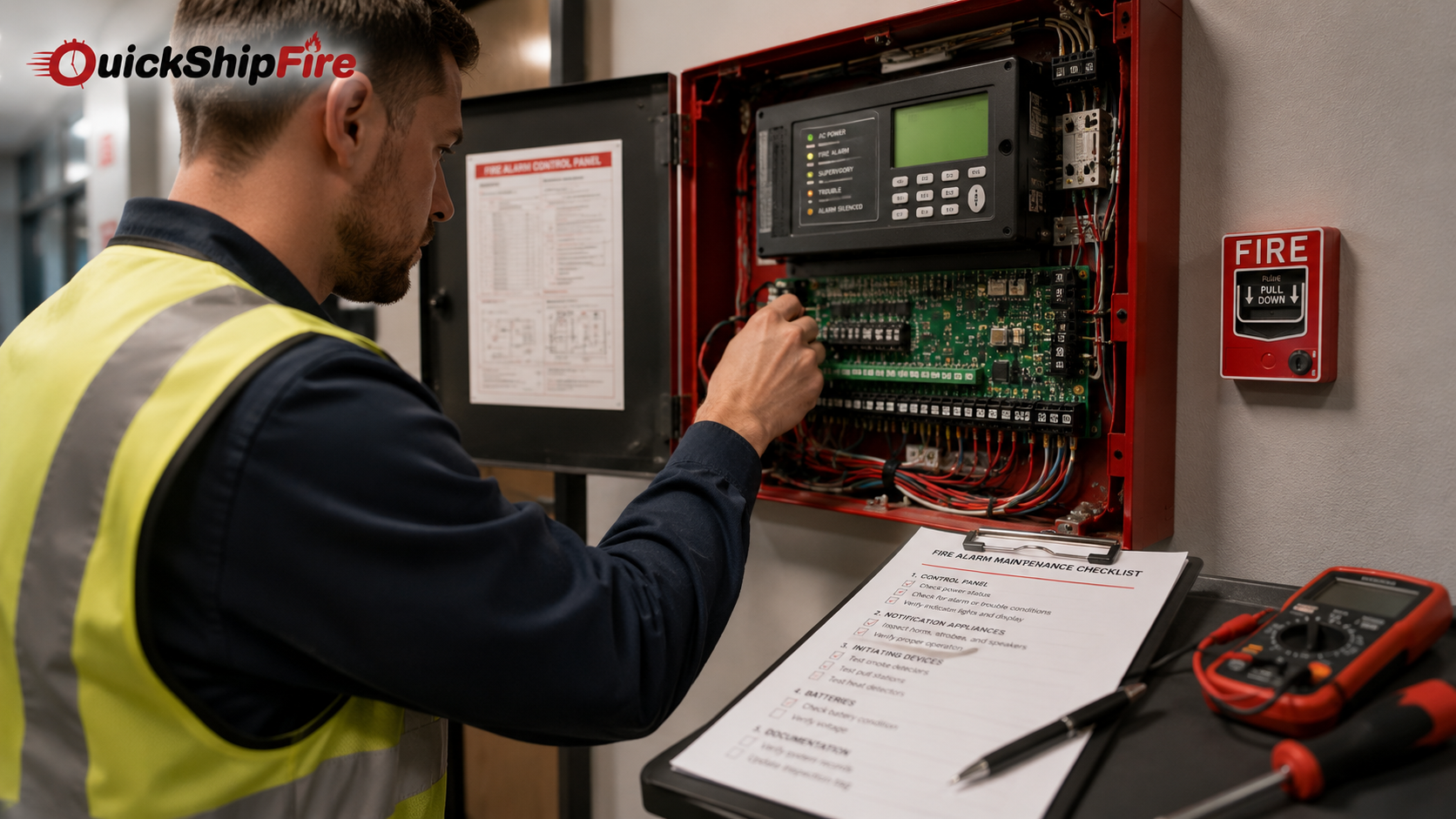
Fire alarm system maintenance is one of the most important responsibilities a building owner carries, yet it is also one of the most frequently overlooked until something goes wrong. A detection network that is not tested and serviced on schedule can fail silently, leaving occupants unprotected and the owner exposed to liability, fines, and insurance complications. This guide walks you through a complete fire alarm system maintenance checklist so you can keep your building safe, compliant, and inspection-ready, and shows you where to source the control panels and boards you may need along the way.
Why Fire Alarm System Maintenance Matters
A fire detection network is a life safety investment, and like any critical equipment it degrades over time. Dust accumulates inside detectors, batteries lose capacity, and wiring connections loosen. Without a consistent program of fire alarm system maintenance, these small issues compound until the network either fails to detect a real event or generates nuisance signals that erode confidence.
Beyond safety, there is a legal dimension. Codes adopted by your jurisdiction, primarily NFPA 72, require documented inspection, testing, and maintenance at defined intervals. A building owner who neglects these duties may face citations, voided insurance claims, and personal liability if a preventable failure causes harm. Regular fire alarm system maintenance is the most cost-effective form of risk management available, because a small recurring expense prevents a catastrophic one.
Understanding Inspection, Testing, and Maintenance
The industry refers to these activities collectively as ITM, which stands for inspection, testing, and maintenance. Each term means something specific, and confusing them is a common mistake among building owners who assume a single annual visit covers every obligation.
Inspection
Inspection is a visual check to confirm that equipment appears to be in operating condition and free of physical damage or obstruction. It can be performed relatively frequently and often does not require specialized tools, making it the easiest layer of upkeep to keep current on your own.
Testing
Testing is a functional verification that a device or circuit actually performs as designed, such as activating a smoke detector with test aerosol or confirming that notification appliances sound. Proper fire alarm inspection and testing requires trained personnel and specific procedures defined by code and the manufacturer, so this layer is usually handled by a licensed service company.
Maintenance
Maintenance is the work performed to keep equipment in reliable condition, including cleaning detectors, replacing batteries, and repairing or swapping failed components. This is where having the right replacement parts on hand turns a multi-day outage into a same-day fix and keeps your fire alarm system maintenance program from stalling.
The Fire Alarm System Maintenance Checklist
The schedule below reflects common NFPA 72 intervals, but always confirm requirements with your local authority having jurisdiction, since some jurisdictions adopt stricter rules than the model code.
Daily and Weekly Checks
Each day, glance at the panel to confirm it displays a normal condition with no trouble, supervisory, or alarm indicators. A trouble light is the system telling you something needs attention. Catching it early is the simplest part of any maintenance routine and prevents small faults from becoming inspection failures.
Monthly Tasks
Monthly, verify that the system’s primary and backup power are both present and that batteries show no signs of corrosion or swelling. Confirm that any off-site monitoring connection is communicating. Walk key areas to ensure each smoke detector and pull station remains unobstructed and undamaged.
Quarterly Tasks
On a quarterly basis, test a representative sample of supervisory signals, water flow devices where present, and communication paths to the monitoring center. These checks confirm that the links between field devices and the outside world remain intact and that your fire alarm system maintenance covers more than just the obvious hardware.
Semi-Annual Tasks
Twice a year, inspect and test items such as panel functions, in-building emergency communication where installed, and select initiating devices. This cadence catches drift in performance before it becomes a failure during a real emergency.
Annual Tasks
The annual service is the most comprehensive event in any fire alarm system maintenance program. A qualified technician tests every initiating device, including each smoke detector and pull station, every notification appliance, all modules, and the full functionality of the control panel. Sensitivity testing of detectors is typically required, and any sensor that falls outside its listed range must be cleaned, recalibrated, or replaced.
Components That Require Regular Attention
Certain parts demand consistent focus because they wear, drift, or simply reach the end of their service life faster than the rest of the network.
Smoke and Heat Detectors
Detectors accumulate dust and contaminants that change their sensitivity over time. Many addressable devices report their own status, but all require periodic cleaning and eventual replacement. Keeping spare smoke detectors on hand means a failed sensitivity test never delays your compliance or your fire alarm system maintenance schedule.
Batteries and Power Supplies
Standby batteries are among the most common failure points. They typically need replacement every few years, and a failed battery places the entire network in a trouble condition. Annual load testing confirms they can carry the system through a power outage for the required duration.
Control Panels and Modules
The control panel is the brain of the network, and its modules translate field signals into action. Faulty modules or an aging board can compromise the whole installation, which is why owners of older systems often keep critical spares available to avoid extended downtime.
Need a replacement detector, module, or battery before your next service date? Browse our in-stock fire alarm modules and parts and get the components shipped fast so your fire alarm system maintenance never stalls.
How Aging Equipment Changes the Picture
Buildings constructed a decade or more ago often run on equipment that the original manufacturer no longer produces. As these systems age, individual detectors, modules, and boards begin to fail more frequently, and replacement parts become harder to find through ordinary channels. Owners who ignore this reality can find themselves with a non-functioning network and no quick way to restore it, which is both a safety gap and a compliance problem.
The smart response is to plan ahead. Identify whether your equipment is approaching obsolescence, ask your service provider which components fail most often, and establish a relationship with a supplier who can locate hard-to-find parts quickly. Doing so transforms an aging system from a looming liability into a manageable one, and it keeps your protection intact while you budget for an eventual upgrade on your own timeline rather than after a failure forces your hand.
Documentation: The Paper Trail That Protects You
Every inspection, test, and repair should be recorded. A complete log documents what was done, when, by whom, and what the results were. When the fire marshal arrives, organized records often shorten the visit dramatically and demonstrate a genuine commitment to safety.
Good documentation also protects the owner legally. In the unfortunate event of an incident, a thorough fire alarm inspection and maintenance history shows that reasonable care was exercised. Store records securely and keep them for at least the period your jurisdiction and insurer require, and back them up so a single lost binder never erases years of diligence.
Common Maintenance Mistakes to Avoid
Several recurring errors undermine otherwise good intentions. The most frequent is ignoring a trouble signal because the building seems fine, which can mask a genuine fault. Others include skipping battery replacement to save money, painting over or covering detectors during renovation, failing to update records, and using untrained personnel for functional testing.
Perhaps the costliest mistake is reactive thinking, waiting for a device to fail completely instead of replacing it proactively. A disciplined approach to fire alarm system maintenance treats the program as continuous, anticipating wear rather than scrambling after a failure or a failed inspection. Owners who shift from reactive to proactive almost always spend less over the life of the system.
Building a Year-Round Maintenance Routine
The easiest way to stay compliant is to turn the checklist into a calendar. Assign the daily panel glance to your opening staff, put the monthly power and walk-through checks on a recurring reminder, and book your quarterly, semi-annual, and annual service well in advance with a licensed provider. Treating each interval as a fixed appointment removes the guesswork and ensures nothing slips through the cracks.
Pair that calendar with a simple parts strategy. Identify the detectors, batteries, and modules your specific system depends on, and keep one or two of each in a labeled cabinet near the panel. When something fails a test, you swap it the same day rather than waiting on a special order, which keeps both your building and your fire alarm system maintenance program running without interruption.
Conclusion
A well-maintained detection network is the silent guardian of every commercial building, and keeping it that way is squarely the owner’s responsibility. By following a structured fire alarm system maintenance checklist, daily panel checks, monthly power verification, quarterly and semi-annual testing, and a thorough annual service, you protect occupants, satisfy code, and avoid the steep costs of failure. Pair that schedule with diligent documentation and a small stock of critical spares, and inspections become routine rather than stressful.
The goal is simple: a system that performs flawlessly the moment it is needed. When a component reaches the end of its life or fails a test, fast access to the right part is what keeps your building protected and compliant. QuickShipFire supplies the detectors, modules, panels, and hard-to-find components that building owners rely on, backed by fast shipping and knowledgeable support whenever your fire alarm system maintenance demands a quick replacement.
Keep your building inspection-ready year-round. Request a quote from QuickShipFire and source the exact parts your fire alarm system maintenance program depends on.
Frequently Asked Questions
How often is fire alarm system maintenance required?
NFPA 72 sets intervals ranging from monthly checks to a comprehensive annual test, with some tasks performed quarterly and semi-annually. Always confirm exact requirements with your local authority.
Can a building owner perform maintenance themselves?
Owners can handle visual inspections and panel checks, but functional testing and sensitivity testing require trained personnel following code and manufacturer procedures to remain compliant.
How long do fire alarm batteries last?
Standby batteries typically last three to five years, though performance varies. Annual load testing confirms they can power the system through an outage for the required duration.
What does a trouble signal on the panel mean?
A trouble signal indicates a fault such as a low battery, a disconnected device, or a wiring issue. It should be investigated and cleared promptly to keep the system reliable.
Why is documentation so important?
Records prove the work was performed, speed up a fire alarm inspection, and protect the owner legally by showing reasonable care was exercised. Most jurisdictions and insurers require retained logs.
What happens if I skip fire alarm system maintenance?
You risk silent system failure, code violations, fines, voided insurance claims, and personal liability. Neglected detection networks are a leading cause of failed inspections.
Should I keep spare parts on hand for my system?
Yes, especially for older or discontinued equipment. Stocking common detectors, modules, and batteries turns a failed test into a same-day fix instead of a lengthy outage.