
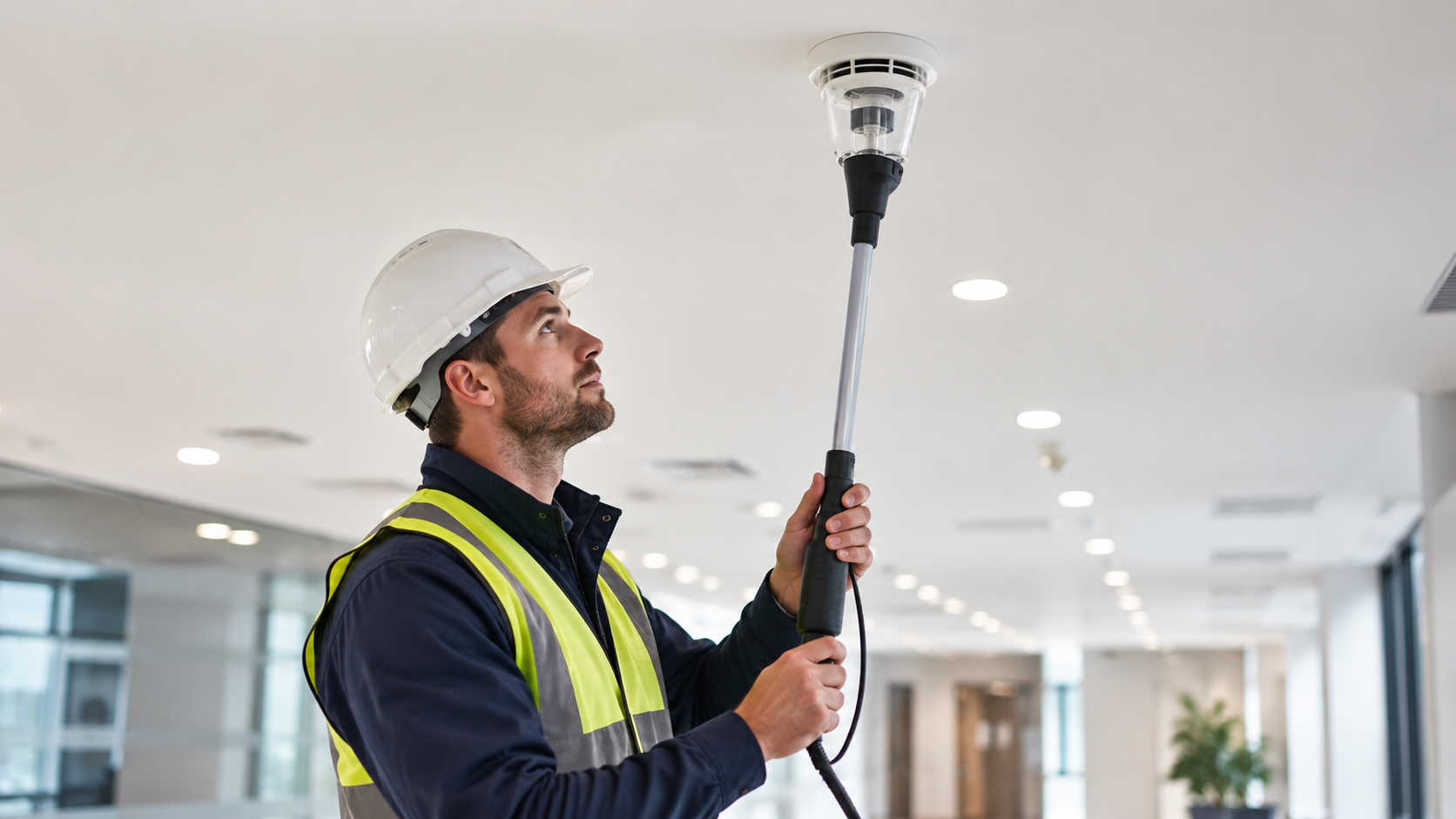
Knowing the correct fire alarm inspection schedule for your building is not optional it is a legal obligation and a cornerstone of occupant safety. Inspection, testing, and maintenance, often abbreviated as ITM, is the ongoing process that keeps a detection system ready to perform on the day it is actually needed. Yet many building owners and facility managers are unsure how often each task must happen, who is allowed to perform it, and how the rules change depending on how the building is used.
This guide breaks down fire alarm inspection frequency in plain language. It explains the intervals set by national code, why they exist, and how requirements shift across occupancy types such as schools, hospitals, offices, and assembly spaces. By the end, you will have a clear roadmap for keeping your system compliant and your building protected.
Why Inspection Frequency Matters
A detection system is a silent investment. For years it does nothing visible, and then one day it must work perfectly. Regular inspection testing and maintenance is what bridges that gap. A device that was installed correctly can still drift out of sensitivity, lose battery capacity, or suffer wiring damage over time. A scheduled fire alarm inspection catches these problems before they become failures. Dust accumulation, corrosion, insect intrusion, and ordinary wear all degrade detection equipment in ways that are invisible until a device is actually exercised.
The consequences of skipping a fire alarm inspection extend well beyond a citation. Federal workplace rules carry significant penalties for fire detection maintenance failures. Insurance carriers routinely review ITM records after a loss, and a documented maintenance gap can become grounds to deny a claim. In civil litigation, courts treat the national code as the applicable standard of care. In short, a missed inspection creates legal, financial, and safety exposure all at once.
The Code Behind the Schedule
In the United States, NFPA 72, the National Fire Alarm and Signaling Code, is the single standard that governs how detection systems are inspected, tested, and maintained. It becomes legally enforceable when a state or local jurisdiction adopts it, usually through the International Fire Code. A companion standard, NFPA 101, the Life Safety Code, determines which buildings need a system in the first place based on occupancy and occupant load. The NFPA 72 testing requirements then dictate how that system is maintained once it is installed.
The NFPA 72 testing requirements are not left to interpretation. The code maps a specific interval to each device category initiating devices, notification appliances, control equipment, supervising station connections, and emergency communications. The Authority Having Jurisdiction, or AHJ, enforces these rules locally and may impose stricter intervals based on a building’s risk profile. Always confirm local amendments, because the national code is a minimum, not a ceiling.
Need replacement parts to pass your next inspection? Browse our in-stock fire alarm panels and detection equipment brand new, in original manufacturer packaging, and shipped fast so you can close out deficiencies without delay.
Standard Inspection and Testing Intervals
While exact requirements depend on the device and the occupancy, most systems follow a recognizable rhythm of checks. The table below summarizes the common intervals that apply to a typical commercial building.
| Interval | Typical Tasks | Notes |
| Monthly | Visual checks, battery condition, indicator lamps | Often done by trained on-site staff |
| Quarterly | Supervisory and waterflow device checks | Frequency may vary by system type |
| Semi-Annual | Additional devices in higher-risk occupancies | Common in healthcare and high-rise |
| Annual | Functional test of all detectors, panels, appliances | Most comprehensive routine inspection |
| Every 1-2 Years | Smoke detector sensitivity testing | After year one, then on alternating cycles |
The annual visit is the most thorough. During an annual fire alarm inspection, a qualified technician functionally tests every smoke detector, heat detector, pull station, and notification appliance, and verifies the control panel and its connection to the supervising station. This is also the inspection most likely to produce replacement recommendations for aging components.
Smoke Detector Sensitivity and Battery Testing
Two items deserve special attention because they drive most replacements. The first is smoke detector testing for sensitivity. The code requires that a detector’s sensitivity be checked after the first year of service, then on a recurring cycle, typically every other year for alternating portions of the building. A detector that falls outside its listed sensitivity range must be replaced, because it can no longer be trusted to alarm at the right moment.
The second is battery capacity. Sealed lead-acid batteries are the single most frequently replaced component during ITM visits. The code expects standby batteries to support a defined period of standby operation followed by a period at full alarm load. Batteries are load-tested during the annual visit, and any unit that fails a test or shows swelling, leakage, or corrosion must be replaced immediately. Keeping the right batteries and power supplies on hand prevents a simple finding from becoming an open deficiency.
Fire Alarm Inspection Frequency by Occupancy Type
The biggest source of confusion is how requirements shift between building types. While the underlying code is the same, higher-risk occupancies face additional or more frequent checks, often layered on by the AHJ or by accreditation bodies. Here is how the picture changes.
Business and Mercantile Occupancies
Offices, retail stores, and similar spaces generally follow the standard schedule: monthly visual checks, an annual functional test, and sensitivity testing on the code cycle. Because occupant load is moderate and occupants are typically alert and mobile, these buildings rarely require intervals tighter than the national minimum. A thorough annual fire alarm system inspection is usually sufficient to maintain compliance.
Educational Occupancies (K-12 Schools)
Schools protect large numbers of minors and often sit on public property, so they receive close attention. The routine inspection schedule mirrors other commercial buildings, but schools must also conduct and document frequent evacuation drills, and many districts adopt stricter local rules. Coordinating the annual fire alarm inspection around the academic calendar is a practical necessity.
Healthcare Occupancies
Hospitals and nursing homes house occupants who cannot quickly self-evacuate, so they face the most demanding requirements. Semi-annual testing of certain devices is common, driven both by the AHJ and by accreditation standards such as those of The Joint Commission. Standby battery duration requirements may also be longer. In these facilities, a fire alarm inspection program is typically continuous rather than a once-a-year event.
Assembly and High-Rise Occupancies
Auditoriums, arenas, and high-rise buildings combine large occupant loads with complex evacuation logistics. These buildings often include emergency voice communication systems, which add their own tasks to every fire alarm inspection. Semi-annual checks of certain notification and supervisory devices are frequently required, and the AHJ may mandate additional verification of mass notification features. Survivability of circuits, intelligibility of voice messages, and coordination with other building systems all add layers that a simple commercial schedule does not include.
The common thread is simple: the greater the risk to occupants, the tighter the schedule. When in doubt, treat the national code as your floor and ask the AHJ what additional inspection, testing, and maintenance applies to your specific building.
Documentation and Who Can Perform the Work
Passing an inspection is only half the equation; proving it is the other half. The code requires that every inspection, test, and maintenance activity be documented and the records retained on site. These records should identify which components were checked and how they performed. During an audit, an insurance review, or litigation, this paperwork is your evidence of compliance. Well-organized records also make every future visit faster, because the technician can immediately see the system history, past deficiencies, and which components are approaching the end of their service life.
Some tasks, such as monthly visual checks, can be carried out by trained on-site staff. Functional testing, sensitivity testing, and panel work, however, must be performed by a qualified, licensed fire alarm technician. Using an unqualified person for a fire alarm inspection that requires certification can invalidate the results and expose the building owner to liability.
Have a deficiency report or an inspection coming up? Our team can help you source the exact replacement parts your system needs. Request a quote or contact our specialists for fast, knowledgeable support.
Conclusion
A reliable detection system is only as good as the program that maintains it. Fire alarm inspection frequency is set by national code, enforced locally by the AHJ, and adjusted upward for higher-risk occupancies like schools, hospitals, and assembly spaces. A complete fire alarm system inspection program combines monthly visual checks, an annual functional test, scheduled sensitivity verification, and careful documentation to form the backbone of compliance. Understanding and following this schedule protects your occupants, your finances, and your legal standing.
At QuickShipFire, we have spent more than twenty years helping facility managers and contractors keep their systems compliant and ready. When an inspection turns up an aging panel, a failed battery, or an obsolete detector, we can help you find the right replacement quickly brand new, in original manufacturer packaging, and shipped fast across the United States. Staying ahead of your next fire alarm inspection is far easier when you have a parts partner who understands the urgency.
Frequently Asked Questions
1. How often does a commercial fire alarm system need to be inspected?
Most commercial buildings follow a layered schedule: monthly visual checks, an annual comprehensive functional test, and smoke detector sensitivity testing after the first year and then on a recurring cycle. Higher-risk occupancies such as healthcare and high-rise buildings may also require semi-annual checks of certain devices.
2. What is the difference between inspection, testing, and maintenance?
Within a fire alarm inspection, inspection itself is a visual check that equipment is in place and undamaged. Testing confirms a device actually operates as intended. Maintenance is the corrective work cleaning, adjustment, or replacement that keeps the system functional. Together, inspection testing and maintenance make up the ITM program required by code.
3. Do schools have stricter fire alarm requirements than offices?
The routine testing schedule is similar, but schools carry extra obligations. Because they protect large numbers of minors, educational occupancies must conduct frequent documented evacuation drills, and many local jurisdictions adopt stricter rules. The annual inspection itself follows the standard commercial pattern.
4. Who is allowed to perform a fire alarm inspection?
Simple monthly visual checks can be done by trained building staff. However, functional testing, sensitivity testing, and any work on the control panel must be performed by a qualified, licensed fire alarm technician. Using an unqualified person for certification-level work can invalidate the inspection.
5. What happens if I miss a required inspection?
Missing a required inspection can lead to citations and fines from the AHJ, and it creates serious exposure elsewhere. Insurance carriers may deny a claim if ITM records show a maintenance gap, and in litigation the national code is treated as the standard of care. A missed inspection is a legal, financial, and safety risk.
6. How often do smoke detectors need sensitivity testing?
Smoke detector testing for sensitivity is generally required after the first year of service and then on a recurring cycle, often every other year for alternating areas of the building. Any detector that falls outside its listed sensitivity range must be replaced.
7. How long should I keep my inspection records?
Inspection, testing, and maintenance records should be retained on site and made available to the AHJ, insurers, and auditors. These documents are your proof of compliance, so keep them organized and current. Your local jurisdiction may specify a minimum retention period, so confirm the requirement in your area.
8. Can I do my own monthly fire alarm checks?
Yes. Routine monthly visual inspections confirming panels show normal status, checking indicator lamps, and noting any obvious damage can be performed by trained on-site staff and documented in your log. Anything involving functional testing or the panel itself should be left to a licensed technician.