
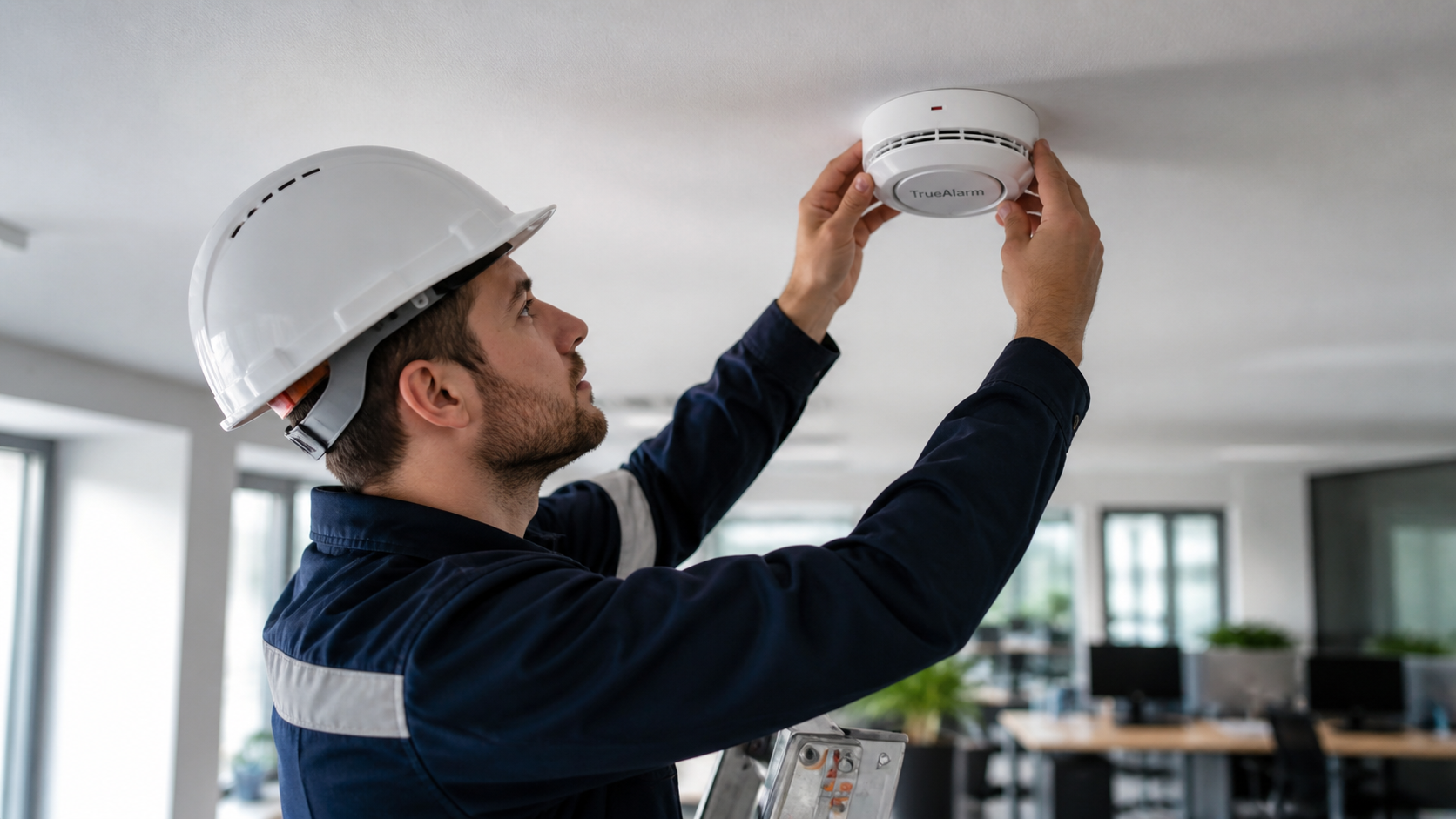
Fire safety in the United States has entered a new era. With UL 268 7th Edition now widely enforced, NFPA 72-2025 introducing fresh requirements near cooking areas, and commercial buildings becoming smarter and more connected, the demand for intelligent, reliable smoke detection has never been higher. For contractors, facility managers, and fire-life-safety specifiers across the USA, choosing the right detection device is no longer a routine decision; it is a critical part of every successful project. At the center of this evolution sits the TrueAlarm photoelectric sensor, a proven, intelligent detection device built for modern commercial and industrial systems.
Alongside it, two trusted Notifier-based detectors continue to play essential roles in addressable fire alarm networks across the country. This complete 2026 guide walks US fire safety professionals through everything they need to know, from how these detectors work to why they remain top choices for buildings that cannot afford to compromise on safety.
What Is the TrueAlarm Photoelectric Sensor?
The TrueAlarm photoelectric sensor is an intelligent, analog-addressable smoke detection device engineered for advanced commercial fire alarm systems. Unlike older conventional detectors that simply trigger an alarm when smoke reaches a fixed level, this sensor continuously communicates with the fire alarm control panel, monitors its own sensitivity, and adapts to environmental conditions throughout its life cycle.
Inside the sensing chamber, a precisely calibrated light source emits a beam at an angle. Under clean conditions, the beam misses the photodetector. When smoke particles enter the chamber, they scatter the light onto the detector, sending a signal to the panel. What makes this technology stand out in 2026 is how it pairs this proven optical principle with smart algorithms, drift compensation, and self-diagnostics, ensuring consistent performance even in dusty, humid, or high-airflow environments.
Why Photoelectric Detection Leads the US Market in 2026
Photoelectric technology now leads the US smoke detection market by a significant margin. According to recent industry research, photoelectric detectors hold over 60 percent of the revenue share in the United States and continue to grow as ionization detectors lose ground. The shift is driven by stricter UL 268 7th Edition testing, modern building materials that produce more smoldering fires, and the industry-wide focus on reducing nuisance alarms in commercial spaces.
- Faster early detection of slow, smoldering fires common in modern buildings
- Strong performance against synthetic materials like polyurethane foam
- Lower nuisance alarm rates near kitchens, breakrooms, and HVAC zones
- Full compatibility with intelligent addressable control panels
How the TrueAlarm Photoelectric Sensor Works in Modern Buildings
In a real building, the TrueAlarm photoelectric sensor functions as much more than a smoke detector. Each device carries a unique address that allows the fire alarm control panel to identify the exact location of every event, whether it is a real alarm, a maintenance signal, or an environmental warning. This level of intelligence transforms how buildings respond to early fire conditions.
When the sensor detects a change in light scattering inside its chamber, it does not immediately ring an alarm. Instead, it sends real-time data to the panel, which evaluates the trend, environmental compensation, and sensitivity profile before deciding the right response. This thoughtful logic is one reason intelligent detection devices have earned long-term trust among contractors and engineers across the USA.
Smart Features That Define the 2026 Standard
- Continuous self-diagnostics with automatic dirty-sensor reporting
- Adaptive sensitivity that meets UL 268 7th Edition requirements
- Seamless addressable communication with modern Simplex panels
- Reliable operation across hospitals, schools, hotels, and data centers
- Field-friendly maintenance and clear panel-side diagnostic alerts
Where the FSP-851R Photoelectric Smoke Detector Fits In
Across thousands of US commercial buildings, the FSP-851R Photoelectric smoke detector remains a respected name in addressable fire detection. Designed for use with compatible Notifier panels, it has long been valued for its dependable smoke sensing performance, simple base compatibility, and proven track record in real-world installations. For facility managers maintaining trusted addressable systems, this detector continues to deliver consistent, code-aligned protection.
This device is especially valuable in projects where existing infrastructure must be preserved while still meeting modern compliance expectations. Its straightforward integration, well-understood diagnostics, and compatibility with widely deployed addressable loops make it a familiar friend for technicians who service active fire alarm networks across the country.
Why the FSP-951R Photoelectric Smoke Detector Is Becoming a 2026 Favourite
The FSP-951R Photoelectric smoke detector represents the next generation of addressable smoke detection for projects that demand updated communication, modern diagnostics, and code-current performance. Built to align with today’s UL 268 7th Edition expectations, it offers refined optical sensing, advanced environmental compensation, and improved support for newer Notifier intelligent panels.
For US contractors planning new installations or upgrading existing systems, this detector offers a smooth path forward. It supports cleaner integration with modern fire alarm architectures, delivers stable performance in mixed-use commercial environments, and provides the kind of long-term reliability that building owners expect when investing in life safety infrastructure.
Where the Newer Notifier Detector Adds the Most Value
- New construction projects requiring current-edition UL listings
- Retrofits of older addressable loops needing updated devices
- Mixed-use buildings with sensitive environments and high foot traffic
- Multi-site portfolios standardizing on next-generation detection
2026 Compliance Trends Shaping US Fire Safety Projects
In 2026, compliance is the single biggest force shaping detector selection across the United States. Three trends stand out, and each one strengthens the case for intelligent photoelectric detection in commercial projects.
UL 268 7th Edition Adoption
UL 268 7th Edition has redefined how detectors are tested for both real fires and nuisance sources. Smoldering polyurethane testing, flaming polyurethane testing, and the cooking nuisance test all push manufacturers toward smarter, more discerning sensors. The TrueAlarm photoelectric sensor, when paired with compatible panel firmware, is engineered to perform within these stricter performance windows, giving specifiers confidence at acceptance testing.
NFPA 72-2025 Updates
Effective in 2025 and now broadly enforced, NFPA 72-2025 introduced fresh expectations for smoke detectors installed near cooking appliances. Photoelectric devices that resist nuisance alarms have become the preferred path for code compliance, and US property owners are increasingly choosing detection systems that combine real-fire sensitivity with strong environmental discrimination.
Smart Building Integration
Modern commercial buildings are no longer siloed. Fire detection now lives alongside building management systems, HVAC controls, security platforms, and remote monitoring tools. The TrueAlarm photoelectric sensor and modern next-generation devices fit naturally into this connected ecosystem, providing the addressable, data-rich performance that smart facilities require.
Choosing the Right Detector for Your US Commercial Project
Selecting the right detection device starts with understanding the panel, the application, and the long-term goals of the building owner. The TrueAlarm photoelectric sensor is an outstanding choice for projects built around Simplex intelligent platforms, where its analog-addressable communication, panel-side sensitivity control, and proven reliability shine. For projects on the Notifier ecosystem, the FSP-851R Photoelectric smoke detector continues to support trusted addressable systems with consistent performance, while the FSP-951R Photoelectric smoke detector offers a forward-ready solution ideal for new installations and major upgrades.
Smart Selection Checklist
- Match the detector to the panel platform and current firmware version
- Confirm UL 268 7th Edition listing on the data sheet before ordering
- Choose the correct base type, whether standard, sounder, relay, or duct-housing
- Plan sensitivity programming based on the specific occupancy
- Source from a reliable supplier offering authentic, manufacturer-packaged products
Why US Fire Safety Professionals Trust QuickShipFire
Fire safety projects move fast, and delays cost money. QuickShipFire serves contractors, facility managers, and integrators across the United States with brand-new, manufacturer-packaged fire alarm components, including the TrueAlarm photoelectric sensor, addressable Notifier detectors, modules, bases, duct housings, and full-system parts. Every product is sourced to support authentic, code-aligned installations.
With deep inventory, fast shipping, and dedicated technical support, QuickShipFire helps US fire safety professionals stay on schedule and on budget without compromising on authenticity or compliance. Whether the job is a single replacement device on a long-running panel or a multi-site rollout for a national portfolio, QuickShipFire delivers reliable products and expert guidance every step of the way.
- Brand-new, factory-packaged commercial fire alarm components
- Industry-leading shipping speeds across the United States
- Dedicated specialist support for model selection and compatibility
- Trusted by contractors, integrators, and facility teams nationwide
Conclusion
As the United States moves deeper into 2026, fire safety standards continue to evolve, and the bar for intelligent detection keeps rising. The TrueAlarm photoelectric sensor remains a cornerstone of modern commercial protection, offering the smart sensing, addressable communication, and long-term dependability that today’s buildings demand. Alongside it, trusted Notifier addressable detectors continue to support both legacy systems and forward-looking new installations, giving US specifiers a complete toolkit for code-aligned protection.
For contractors, specifiers, and facility managers across the USA, the path forward is clear: invest in detection technology that meets current codes, integrates cleanly with smart building systems, and comes from a supplier that understands the urgency of fire-life-safety work. QuickShipFire stands ready to support every project with genuine TrueAlarm photoelectric sensor inventory, expert guidance, and the kind of reliable service that fire safety professionals depend on. Choose smarter detection, choose trusted components, and choose a partner committed to keeping America’s buildings safer in 2026 and beyond.
Frequently Asked Questions
1. What makes the TrueAlarm photoelectric sensor different from a standard smoke detector?
It uses analog-addressable communication, smart drift compensation, and self-diagnostics, allowing the panel to monitor each detector’s exact status and location.
2. Is the TrueAlarm photoelectric sensor suitable for UL 268 7th Edition projects?
Yes, current-production TrueAlarm devices are designed to meet UL 268 7th Edition when used with compatible panel firmware, making them a strong fit for 2026 compliance.
3. Where is the FSP-851R commonly used today?
It is widely used across existing commercial Notifier-based systems where dependable, addressable photoelectric sensing is needed for ongoing service and maintenance.
4. Why are contractors choosing the FSP-951R for new projects?
Because it offers updated optical sensing, modern panel compatibility, and strong alignment with current US code requirements, making it ideal for new installations and upgrades.
5. Can these detectors be used in hospitals, schools, and data centers?
Yes, all three are commonly deployed across healthcare, education, hospitality, and mission-critical facilities throughout the United States, supporting addressable fire alarm networks.
6. How often should photoelectric smoke detectors be tested?
NFPA 72 generally requires functional testing once per year and visual inspection twice per year, with panel-reported diagnostics monitoring detectors continuously in between.
7. Where can US fire safety professionals buy authentic detectors?
QuickShipFire supplies brand-new, manufacturer-packaged fire alarm components across the USA, with fast shipping and specialist support for every project.
Power Your 2026 Fire Safety Projects with QuickShipFire
Upgrade smarter. Source faster. Stay compliant. Whether you need a TrueAlarm photoelectric sensor or any other genuine, factory-packaged fire alarm component, QuickShipFire delivers authentic products with industry-leading shipping speeds across the USA. Talk to our specialists today and keep your project moving without delays.
Visit quickshipfire.com or contact our team at info@quickshipfire.com